

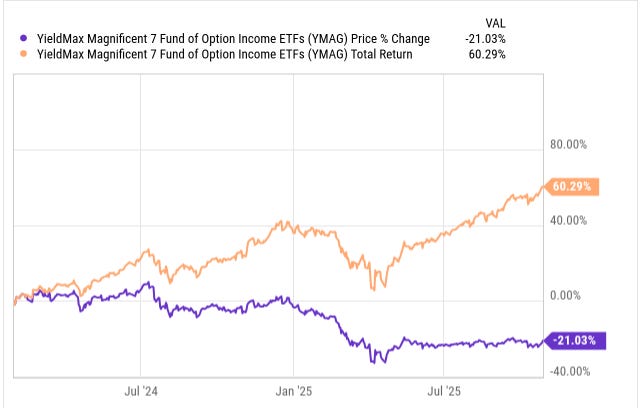
Most option income ETFs are built to deliver one thing above all else: yield. While the high payouts can be attractive, the trade-off is often a slow decline in the fund’s net asset value. This steady erosion happens when distributions outpace the fund’s growth and can make it seem like the strategy is failing, even when investors are collecting strong income.
For instance, YMAG 0.00%↑ offers indirect exposure to the Mag 7 companies, including: TLSA 0.00%↑, NVDA 0.00%↑, MSFT 0.00%↑, AAPL 0.00%↑, NFLX 0.00%↑, META 0.00%↑, GOOG 0.00%↑
However, the fund’s total return including all dividends paid is more than 60%.
I recently published an article on 5 ways to offset NAV erosion. I wanted to follow up on that by providing three funds that actually grow its NAV.
However, a few funds have managed to challenge that reputation. They have found a way to balance income generation with capital preservation and even gradual NAV growth. These funds use smarter call-writing strategies, more flexible management, and exposure to areas of the market that can grow alongside their distributions.
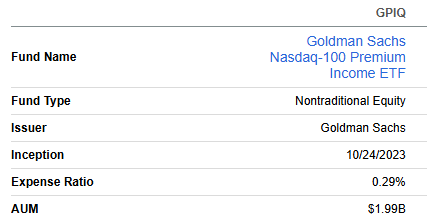
Fund #1 - Goldman Sachs Nasdaq 100 Premium Income ETF GPIQ 0.00%↑
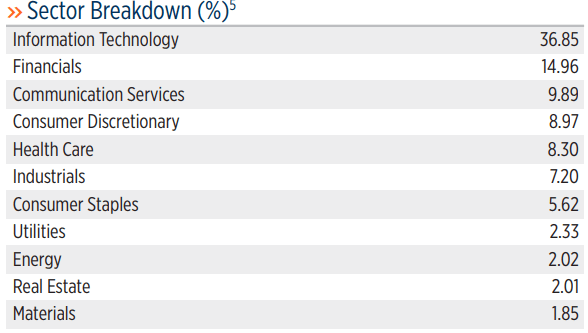
The Goldman Sachs Nasdaq 100 Premium Income ETF takes a balanced approach to option income. Instead of covering the entire portfolio, it sells calls on a portion of its Nasdaq 100 exposure. This lets the fund collect meaningful option premiums while still participating in upside from the index’s largest technology and innovation leaders.
👉 GPIQ offers a 9.4% dividend yield issues payouts on a monthly basis.
That partial coverage is the key to protecting and growing NAV. When the market rises, the uncovered slice can appreciate and offset the natural drag from call writing. When volatility increases, premiums tend to rise, which helps sustain the fund’s income stream without fully capping gains.
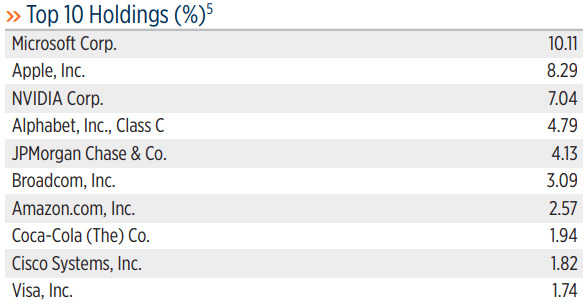
👉 Looking at the top ten positions below, we can see exposure to many of the greatest growth companies in the world.
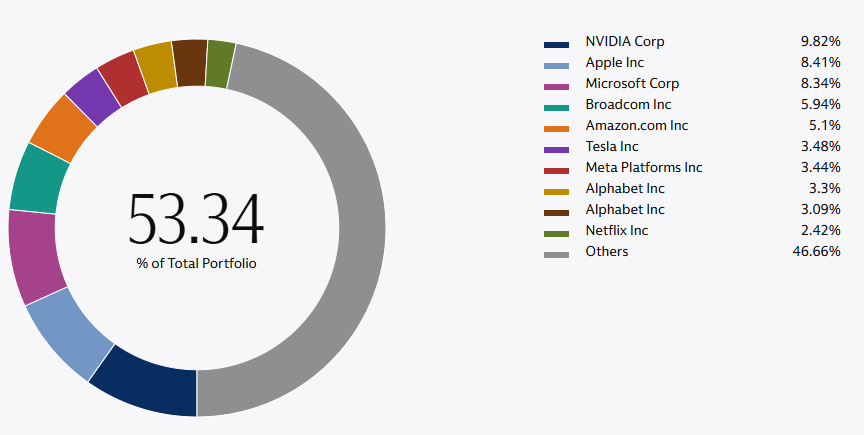
By pairing selective call coverage with exposure to the Nasdaq 100, this fund shows that investors can pursue high income and still keep a path open for capital growth. The result is steadier cash flow with a better chance of long term NAV resilience compared with fully covered strategies.
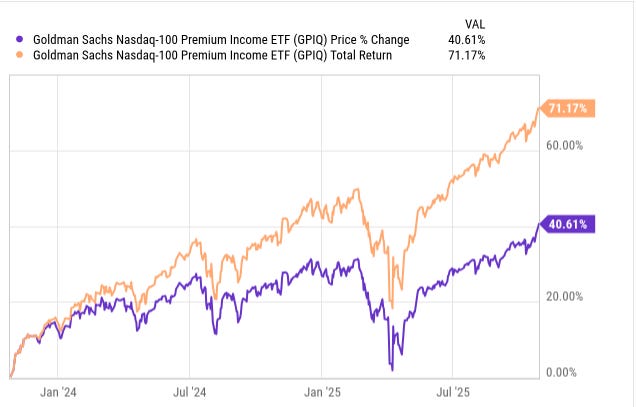
The standout part of the ETF is that it can still provide a meaningful level of capital appreciation over time. As we can see below, the fund’s share price has increased by more than 40% since inception. When including all distributions paid out, the total return jumps above 71%.
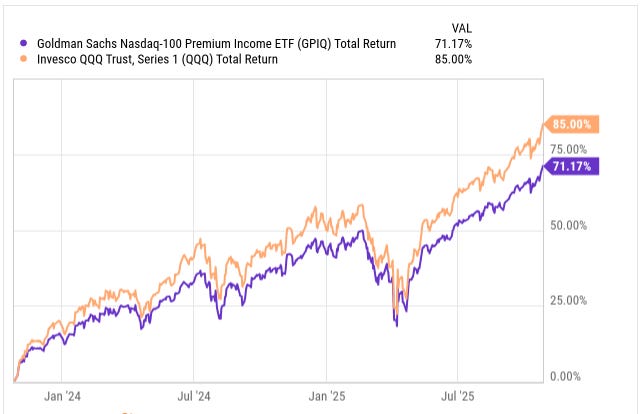
The downside? GPIQ is likely to underperform a more traditional ETF like QQQ 0.00%↑ over time, despite having many of the same holdings.
👉Upgrade to a paid membership to view the full list of funds.
Not ready to upgrade? That’s fine! When you become a free subscriber today, you will gain access to the following:
✅50+ Monthly Dividend Stocks provides a list of tickers that send income to your account every single month.
✅ETFs for Beginners breaks down income focused funds that simplify the investing process.
✅Dividend Legends highlights companies with long histories of increasing dividends through every type of market.
These are tools that will help you get your dividend journey started!
Fund #2 - First Trust Enhanced Equity Income Fund FFA 0.00%↑
The First Trust Enhanced Equity Income Fund has quietly built one of the most consistent track records among option-based income funds. Unlike most ETFs that follow a rules-based call-writing approach, FFA is actively managed. Its team adjusts option coverage, strike levels, and sector exposure based on market conditions rather than sticking to a fixed formula.
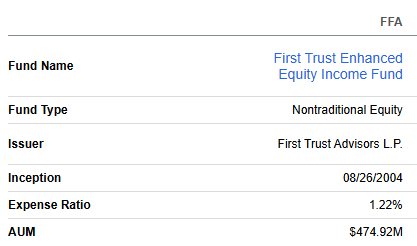
👉 FFA offers a dividend yield of 7.1% and pays out on a quarterly basis.
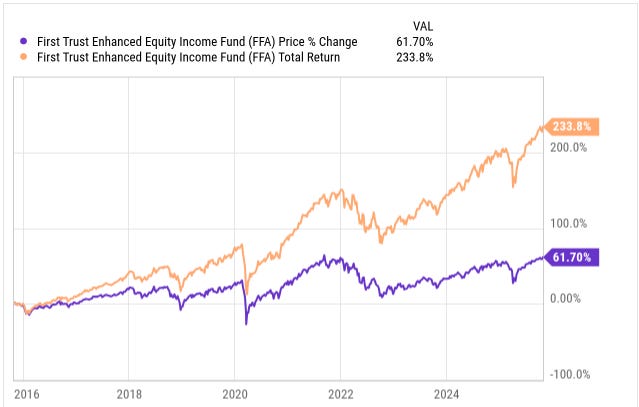
👉 Looking at the performance, we can see that the fund has provided the best of both worlds, growth and income!
When markets trend higher, the managers can reduce call coverage to capture more upside. When volatility rises, they can sell calls further out of the money or increase coverage to lock in higher premium income. That adaptability helps keep the portfolio growing while still generating a dependable dividend stream.
FFA also benefits from its diversified portfolio of large-cap equities and selective sector rotation. Instead of being tied to one index, the managers can shift exposure toward areas showing relative strength. This combination of active call management and tactical positioning has allowed FFA to maintain a healthy distribution rate while gradually increasing its underlying value over time.
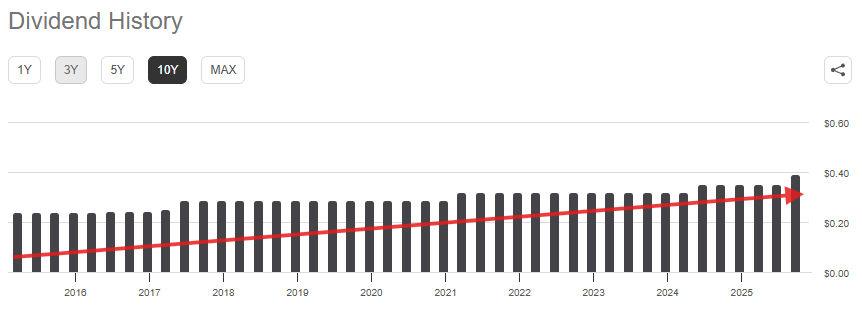
Unlike other option ETFs, FFA is wrapped in a closed-end fund structure. This has allowed FFA to raise dividends over the last ten year period. Therefore, investors would have seen their passive dividend income grow without the need to add any additional capital over time.
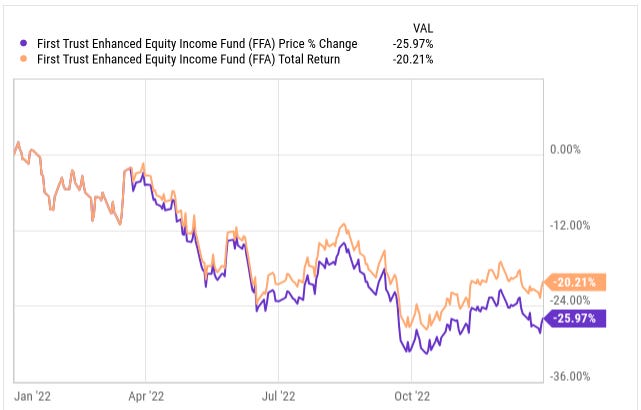
The downside is that the fund has historically performed worse during market downturns. The latest example of this can be demonstrated when looking at the performance over 2022’s market pullback. FFA performed worse than a traditional S&P 500 fund SPY 0.00%↑, despite offering a higher dividend yield.
Fund #3 - NEOS Real Estate Income ETF IYRI 0.00%↑
The NEOS Real Estate Income ETF brings a refreshing approach to income generation within the real estate sector. Traditional REIT funds often face NAV pressure because a large portion of their distributions come from return of capital. IYRI tackles this issue differently by combining diversified REIT exposure with an options overlay that enhances income without overextending the portfolio.
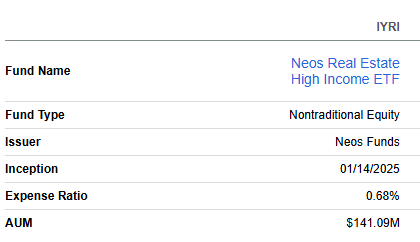
👉 IYRI offers a dividend yield of 11% and issues payouts on a monthly basis.
The fund sells call options on real estate securities and ETFs to capture additional premium income while keeping most of its capital invested in high-quality property companies. This approach provides steady cash flow while still allowing for long-term appreciation as real estate values recover.
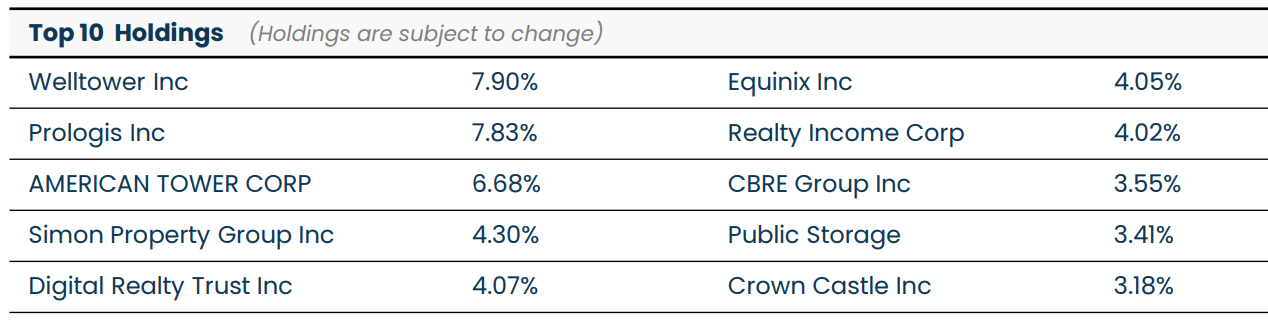
Lower interest rates also serve as a potential tailwind for IYRI. As borrowing costs decline, REIT valuations tend to improve, and that capital recovery supports the fund’s NAV. The options income adds stability through different rate cycles, creating a balance between reliable monthly yield and gradual portfolio growth.
In short, IYRI shows that even within a rate-sensitive sector like real estate, NAV protection and high income can coexist when managed carefully.
However, the fund is so new that the performance history is limited. I will revisit this as more time passes.