

The dream of “passive income” in real estate is often sold as a montage of flipping houses or managing a string of suburban rentals. But for most people, the reality is a second full-time job. Between the massive down payments, the rising cost of property taxes, and the “three Ts”
Tenants
Toilets
Trash
Traditional landlording is anything but passive. It is a capital-intensive, high-stress endeavor that ties up your net worth in a single, illiquid asset.
There is a more efficient, mathematical way to own the roof over someone else’s head.
By investing in Real Estate Investment Trusts (REITs), you are firing yourself as the property manager and hiring a multi-billion dollar corporate team to do the work for you. A REIT is a company that owns, operates, or finances income-producing real estate across various sectors, ranging from the grocery stores where you shop to the cell towers that power your smartphone.
For instance, I own Simon Property Group SPG 0.00%↑ that owns many malls and shopping plazas across the U.S. I collect about $200 every quarter from SPG so it makes up a small percentage of my $42K in annual dividend income. SPG allows me to own and collect passive income from the malls, where millions of people spend money every year.
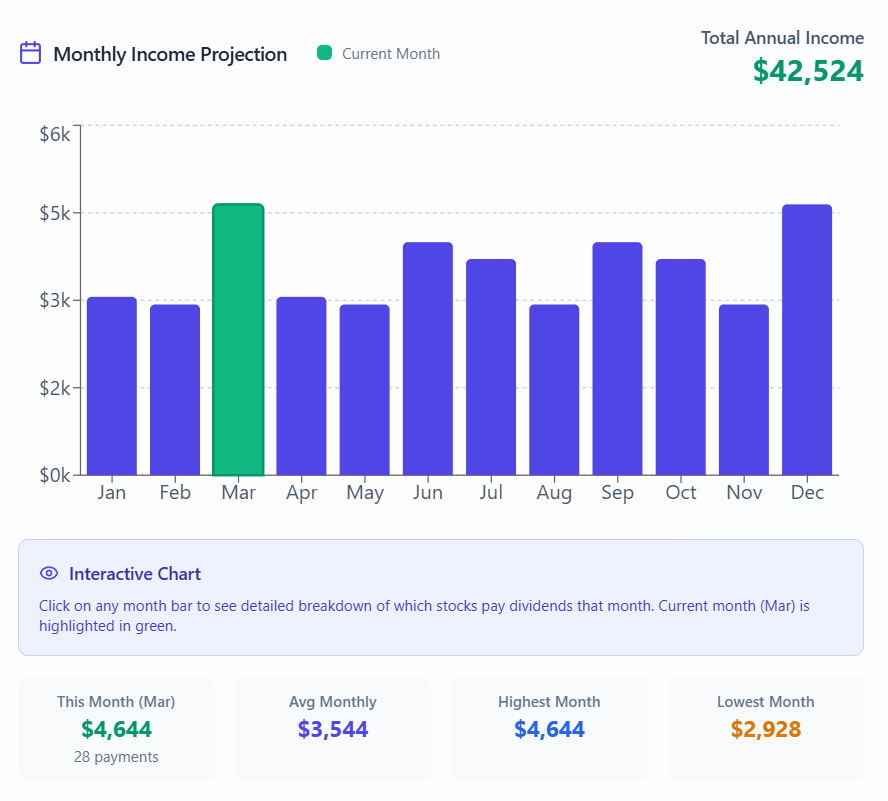
👉 Paid subscribers get instant access to the Yieldly Dashboard to track monthly dividend income.
The beauty of the REIT structure is rooted in federal law. To avoid paying corporate income taxes, these entities must distribute at least 90% of their taxable income back to shareholders. When you buy a share of a monthly-paying REIT, you are securing a legal claim to a slice of the rent collected from thousands of commercial tenants.
The 2026 Catalyst: The Tide is Turning for REITs
Timing is the final ingredient in any great investment thesis. For the past few years, REITs have faced a “perfect storm” of high interest rates. Because REITs use debt to acquire properties, higher rates made their growth more expensive and caused income-seeking investors to flee toward “safe” 5% savings accounts.
However, as we move through 2026, the macro environment has shifted. With the Federal Reserve actively cutting rates, two massive catalysts are now in play:
Lower Cost of Capital: As rates drop, REITs can refinance their debt and acquire new properties at significantly higher margins. This translates directly into higher Funds From Operations (FFO), which is the core metric used to measure a REIT’s ability to pay and grow its dividend.
The Great Migration of Cash: When high-yield savings accounts and CDs stop paying 5%, billions of dollars will rotate back into the equity markets looking for yield. By positioning yourself in high-quality REITs now, you are “front-running” this wall of money. You are capturing both the monthly income and the significant capital appreciation as valuations normalize.
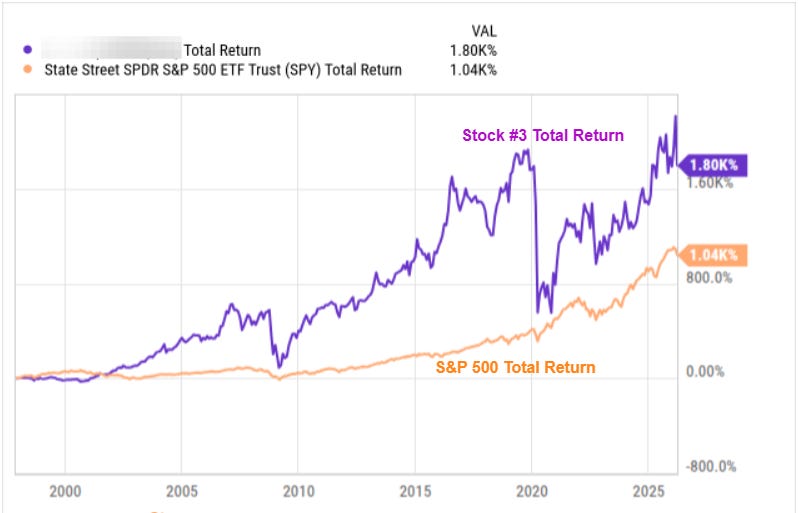
👉 Stock #3 has crushed the S&P 500 in total return over the last twenty years, while offering a dividend yield above 7%.
Stock #1: Realty Income O 0.00%↑
Realty Income operates on a “triple-net lease” structure, which shifts the burden of property taxes, building insurance, and maintenance costs directly to the tenant. This creates a highly predictable, high-margin cash flow stream insulated from operational overhead.
The company manages a massive scale of over 15,000 freestanding commercial properties. Their tenant base is intentionally defensive, concentrating on non-discretionary, service-oriented retail businesses (e.g., grocery stores, pharmacies, and convenience stores) that are highly resistant to e-commerce disruption and economic downturns. Looking at 2026, Realty Income is actively capitalizing on the shifting macro environment. With their cost of capital decreasing, they have guided for an aggressive $8.0 billion investment pipeline this year, signaling a strong return to portfolio expansion and FFO (Funds From Operations) growth.
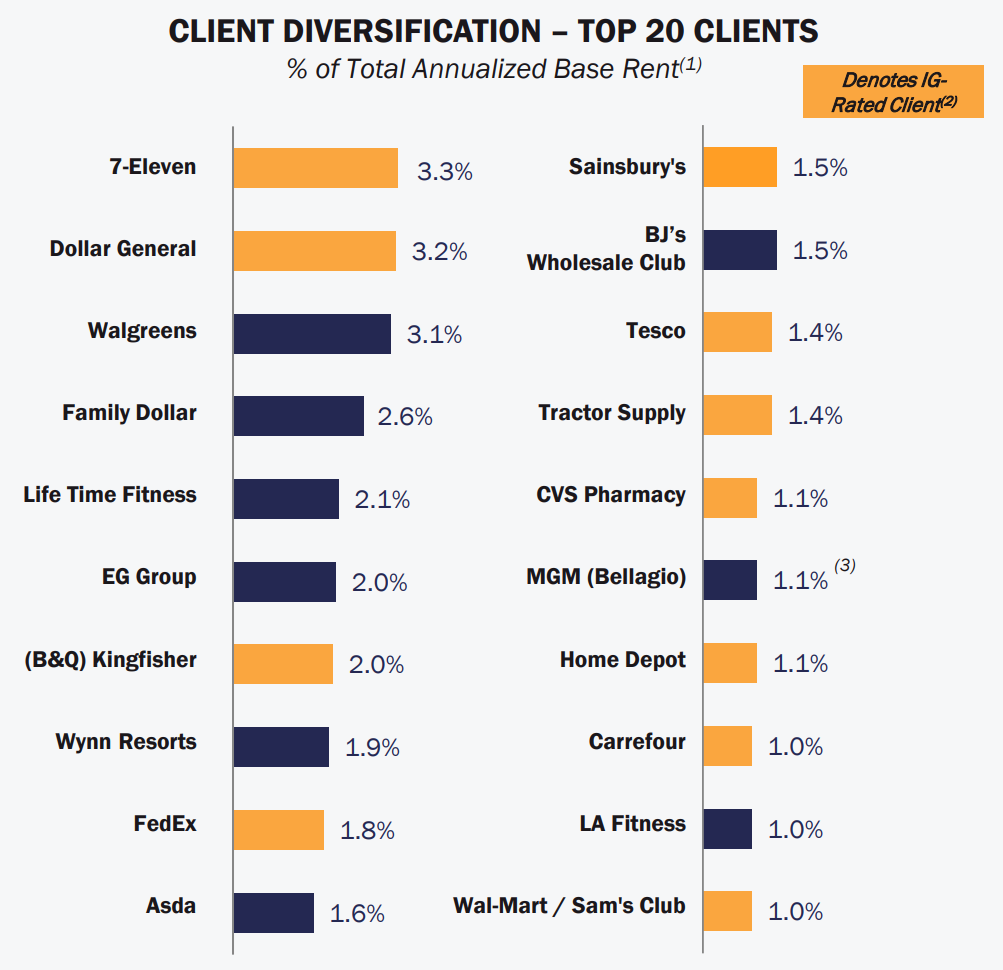
👉 When you own O 0.00%↑, you are collecting income from all of the following tenants.
Yield & Income Potential: The stock currently offers a forward dividend yield of approximately 5.3%, paying out $3.24 per share annualized on a monthly schedule.
For income investors, the primary value proposition here is structural reliability. Realty Income has declared over 660 consecutive monthly dividends and has increased its payout over 130 times since its 1994 NYSE listing.
While it is not a high-beta growth stock, it provides an immediate, bond-like yield replacement for investors rotating capital out of declining 5% CDs, with the critical advantage of built-in, compounding annual payout growth that outpaces inflation.
Stock #2: Agree Realty ADC 0.00%↑
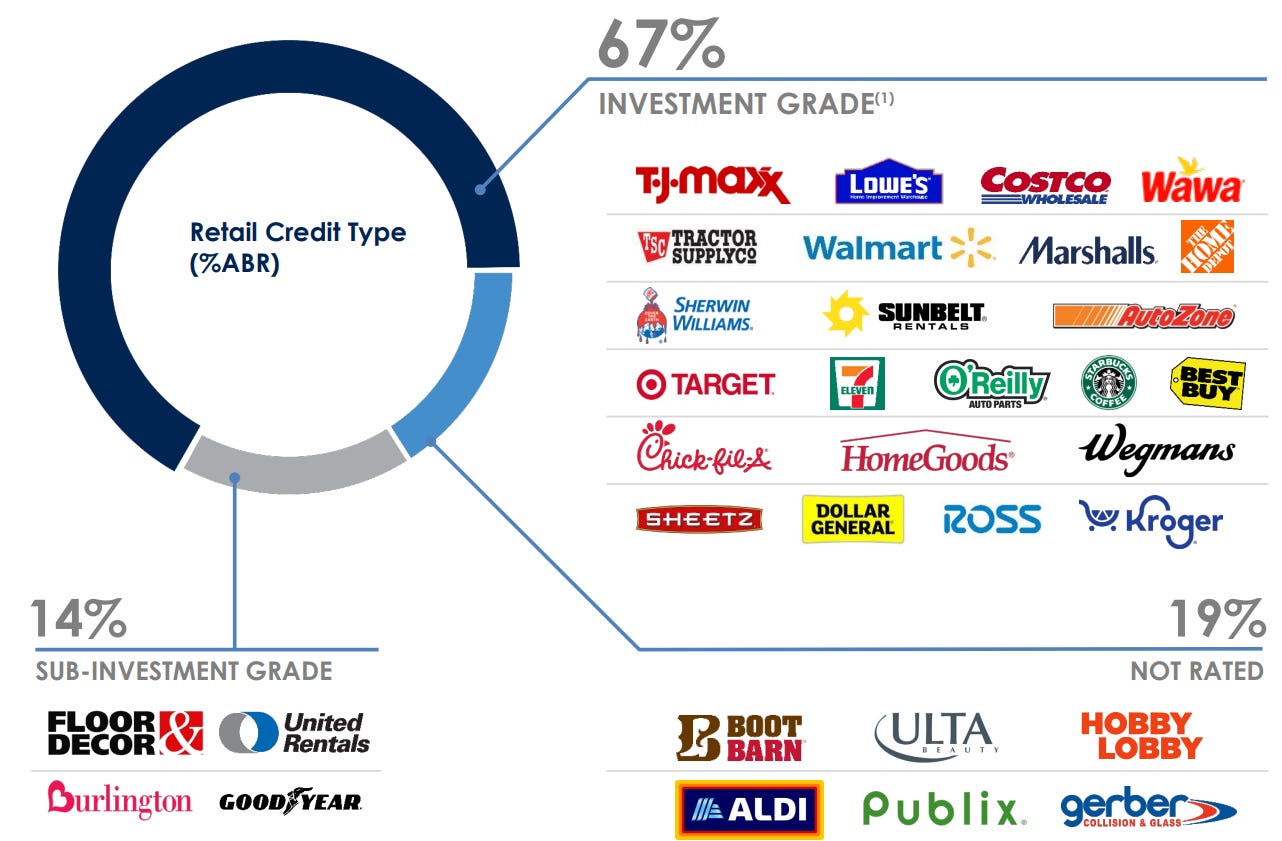
Agree Realty distinguishes itself through a hyper-focus on “omni-channel” retail. They prioritize properties leased to top-tier, recession-resistant national tenants with strong e-commerce defenses, such as Walmart, Home Depot, and Tractor Supply. As of early 2026, approximately 67% of their rental income is derived from investment-grade tenants, providing a level of credit quality that is among the highest in the REIT sector.
Look at the high quality tenants that pay rent to ADC properties!
A unique pillar of their strategy is an expanding ground lease portfolio, which currently accounts for over 10% of their base rent. In a ground lease, Agree owns the land while the tenant owns and maintains the building; if the tenant defaults, Agree takes ownership of the entire improved property. This provides an ultra-secure, low-risk income layer. For 2026, management has signaled high confidence by raising their investment guidance to a range of $1.4 billion to $1.6 billion, backed by a “fortress” balance sheet with over $2 billion in liquidity and no major debt maturities until 2028.
Yield & Income Potential: Agree Realty currently offers a monthly dividend of $0.262 per share, which annualizes to approximately $3.14 per share. This represents a forward yield of roughly 4.1% based on current market pricing.
While the starting yield is lower than Realty Income’s, the growth trajectory is often steeper. For 2026, the company is targeting roughly 5.4% growth in Adjusted Funds From Operations (AFFO), which directly supports their track record of consistent, mid-single-digit dividend increases. With a conservative payout ratio of approximately 71%, the dividend is well-covered, making ADC an ideal “quality-growth” pick for investors who want a monthly paycheck that grows faster than inflation.
Not ready to upgrade? That’s fine! Free subscribers still get the following perks!
👉 Free Subscribers get access to a Beginners ETF dashboard
👉 Free Subscribers get access to a list of 50+ monthly paying dividend stocks.
👉 Free Subscribers get access to a list of companies that consistently raise dividends.
