

I started a Netflix position in August, when I sold four income funds and moved that money into growth, and the stock has gone pretty much straight down since. It lost 14% in September alone and now trades around $70, roughly 44% below the $124.86 high it set last October.
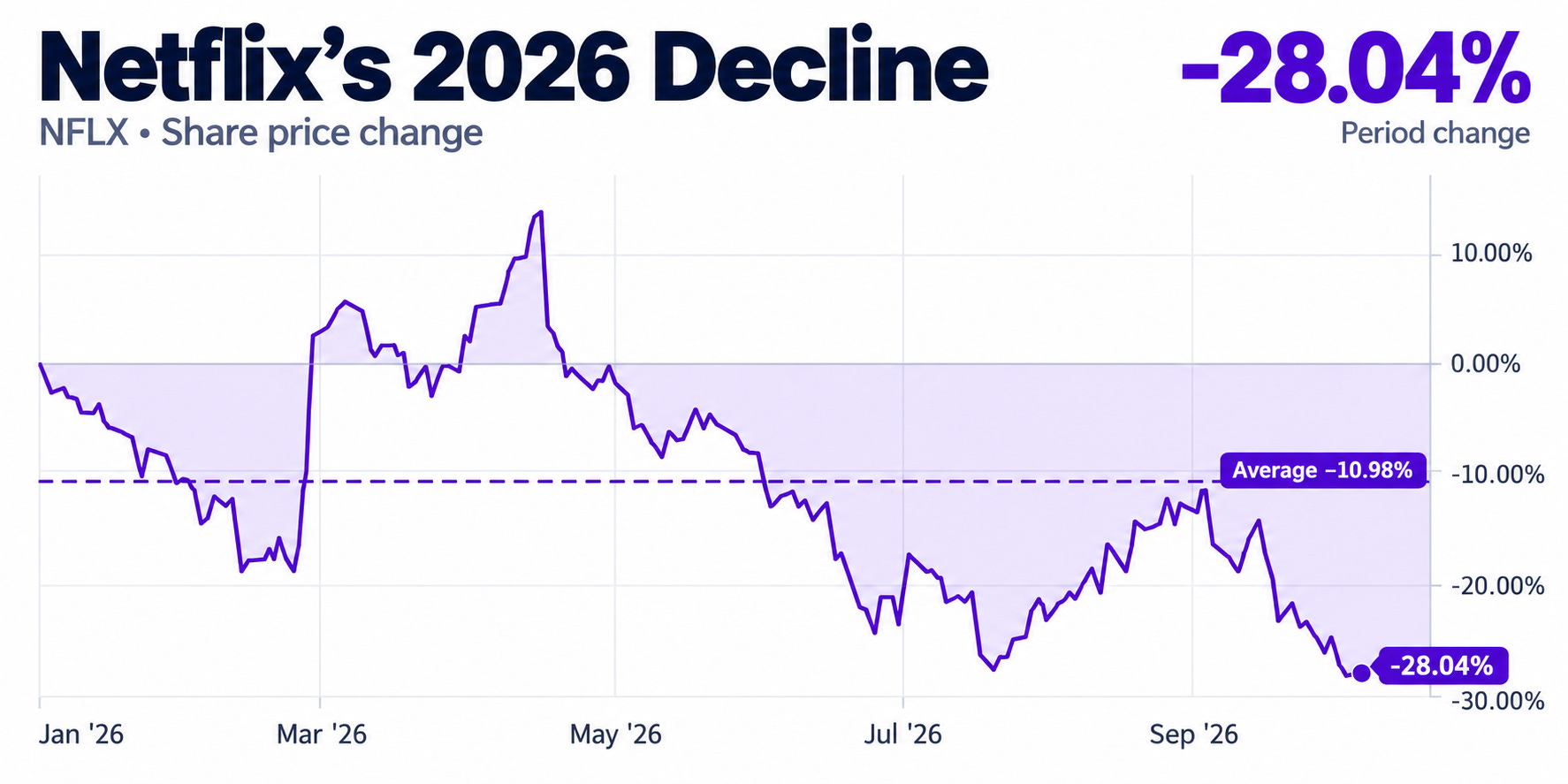
I’m adding more anyway, because Netflix is guiding to about $12.5 billion of free cash flow this year and operating income growth above 20%, and the market is pricing it like the growth story is finished. When a company makes MORE money every quarter while its stock gets cheaper, that’s the setup I want to be buying. You can see how I first funded the position in my August 2026 dividend report.
👉 Upgrade Your Subscription for $0.82 a day and get every buy alert as I place it.
Why The Stock Is Down
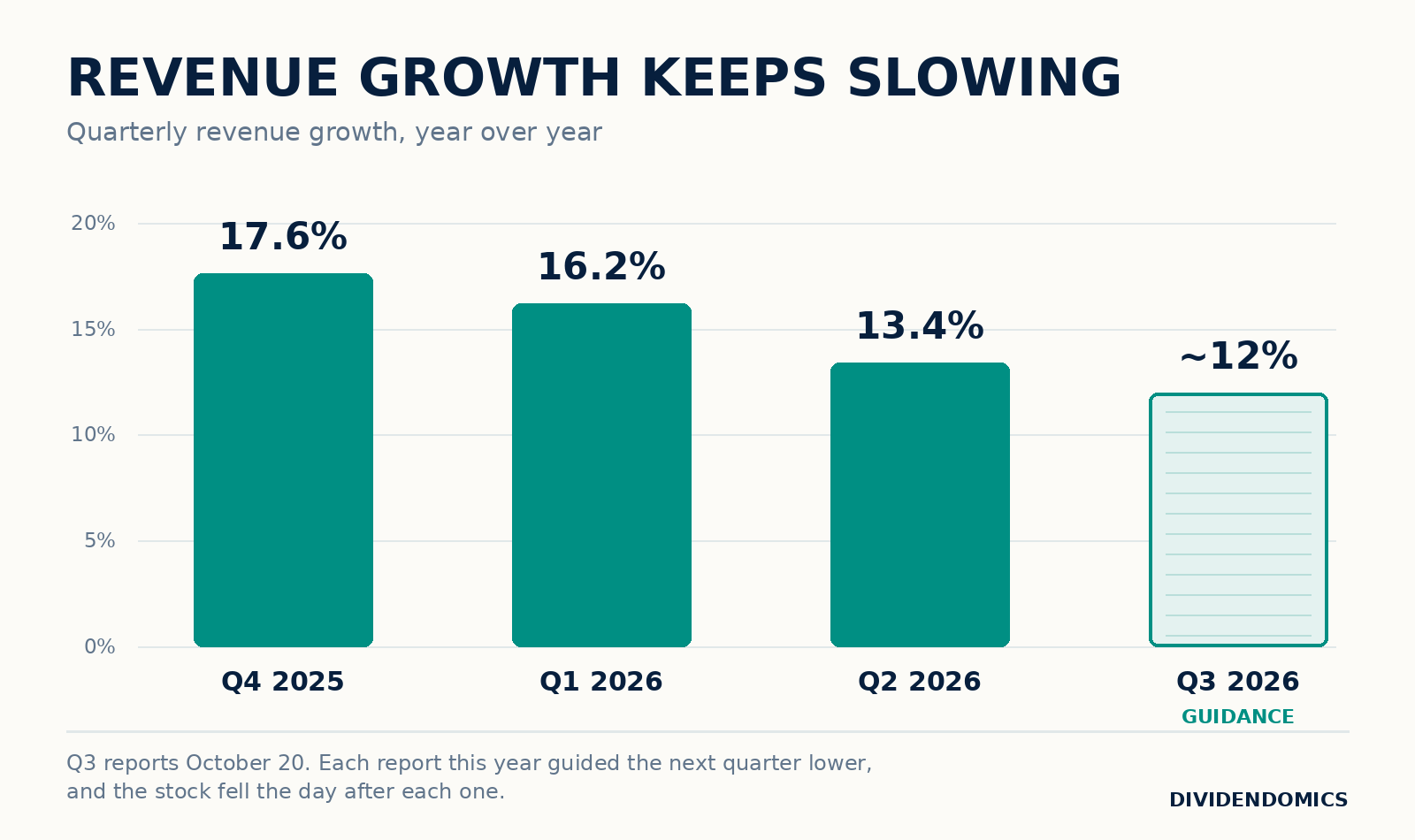
Netflix has dropped the day after each of its last four earnings reports, falling 10%, 2%, 10% and 7%, according to The Motley Fool. None of those quarters were disasters. The problem is that every report came with a slightly lower growth forecast for the quarter ahead, and the market has been repricing the stock one step down at a time.
September piled engagement worries on top. Co-CEO Ted Sarandos said viewing grew only about 2% in the first half of the year, and on September 18 Wells Fargo downgraded the stock to underweight with a $57 target, projecting a 21% drop in viewing hours for Netflix’s top 100 original shows in the second half. HSBC followed with a downgrade to hold and a $76 target, pointing to time lost to YouTube, per Yahoo Finance. A weak showing at the Emmys didn’t help.
The Warner Bros. situation added to it. Netflix pursued the deal earlier this year and walked away, collecting a termination fee, and about $275 million of deal costs still sit inside this year’s margin target. To a market that already wanted a reason to sell, a failed acquisition looked like a company searching for growth.
False Narratives
Three stories are doing most of the damage to this stock right now, and the company’s own Q2 shareholder letter pushes back on every one of them.
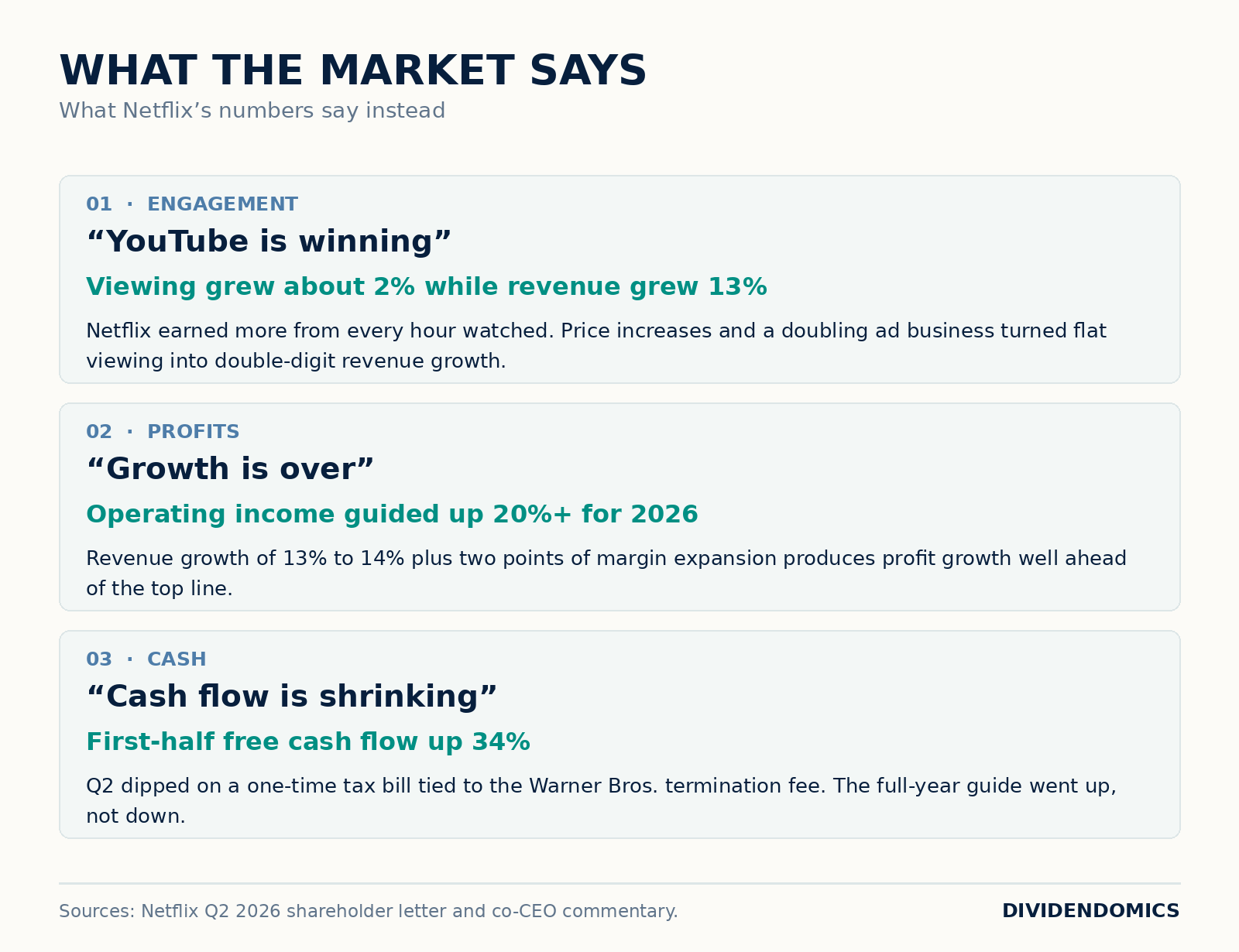
The YouTube argument assumes Netflix needs more hours to grow. It doesn’t, because Netflix sells subscriptions and ads, and both are getting more valuable per viewer. Revenue grew 13% in Q2 on viewing that grew about 2% in the first half, which means the average hour on Netflix is earning a lot more money than it did a year ago. YouTube competing for attention is real, and Netflix keeps raising prices anyway without losing the growth.
The cash flow scare comes from one number. Q2 free cash flow fell to $1.5 billion from $2.3 billion, and the letter explains it plainly: higher cash tax payments tied to the Warner Bros. termination fee. Zoom out to the first half and free cash flow came in at $6.62 billion against $4.93 billion a year earlier, a 34% increase by my own calculation.
The false narratives, the financials, and how I’m buying
Below the line for paid subscribers:
Three narratives driving the selloff, and the numbers that contradict each one
The financials charted, including a cash flow guide that went UP this year
The valuation at roughly half the multiple it started the year with
How I’m adding heading into the October 20 report