

The headlines are impossible to ignore. Cannabis is no longer a fringe market; it is a burgeoning economic powerhouse.
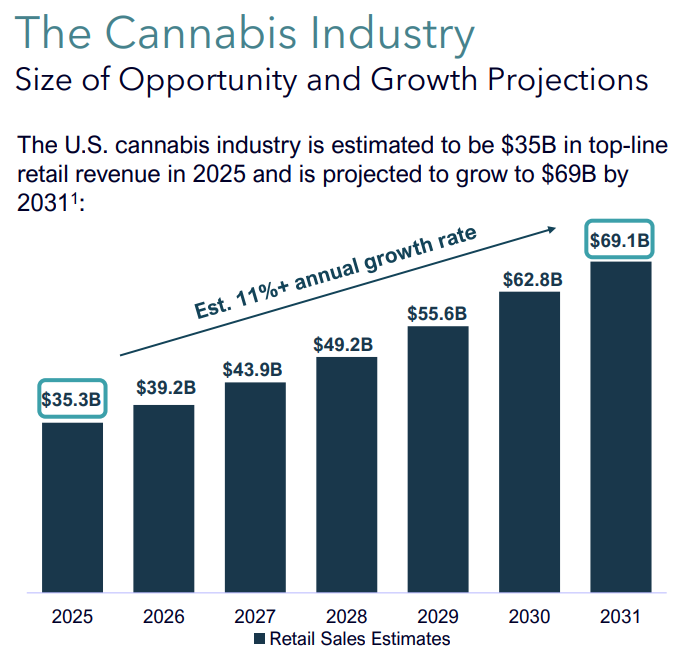
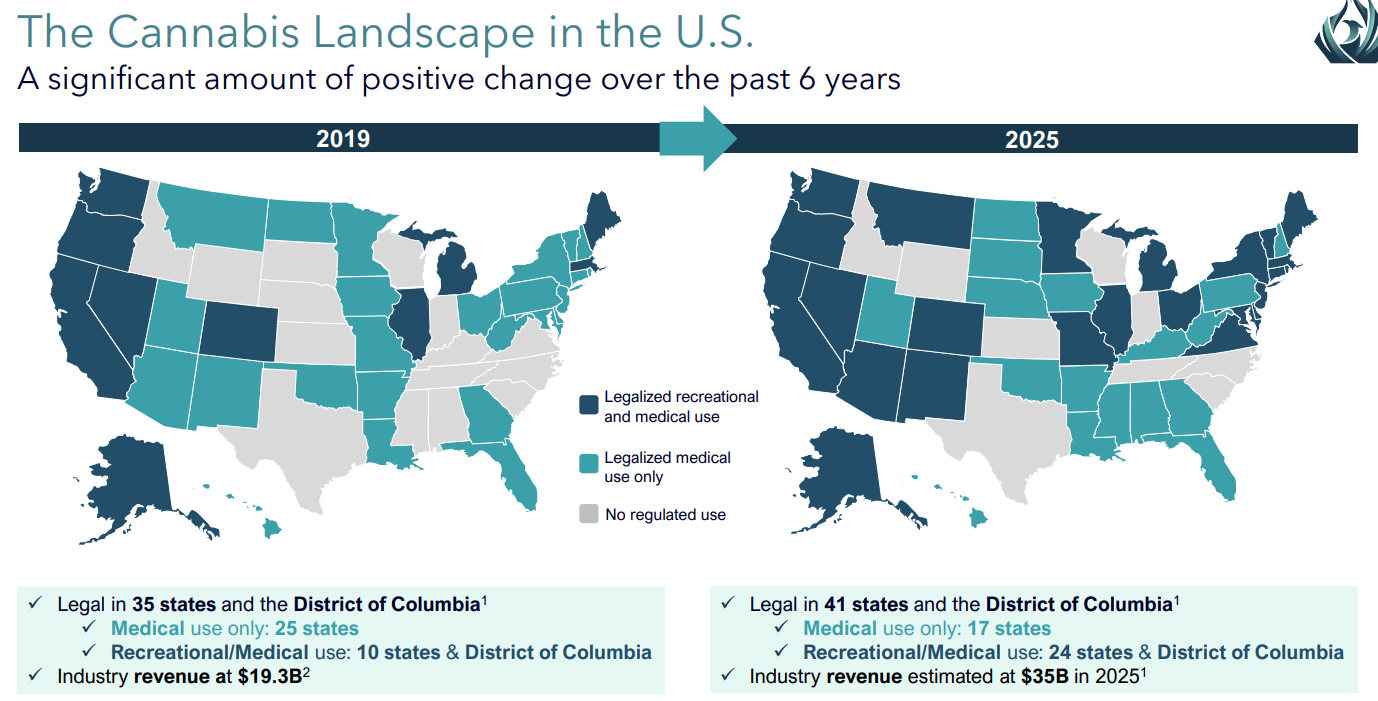
Recent data projects the US cannabis industry will grow at a Compound Annual Growth Rate (CAGR) of 11% through 2031. This trajectory puts the industry on track to reach a staggering valuation of $69.1 billion. Yet, despite this growth, the market remains in its infancy. With recreational use legal in only 24 states so far, the runway for expansion is massive as more jurisdictions inevitably come online.
For investors, however, this “Green Rush” has been a minefield. Buying equity in cannabis operators has been a rollercoaster of volatility, regulatory headaches, and compressed margins.
But there is a “backdoor” into this trade. Instead of betting on who sells the most product, the smartest money is betting on the infrastructure. Specifically, they are backing the senior lenders financing this explosive growth.
This stock allows you to collect a 12% dividend on invested capital.
$1,000 invested = $120 in annual dividend income.
The Solution: Being the Banker, Not the Farmer
While the operators fight for market share, one specialized lender has been cornering the market on capital. They are securing a senior position in the debt stack and passing the profits on to shareholders in the form of a massive 12.7% yield.
👉 That lender is Chicago Atlantic BDC LIEN 0.00%↑
LIEN operates on a simple premise. Capital is scarce in the cannabis sector due to federal regulations. This scarcity allows LIEN to command premium rates on its loans while securing them with significant collateral. As the industry races toward that $69 billion valuation, these operators need cash to expand, and LIEN is the one providing it.
What Is A Business Development Company?
Before diving into the specific opportunity, it is critical to understand the vehicle we are using: the Business Development Company (BDC).
Think of a BDC as a private equity fund for the public markets. Congress created BDCs to stimulate the economy by providing capital to small and medium-sized US businesses that traditional banks often ignore.
How the Model Works:
They Lend, You Earn: A BDC raises money from investors (like you) and lends it to growing companies.
The “Pass-Through” Loophole: Unlike normal corporations that pay 21% corporate tax, BDCs pay zero corporate tax—as long as they distribute at least 90% of their taxable income to shareholders. This is why BDC yields are famously high.
Where LIEN Fits In: Chicago Atlantic BDC (LIEN) is the specialized “banker” for the cannabis industry. Because cannabis is federally illegal, major banks (like Chase or Wells Fargo) cannot lend to these companies. This creates a “capital vacuum.” LIEN steps into this vacuum and offers loans at premium interest rates. But unlike a venture capitalist who prays for a moonshot exit, LIEN acts as a strict lender:
Senior Secured Debt: They take the “top” position in the capital stack. If a borrower goes bust, LIEN gets paid back first, often by seizing the collateral (real estate, equipment, or licenses).
Floating Rate Loans: Their loans are not fixed; the interest rate floats with the market, protecting them (and you) from inflation.
In short: LIEN collects high-interest payments from cannabis operators desperate for cash, and then passes that cash directly to you every quarter.
Capitalizing on the Demand: A Deal a Week
In an economic environment where many lenders are pulling back, LIEN is stepping on the gas.
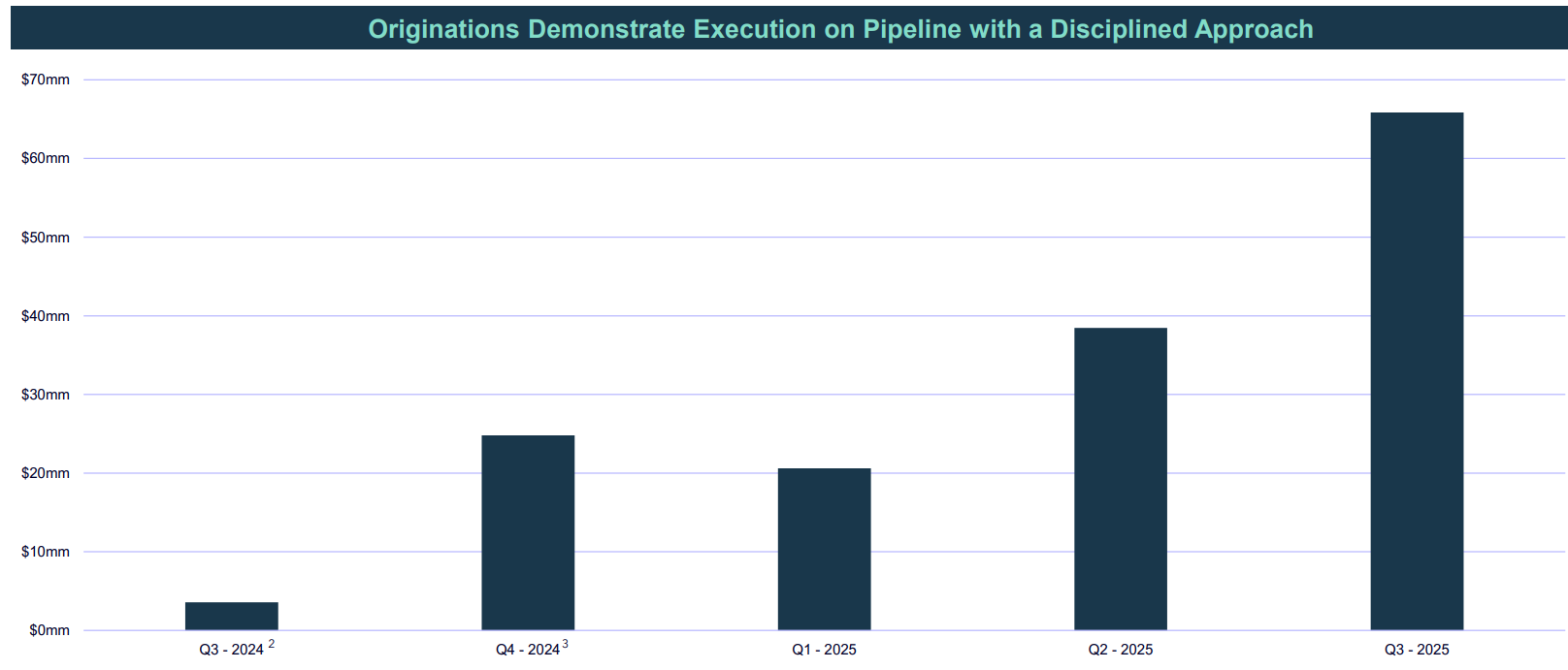
In the third quarter alone, the company allocated $66.7 million across 13 new investments. That is a pace of roughly one new deal every single week. This isn’t just growth for growth’s sake. Seven of those deals were with brand-new borrowers, proving that the demand for LIEN’s capital is expanding alongside the broader industry.
The Income Thesis: 124% Coverage
The primary reason to own LIEN is the income, and the metrics here are exceptionally strong compared to the broader Business Development Company (BDC) sector.
Dividend Yield: ~12.7%
Dividend Coverage: 124%
Net Investment Income: $0.42 per share vs. a $0.34 dividend
👉 Upgrade to a paid membership with a limited time discount for the holidays!
👉 With the holidays coming up, consider gifting a subscription!
While other high-yield stocks are barely covering their payouts, LIEN is generating 24% more cash than it needs to fund its dividend. This surplus provides a crucial buffer to ensure that the double-digit yield is sustainable even if market conditions tighten.
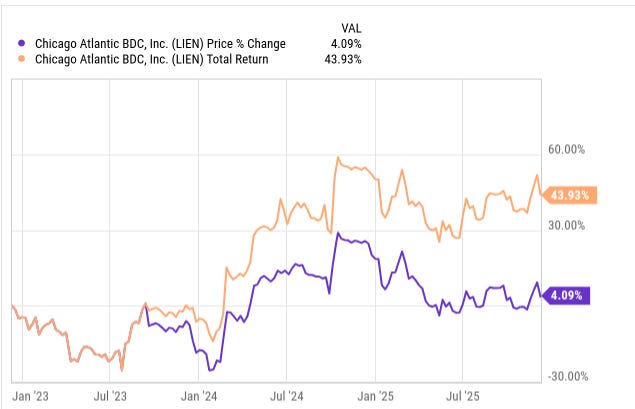
In the last three shares, the share price hasn’t moved much. However, the total return (which includes all dividend paid) is now approaching 44%! Not bad for a three year period.
Resilience in a Shifting Rate Environment
One of the biggest questions for 2026 is interest rates. Typically, when rates fall, BDC earnings fall. However, LIEN is uniquely positioned to capture the industry’s growth regardless of Fed policy.
Approximately 40% of the portfolio is protected by contractual interest rate “floors,” ensuring that income remains high even if benchmark rates drop. Furthermore, to mitigate sector-specific risks, LIEN has diversified 37% of its non-cannabis portfolio into Finance and Insurance borrowers.
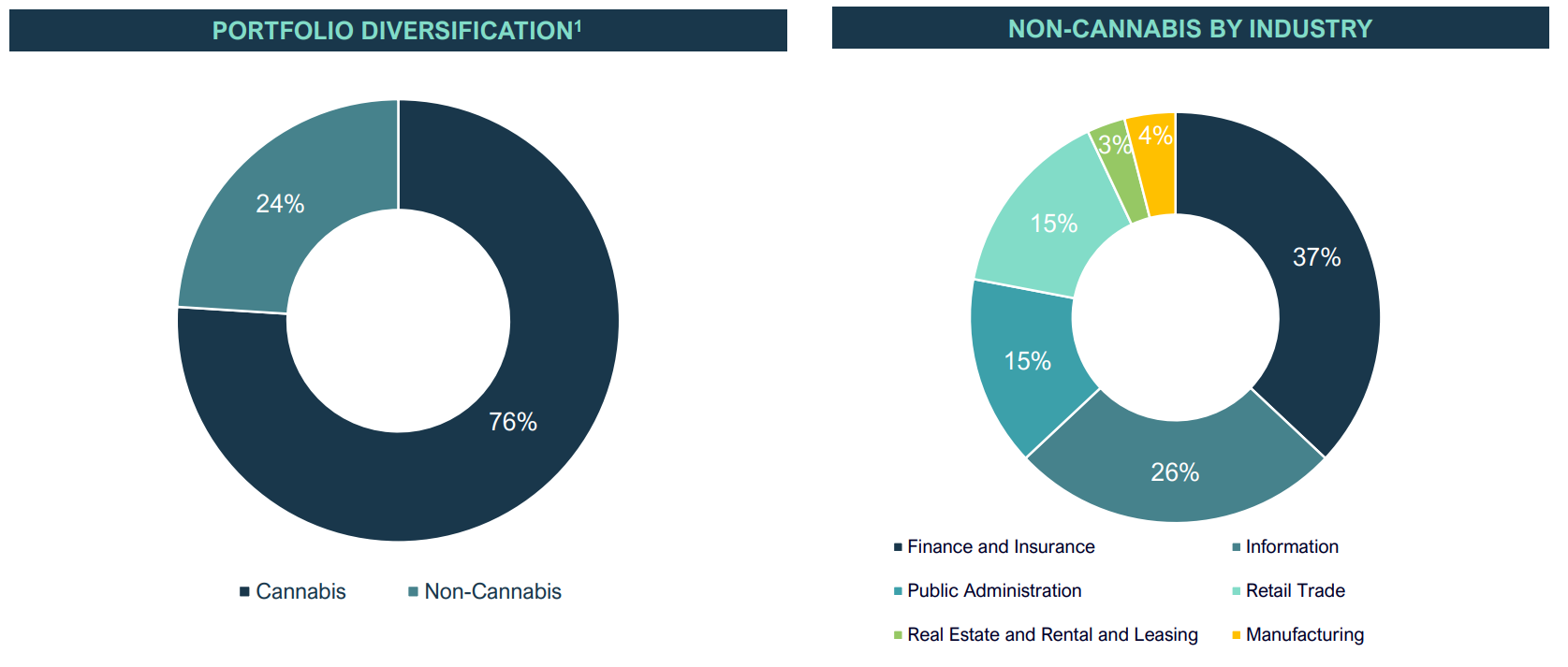
The result? While peers have seen their Net Asset Value (NAV) erode, LIEN’s NAV has remained resilient. It ticked up to $13.27 per share in the most recent quarter.
The Entry Point: Buying at a Discount
A unique aspect of BDCs is that the share price can trade at a difference from the underlying value of its assets. This disconnect can be used to our advantage. Despite the growth potential and the safe yield, the market has mispriced this asset. LIEN is currently trading at a ~19.8% discount to NAV.
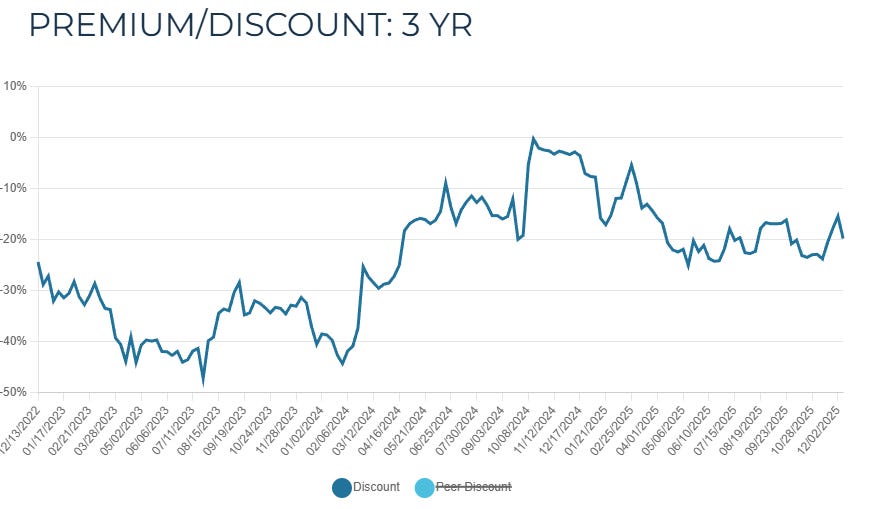
This means you are effectively buying a dollar’s worth of high-quality, senior-secured loans for roughly 80 cents. With zero investments on non-accrual status (meaning 100% of borrowers are paying their bills), this discount appears to be a market inefficiency rather than a reflection of credit quality.
Risks to Watch
The path to $69 billion won’t be a straight line. Investors should monitor two specific areas:
PIK Income: Payment-in-Kind interest, where borrowers pay with more debt rather than cash, rose to $1.7 million last quarter. While manageable, we want to see borrowers paying in cash.
Taxation: As with all BDCs, dividends are taxed as ordinary income.
Final Verdict
If you believe in the long-term growth of the US cannabis industry but want to avoid the volatility of pot stocks, LIEN offers the perfect middle ground. It allows you to act as the “house” by collecting steady, double-digit rent on the industry’s expansion.
With a 124% dividend coverage and a massive valuation discount, LIEN is a solid place to collet a 12% dividend yield.
3 Undervalued Dividend Stocks For 2026, According To Yieldly

Most investors think you have to choose: you either get High Income or you get Market-Beating Growth.