

I posted this tweet several days ago and it got me think about the way dividends have helped to shift some of my life perspectives about time.
Let’s break it down for a second. Gas at Costco was about $3.39 per gallon, while the station down the street was $3.59. That’s a twenty-cent difference. For a typical fifteen-gallon fill-up, you’re saving around three dollars. Yet people were sitting there for twenty to thirty minutes, to save the equivalent of six dollars an hour.
What a waste of time.
Everyone likes a deal, and I understand that. But what’s wild is how easily we forget to value our time, as if it’s somehow free just because it doesn’t show up as a line item on a credit card statement. They’ll spend 5 hours researching the best refrigerator but won’t spent 30 minutes learning the basics of the stock market.
There needs to be rewiring of the brain. It’s not that people are irrational. It’s that most have never been taught to think in terms of yield. When you start investing, especially in income-producing assets, your brain begins to rewire itself. You stop thinking only in terms of saving money and start thinking about what that time could earn instead.
How Dividends Rewired My Thinking
When my first dividend payment hit my account, it was only a few dollars. It wasn’t life-changing, not even close. But it felt different from any paycheck I’d ever earned. I didn’t exchange time, labor, or focus for it. It just showed up.
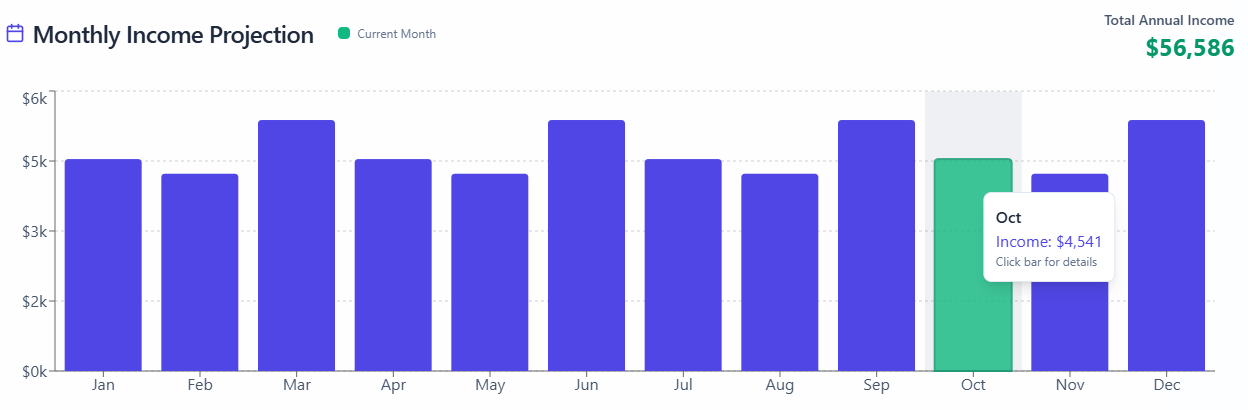
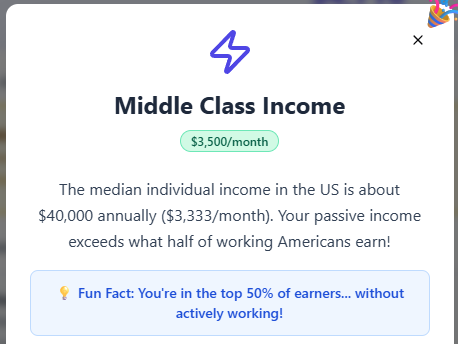
According to the Yieldly Dashboard, I am projected to earn over $56,000 in dividends. Most of us grow up being told that income is tied to effort; you have to show up, grind, and trade time for money. But dividends break that rule.
👉 They introduce a new equation: money creates more money, even while you sleep.
Once you experience that, it’s almost impossible to go back to thinking like everyone else. You start valuing your time the way an investor values capital. You stop asking, “How can I save a few dollars?” and start asking, “How can I buy back more of my time?”
Every dollar that flows into my account passively represents freedom.
It’s another minute I don’t have to sell.
Another errand I don’t have to run.
Another project I can say no to. It’s tangible proof that ownership is more powerful than effort.
Dividends turned me into an optimizer with life. I stopped chasing discounts and started chasing leverage. I’d rather pay for convenience if it lets me focus on creating something more valuable. I’d rather spend on quality if it saves me time and mental energy down the road. When your portfolio starts sending you income every week or month, you realize something profound: you don’t just want more money. You want fewer obligations. You want your days to belong to you.
The Shift From Scarcity to Abundance
When you stop trading time for money, everything changes. Most people live reactively, always trying to protect what they already have. They spend hours chasing small discounts, hesitating over decisions, and avoiding risk because they fear losing ground. That mindset is scarcity. It keeps people trapped in small calculations and small rewards.
Wealth stops being about preservation and becomes about creation. And that shift leads to something powerful: the confidence to take smart, calculated risks.
People with a scarcity mindset avoid risk entirely. People who think abundantly understand that controlled risk is the foundation of growth. The richest people in the world did not get there by avoiding leverage. They used it intelligently and strategically.
👉 Examples include:
Elon Musk, who borrowed against his Tesla shares to fund new ventures.
Jeff Bezos, who used leverage to build Amazon long before it became profitable.
Warren Buffett, who runs Berkshire Hathaway with billions in long-term leverage managed conservatively and efficiently.
They do not see leverage as dangerous. They see it as a tool.
The same logic applies to investing. In my own portfolio, I use margin to buy stocks that pay high dividends. On paper, that means borrowing money. In practice, it means using borrowed capital to generate more income than the cost of that debt.
Here is the math behind it:
If my margin interest rate is around eleven percent
And my portfolio yield is closer to forty-five percent through covered-call ETFs such as WPAY 0.00%↑ or QDTY 0.00%↑
Then my income far outpaces the borrowing cost
How I Use Margin Safely to Increase My Dividend Income

Margin is money you borrow from your brokerage firm to invest. You are borrowing money and using your stocks as collateral.
The spread becomes profit. The dividends pay down the margin while the principal continues compounding. That is not gambling. It is structured, disciplined growth.
Leverage, when used properly, teaches discipline. It forces you to think like an owner instead of a consumer. It pushes you to make decisions intentionally because poor choices have real consequences. It also rewards patience. Smart ideas take time to mature, and leveraged capital benefits those who can wait.
The wealthy are not fearless because they have money. They have money because they learned to think beyond fear.
Dividends taught me that the goal is not to avoid risk but to control it, to use it intentionally, just like time itself, as a lever for freedom.
👉 Upgrade to a paid subscription to unlock the full access to all of my high-yield income picks.
If you are ready to take these principles and build a real plan for your finances, I have two ways to help.
My Book — The Dividend Income Blueprint
This is my step-by-step guide for building a portfolio that pays you consistent monthly income for the rest of your life. It walks you through exactly how to find, buy, and manage income-producing assets so you can create financial freedom without gambling or guessing. Want to get a well-rounded idea of where to start your investing journey? I have you covered here as well!
One-on-One Consulting
If you want personal guidance tailored to your situation, I offer private consulting sessions where we map out your income goals, investment strategy, and the exact steps you can take right now to start building wealth.

love the mindset here