

Picture a finance team that sets up an AI agent on Tuesday afternoon to reconcile invoices. By Wednesday morning that agent has pulled data from the warehouse thousands of times, rechecked its own work, and handed pieces of the job to two other agents, and nobody on the team was awake for any of it. Every one of those steps ran on cloud software that charges by usage.
That’s the shift I care about as an investor. For twenty years software got paid per seat, so revenue grew as fast as companies hired.
Agents don’t need seats, and the companies that bill by the query, the gigabyte or the compute hour get paid on every step they take. I own a weekly paying fund whose second largest position is one of the cleanest examples of that model, and it paid me $194 in September alone.
👉 Upgrade Your Subscription for $0.82 a day and get every buy alert first, plus the funds paying my bills.
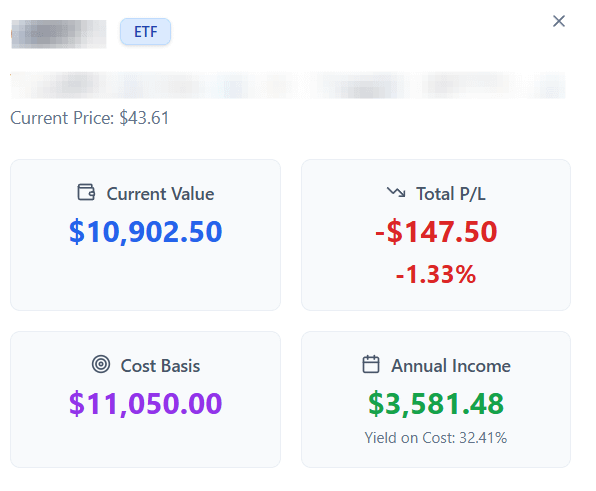
This ETF is currently estimated to generate me $3,500 in annual dividend income. As the software and technology market faces more volatility, I suspect that this fund will continue to harness that uncertainty and reward me with weekly dividends.
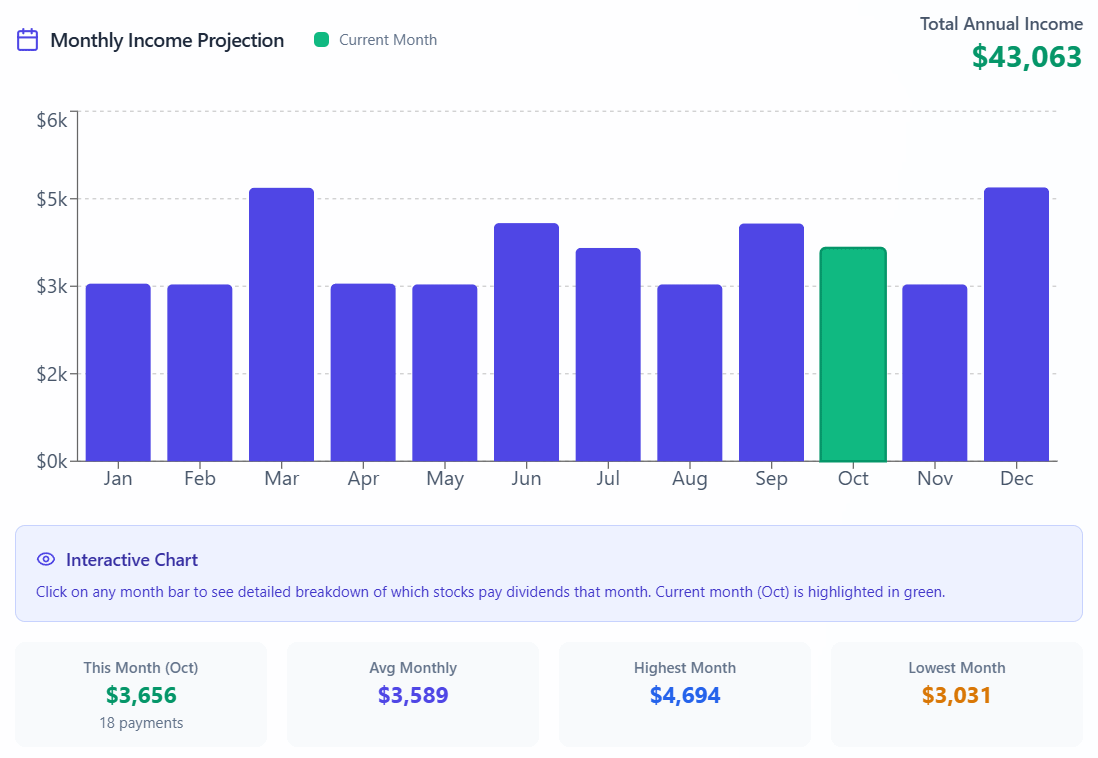
The portfolio’s estimated annual dividend income has now risen above $43,000.
The Meter Doesn’t Stop At 5PM
The pool of money underneath all of this is growing faster than it has in almost a decade. Companies spent $143.4 billion on cloud infrastructure in the second quarter, up 43% from a year earlier, according to Synergy Research Group. That was the 11th quarter in a row where the growth rate itself went UP, and the market doubled in size over that stretch.
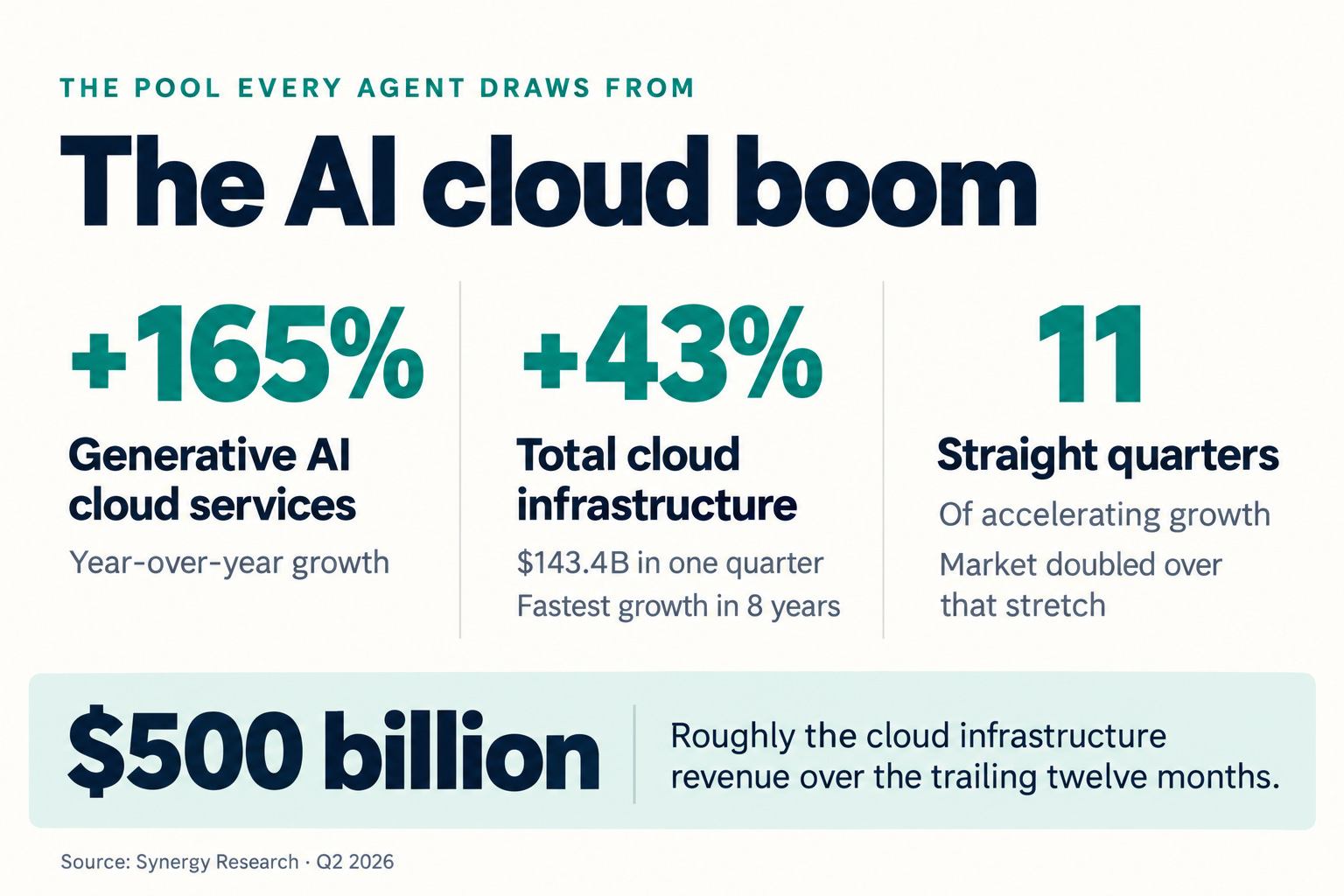
The 165% number is the one to focus on. Generative AI cloud services are growing almost four times faster than the cloud market as a whole, and that’s the category where agents live. A person asks one question, and behind it the agent queries a database, checks the answer, retries what failed and writes the result somewhere, so a single request turns into a stack of billable events.
Seat-based software can’t capture that. A company with 500 employees pays for 500 seats whether those people run ten agents or ten thousand. Usage-based software gets paid on the ten thousand, which is why I think the growth in this market is heading to the companies holding the meter rather than the ones counting heads.
Snowflake Is Where The Bill Shows Up First
Snowflake SNOW 0.00%↑ runs the data warehouse a lot of these agents read from and write to, and it charges for the compute each query uses. Its fiscal second quarter is the clearest proof I’ve seen that agent usage is turning into revenue. Product revenue hit $1.49 billion, up 37%, the third straight quarter of faster growth, per the company’s Q2 results.
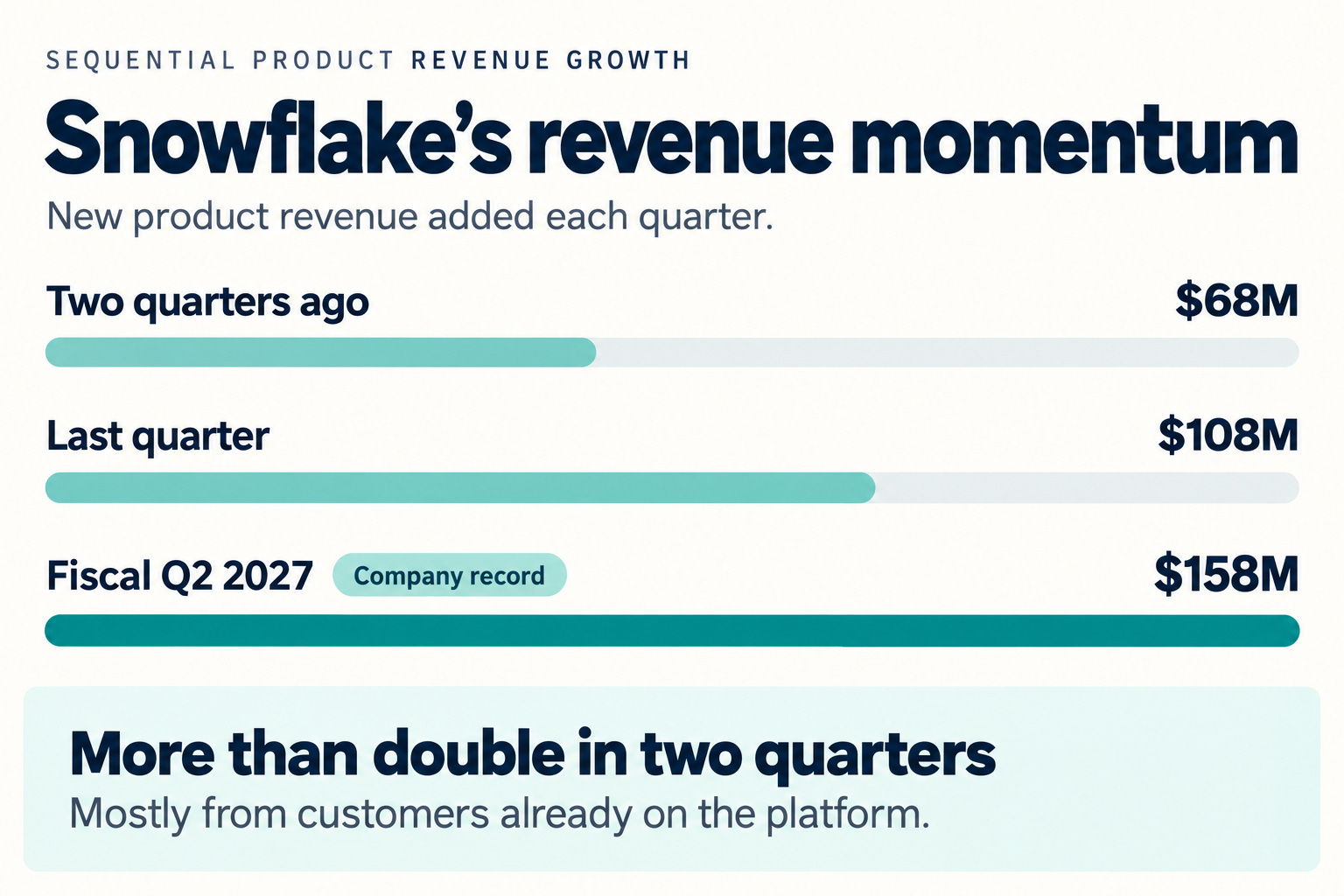
Look at how the new dollars stacked up. Snowflake added $68 million of product revenue two quarters ago, $108 million last quarter and $158 million this quarter, and net revenue retention rose to 126% from 124%, the first sequential improvement in more than two years. Existing customers are running more work through the platform every quarter, and the bill rises with them.
Management raised its full year product revenue guide to $6.07 billion from $5.84 billion, lifting expected growth from 31% to 36%. The number of customers spending over $1 million a year climbed to 828, and 65 now spend more than $10 million. Those are enterprises running production workloads at scale.
What I’m Watching Through 2027
Growth like this doesn’t move in a straight line, so here are the specific checkpoints that tell me whether the usage story keeps compounding, with the number attached to each:
