

For the past two years, investors have been living through one of the most aggressive rate hiking cycles over the last decade. The cost of borrowing climbed, yields on savings accounts spiked, and suddenly it felt like every dollar had to work twice as hard just to keep up. Most people know how interest rates impact the cost of mortgages and car loans, but how it affects your investments may not be as known.
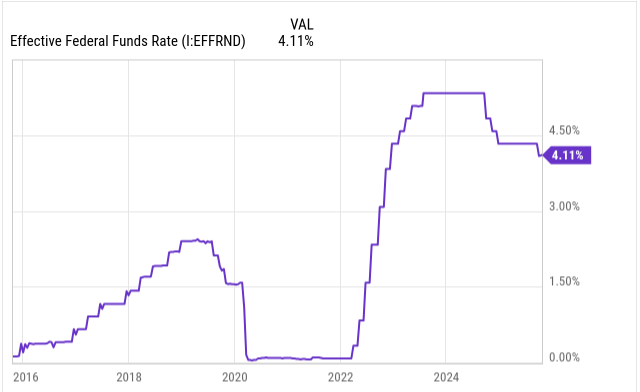
👉 Below is the history of the federal funds rate. In plain English, the cost of debt sits near the most expensive end of its range over a ten-year span.
The federal funds rate impacts things like:
Credit card debt: Higher rates mean balances accumulate interest faster, making it harder to pay down revolving debt.
Mortgages: Monthly payments rise as mortgage rates climb, reducing how much house people can afford and cooling housing demand.
Car loans: Auto financing becomes more expensive, which slows new car sales and pressures lenders’ profits.
Business borrowing: Companies face higher costs when issuing new debt or refinancing existing loans, which can reduce earnings and limit expansion.
Consumer spending: As households pay more interest on debt, they have less disposable income, which can slow broader economic growth.
Since reaching its peak, the Fed has begun cutting rates, with the most recent cut taking place in September. Now, things are beginning to shift. Inflation has cooled, and the Federal Reserve is preparing to move in the opposite direction, cutting rates to stimulate growth once again. While most people will focus on what that means for consumers, investors have something far more exciting to look forward to.
Lower interest rates make it cheaper for companies, funds, and even individual investors (that means you) to borrow money, and that extra breathing room often leads to stronger dividends, better fund performance, and new opportunities to grow recurring cash flow.
Lower Rates = Higher Dividend Spreads
When the Federal Reserve lowers interest rates, the cost of borrowing inside your brokerage account also drops. This means margin becomes cheaper to use.
Margin lets you borrow against your portfolio to buy more income-producing assets. When rates are high, the cost often wipes out any potential gain. But as rates fall, that math changes in your favor. However, I wouldn’t suggest using margin unless you have at least $50K - $100K in your account. There are specific rules that you should keep in place.
Here’s the simple math of the concept.
If you can borrow against your portfolio at a 9% interest rate.
You can invest that capital in a fund yielding 30%.
Keep the 21% difference as profit.
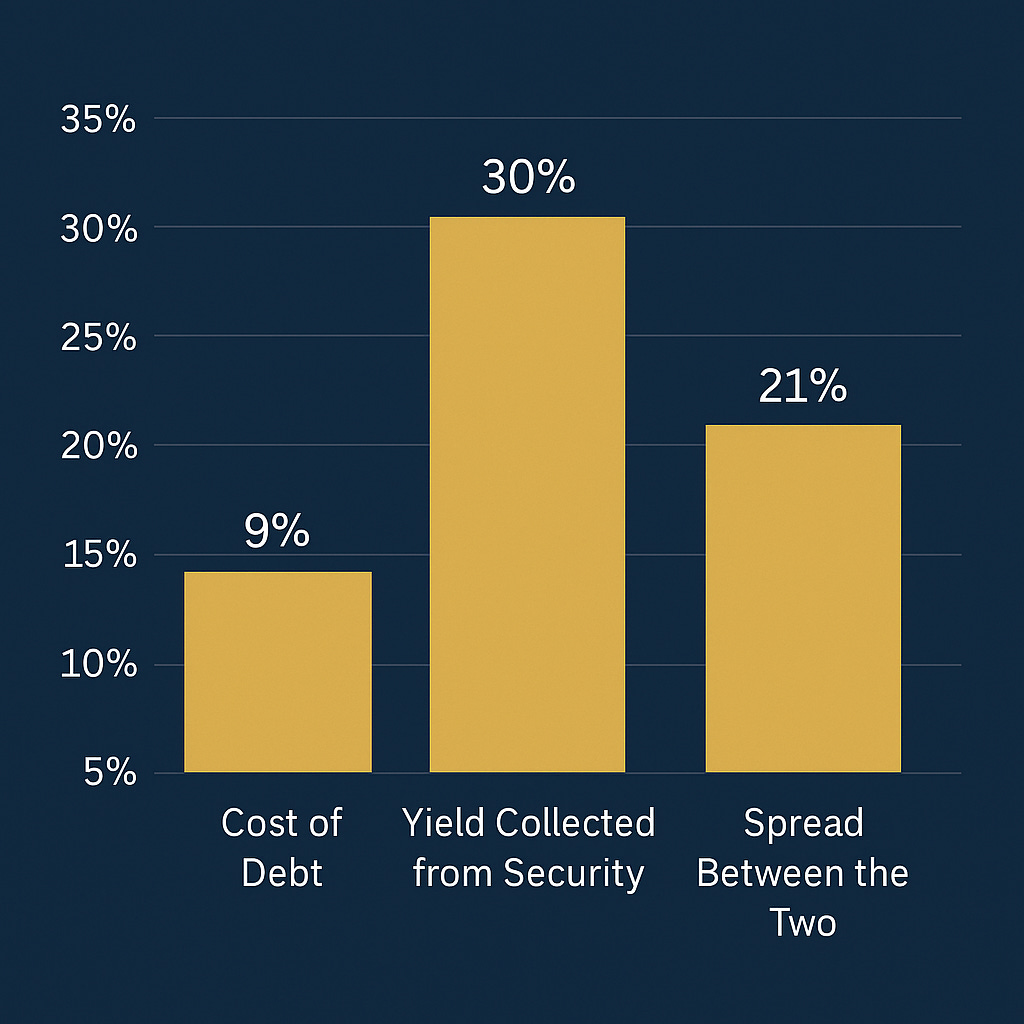
That spread can become an extra layer of income while your main portfolio continues to work in the background. This is how I am capable of generating thousands in dividends every single month.
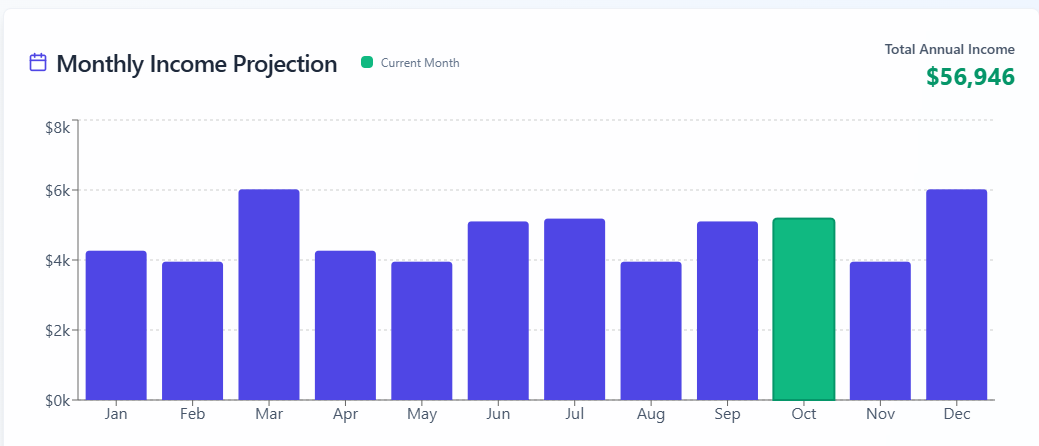
The key is moderation. Use margin conservatively and only with strong, high-yield funds that have reliable coverage. When rates come down, even small amounts of safe leverage can quietly boost your overall cash flow.
How I Plan To Benefit
Once the Federal Reserve starts cutting, prices on income-focused assets often rise quickly, and yields compress as more investors rush in. To stay ahead of that curve, focus on areas of the market that stand to benefit most from lower borrowing costs and steady demand for income.
Here are a few stocks to watch closely, as well as some positions I will be adding to. These are all positions that I feel comfortable buying and holding for the long-term.
Here’s the key:
👉 As interest rates trend down, the cost of our margin debt will decrease. This improves our spread.
Ares Capital - ARCC 0.00%↑
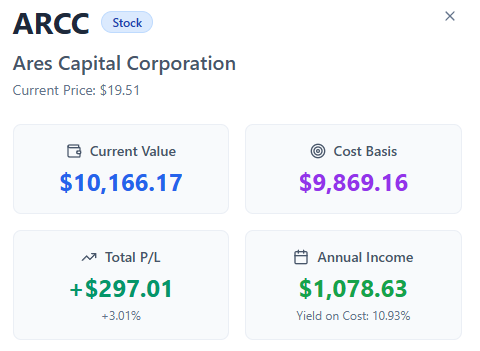
Ares Capital is my largest BDC position. ARCC offers a 9.6% dividend yield and trades at an attractive valuation. ARCC essentially lends out capital to a diverse portfolio of borrowers. Instead of paying interest on debt, ARCC allows you to be on the receiving end of it.
Lower rates reduce their own financing costs and help borrowers manage debt more easily, improving dividend coverage.
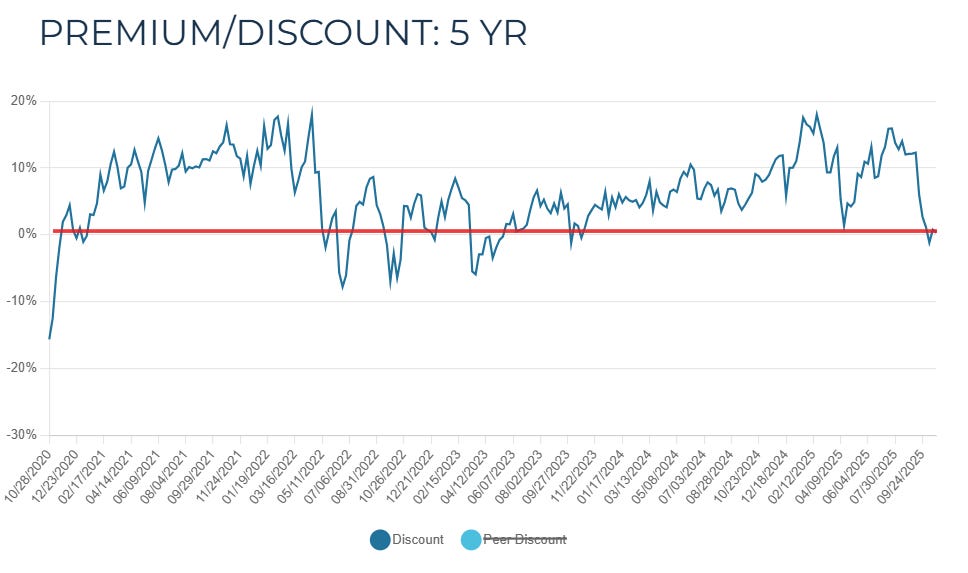
As indicated by the red line on the graph below, ARCC currently trades at one of the more attractive price to NAV valuations over the last five years. A lower interest rate means that
👉 Get the full list by becoming a paid subscriber!
Not ready to upgrade? That’s fine! When you become a free subscriber today, you will gain access to the following:
✅50+ Monthly Dividend Stocks provides a list of tickers that send income to your account every single month.
✅ETFs for Beginners breaks down income focused funds that simplify the investing process.
✅Dividend Legends highlights companies with long histories of increasing dividends through every type of market.
These are tools that will help you get your dividend journey started!
