

We’ve recently seen a spike in new subscribers so I wanted to start 2026 off by laying the framework that new investors can implement. If you’re a new investor, it can be confusing trying to build your dividend portfolio. There are thousands of stocks and ETFs, so how do you choose the right structure? After doing hundreds coaching calls, I noticed a trend with the portfolios I analyze. They typically fall into two different ends of the spectrum:
A risky portfolio that is aggressively aligned with growth stocks. This can lead to massive losses during a downturn.
A too conservative portfolio, leading to zero growth over a decade.
To kick off 2026, I want to share the “Three-Bucket Framework” that you can implement asap!
This is the exact structure I would use if I were starting from scratch today with $1,000. It ensures you aren’t just collecting dividends, but actually building wealth that beats inflation. I’ve successfully implemented a dividend growth structure over the last few years.
Bucket 1: The Foundation (Safety & Stability) 🛡️
Role: Protect capital and provide reliable, growing payouts.
Target Allocation: ~50%
This is the bedrock of your portfolio. These assets are the boring, reliable heavyweights that keep your portfolio stable when the market gets volatile. The idea here is to stick with a high quality ETF that can track the market indexes.
👉 Two popular funds are the following:
Vanguard Total Stock Market Index Fund ETF Shares VTI 0.00%↑: Quite literally tracks the entire stock market. This ETF gives you instant diversification across +3,500 companies.
SPDR S&P 500 ETF SPY 0.00%↑: Tracks the S&P 500 Index. You get exposure to 500 of the largest companies in the US.
Another approach is to allocate capital towards dividend legends. These are typically companies that have raised their dividends for 10, 20, or even 50+ years. They likely won’t double in price overnight, but they won’t go to zero either. When the broader market drops 20%, these might only drop 10%. They provide the peace of mind you need to sleep at night.
Top Examples:
Schwab US Dividend Equity ETF SCHD 0.00%↑: The gold standard for dividend growth.
Vanguard Dividend Appreciation VIG 0.00%↑: Focuses on companies with a history of aggressively raising payouts.
Blue Chip Stocks: Companies like Johnson & Johnson JNJ 0.00%↑, Microsoft MSFT 0.00%↑, Walmart WMT 0.00%↑, Costco COST 0.00%↑, or PepsiCo PEP 0.00%↑.
Why you need it: If your portfolio is 100% high-risk plays, you will panic sell during a correction. The “Foundation” keeps you invested.
Want a shortcut on your journey? You can get the dividend starter bundle so that you can skip the mistakes that I made.
👉 Here is what’s included:
✅ The Dividend Blueprint (ebook)
A step-by-step guide showing how I structure my portfolio, grow monthly cash flow, and reinvest for long-term income.✅ Monthly Dividend Map
50+ hand-picked tickers that pay monthly so you can ladder your income all year long.✅ Dividend Tracker (Google Sheet)
The exact spreadsheet I use to track yield, forward income, reinvestment, and portfolio growth.✅ Dividend Growth Legends: 50+ Stocks
50 stocks that have an established history of dividend increases.✅ List of ETFs for Beginners To Start With
Bucket 2: The Growth Engine (Capital Appreciation) 📈
Role: Grow your Net Worth and outpace inflation.
Target Allocation: ~35%
Many dividend investors completely ignore this bucket. They get obsessed with “Dividend Yield” (the cash payouts) and forget about “Total Return” (Stock Price + Dividend). It can be addicting trying to raise your passive income with dividends, but its crucial that you do not forget to align your portfolio with growth. Simply put, the majority of dividend focused companies grow a lot slower than growth companies.
A company like Target TGT 0.00%↑ (which pays dividends) will grow a lot slower than a company like Netflix NFLX 0.00%↑ (which does not pay a dividend).
Adding these growth positions aligns us to see rapid wealth accumulation when done right. This is how I was able to achieve a > 80% return on Google GOOG 0.00%↑ and a >50% return on ASML Holdings ASML 0.00%↑ in less than 12 months.
I Issued 17 Buy Alerts in 2025. Here Are The Results (Hint: We Beat The S&P 500)

In the financial industry, transparency is rare.
These are companies that grow their earnings so fast that their share price can double or triple over a few years. This growth pulls your entire portfolio value upward.
The Goal: To ensure your portfolio’s value grows faster than the dollar loses value.
Top Examples:
Big Tech: Microsoft MSFT 0.00%↑, Visa V 0.00%↑, Nvidia NVDA 0.00%↑, Qualcomm QCOM 0.00%↑.
Broad Growth: An ETF that tracks the Nasdaq-100, such as the Invesco Nasdaq-100 ETF QQQM 0.00%↑.
Why you need it: A 5% dividend yield is useless if your principal investment drops by 5% over the course of 12 months. You need Growth to build actual wealth.
👉 Yieldly’s AI Stock Screener can help you identify these undervalued growth opportunities.
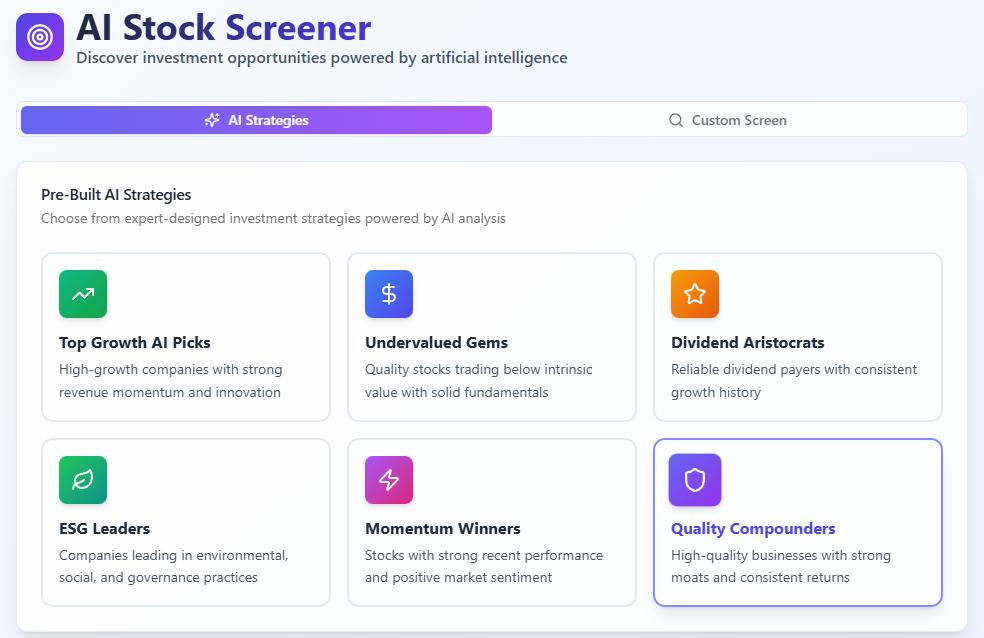
👉All paid subs automatically get access to the Yieldly Dashboard!
Bucket 3: The Income Accelerator (Cash Flow) 💰
Role: Generate immediate cash to reinvest.
Target Allocation: ~15%
This is the “High Yield” bucket. These assets are designed to do one thing: Print Cash.
This includes Covered Call ETFs, BDCs (Business Development Companies), or REITs. They often pay massive monthly dividends (10% - 50% yields). However, they typically offer little to no share price appreciation, and some may even slowly erode in value over time. These are the funds that allowed me to collect over $43k in dividends in 2025.