


The explosion of option income ETFs has created a gold rush for yield-hungry investors. With the promise of monthly payouts, sky high yields, and hands off management, these funds sound like the perfect solution for anyone trying to build passive income.
But here is the problem
Not all of these ETFs are created equally. Some are cash machines. Others are ticking time bombs.
Many investors jump in chasing the headline yield without understanding how these funds actually work. Under the surface, you will find a wide variety of strategies. Some funds hold real assets. Some track indexes. Some go all in on synthetic exposure. Each one comes with tradeoffs in yield, stability, and sustainability.
So I decided to break them down. One by one
In this post, I analyzed 10 of the most talked about option income ETFs. These include funds from YieldMax, Roundhill, REX FANG, Goldman Sachs, and JPMorgan. I ranked them by income potential, risk profile, and long term resilience.
This is not just about dividends. It is about what is driving them.
By the end of this post, you will know
Which ETFs hold real assets and which do not
Where the yield actually comes from
What risks most investors overlook
Which funds I trust enough to keep holding
How I would build a reliable income stream using the best ones
I was able to utilize these funds in a strategic way that helped me generate over $4,100 in dividend income for May. You can see that full report below. I publish all of my reports and list out what funds or stocks paid me.

May 2025 Dividend Report

When I graduated college, my first job paid me about $3,000 a month. I worked full-time, sat in traffic, juggled deadlines, and waited two weeks for each paycheck to hit.
Three Strategy Types You Need to Understand First
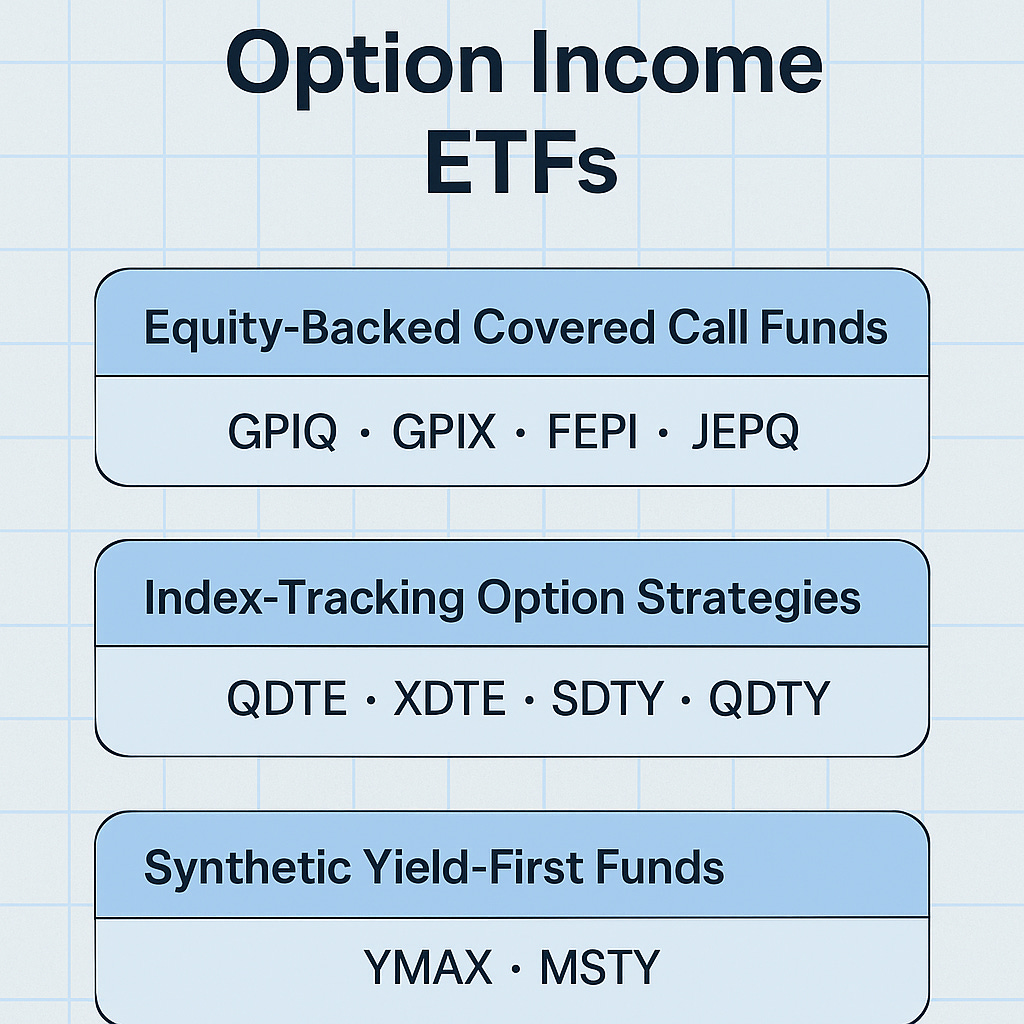
Before diving into each fund, it is important to understand that option income ETFs fall into three very different strategy buckets. Each has its own risk profile, payout mechanics, and behavior in different market conditions.
Some of these funds hold actual stocks. Others simply track indexes. And a few rely entirely on synthetic exposure. Knowing what strategy you are buying into is critical if you want your income stream to last.
📊 Tool: Track Your Progress
Want to keep track of what you're earning, how much your portfolio yields, and where to reinvest?
📥 Dividend Tracker Template – $5
Simple, powerful Google Sheet to track your holdings, income, yield-on-cost, reinvestment, and more.
📘 Full System: Go From $0 to $500/Month in Income
If you’re ready to build a scalable dividend income portfolio from scratch, with real structure, strategy, and support. You can start here:
🚀 The Dividend Income Blueprint – $25
My complete guide that shows how I built over $3,000/month in passive income using a three-layer dividend system, reinvestment strategy, and sustainable yield portfolio design.
Here is a breakdown of each strategy group and which funds fall under them.
Equity Backed Covered Call Funds
These ETFs hold the actual stocks they write options on. That means they generate income from both the options they sell and the dividends from the underlying companies. This tends to give them a more stable NAV, especially in sideways markets.
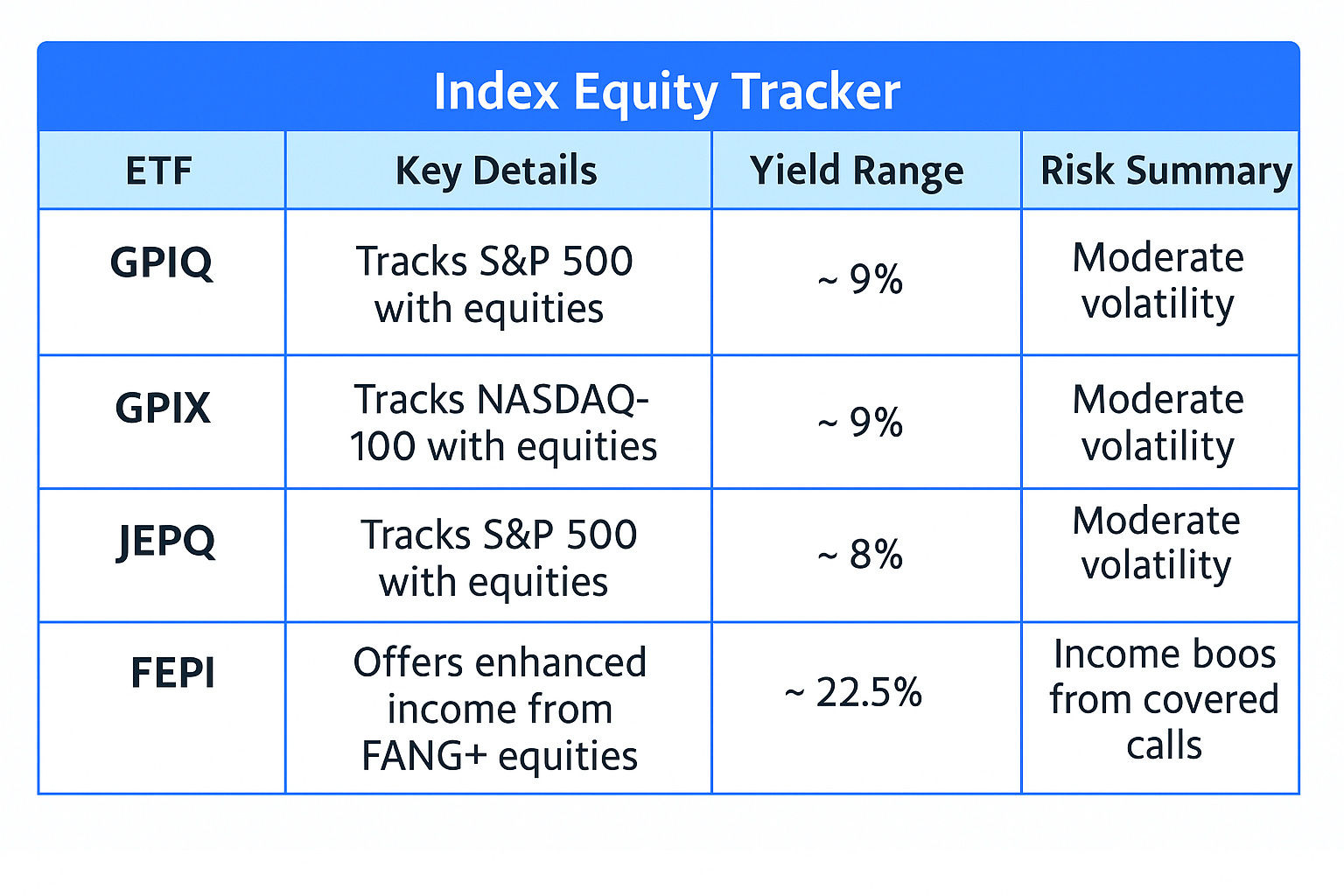
Funds in this category include GPIQ, GPIX, and FEPI. All three own a basket of high growth stocks and use covered call overlays to enhance their yield. Because they own real equities, they are more likely to participate in long term market appreciation. They may not offer the highest yield of the group, but they offer a better blend of growth and income with real asset backing.
Index Tracking Option Strategies
These ETFs do not own the stocks themselves. Instead, they track broad indexes like the Nasdaq or S&P and use derivatives to generate income based on that index performance. This approach allows for more diversified exposure with relatively lower volatility, but it also limits upside in strong bull markets.
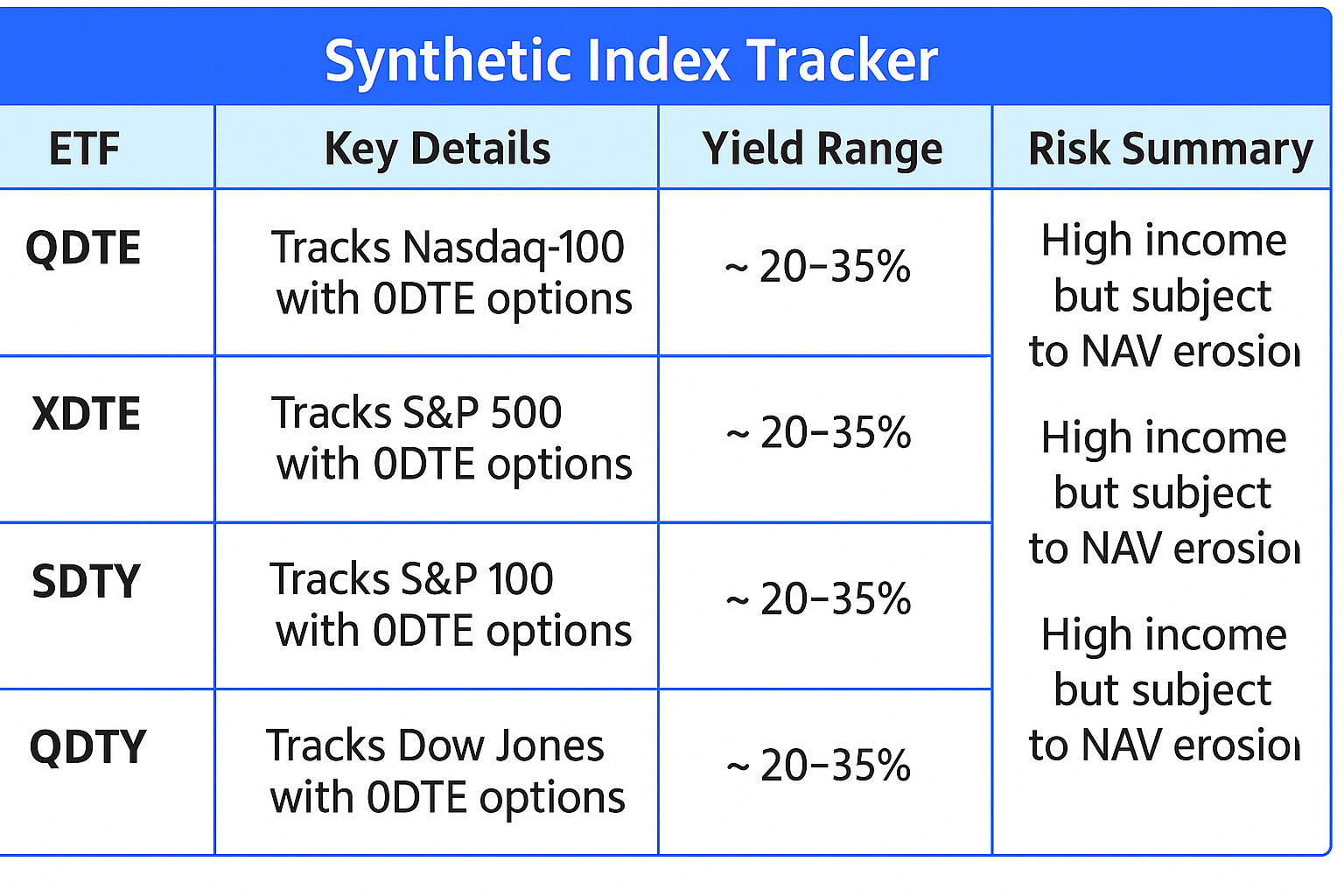
Funds in this group include QDTE, XDTE, SDTY, QDTY, and JEPQ. These funds appeal to investors who want consistent income tied to broader market trends. They tend to be less volatile and more diversified than single name strategies, but they may lag in periods of rapid market growth.
Synthetic Yield First Funds
This final group is all about maximizing yield. These ETFs use aggressive option overlays and synthetic exposure without holding any underlying equities. The goal is to generate extremely high income, sometimes reaching 30 percent or more annually. However, this comes with elevated risk, especially if volatility spikes or option premiums shrink.
YMAX and MSTY fall into this camp. They are designed to deliver very large distributions, but they do so by sacrificing long term NAV stability. These are best suited for investors who prioritize monthly income above all else and are comfortable with the possibility of capital erosion.
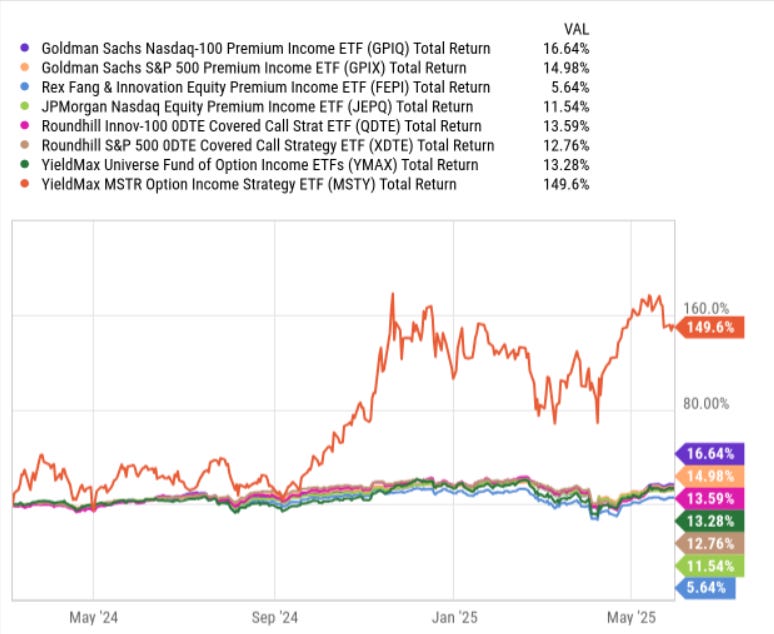
Before you continue reading on, I wanted to provide you with a breakdown of each of the respective total returns for the funds listed here. The returns are based on the last 13 month period.
1) GPIX – Goldman Sachs S&P 500 Premium Income ETF
Structure & Holdings
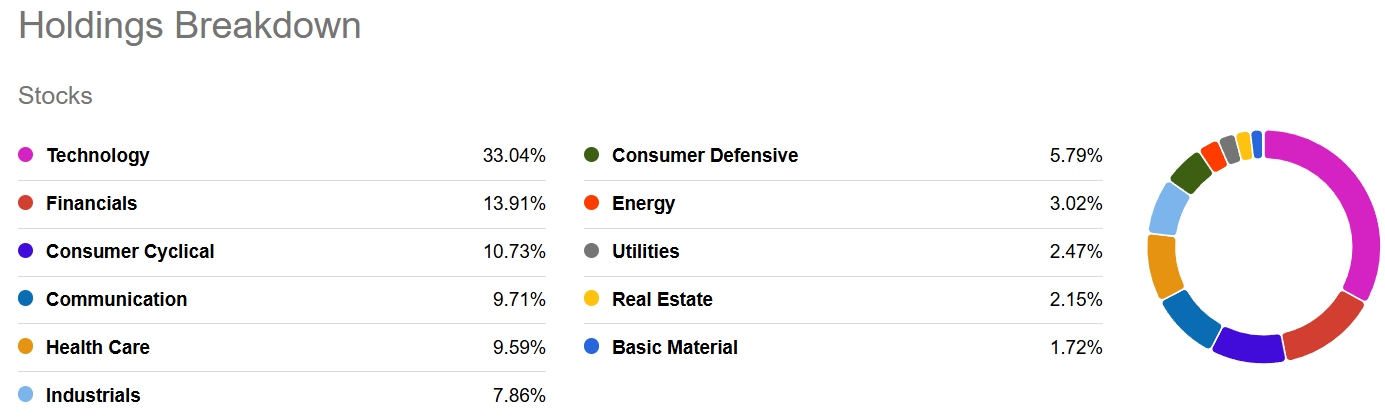
GPIQ holds shares of the S&P 500’s most dividend-resilient companies and layers on covered calls to generate enhanced monthly income. It is designed to provide exposure to high-quality large-cap names while boosting yield without excessive turnover. Since the fund owns the underlying stocks, you get full dividend participation and some capital appreciation in bull markets.
Income & Yield Profile
The dividend yield is competitive but not outrageous, typically falling in the 7 to 10 percent range. Unlike synthetic funds, this yield is partly supported by actual dividends from underlying holdings, which adds stability and tax efficiency. It’s a solid middle ground between traditional dividend ETFs and aggressive income strategies.
NAV Behavior & Risk
Because it holds equities, GPIQ’s NAV is more resilient in volatile markets. Covered call income offsets downside moderately but will limit upside in sharp rallies. Over time, this fund is more likely to deliver a balanced total return than an artificially inflated yield.
Who It’s For
This is ideal for buy-and-hold investors looking for elevated yield with much lower NAV decay. It works well in tax-advantaged accounts and can be used as a foundation for a retirement income portfolio.
2) GPIQ – Goldman Sachs Nasdaq 100 Premium Income ETF
Structure & Holdings
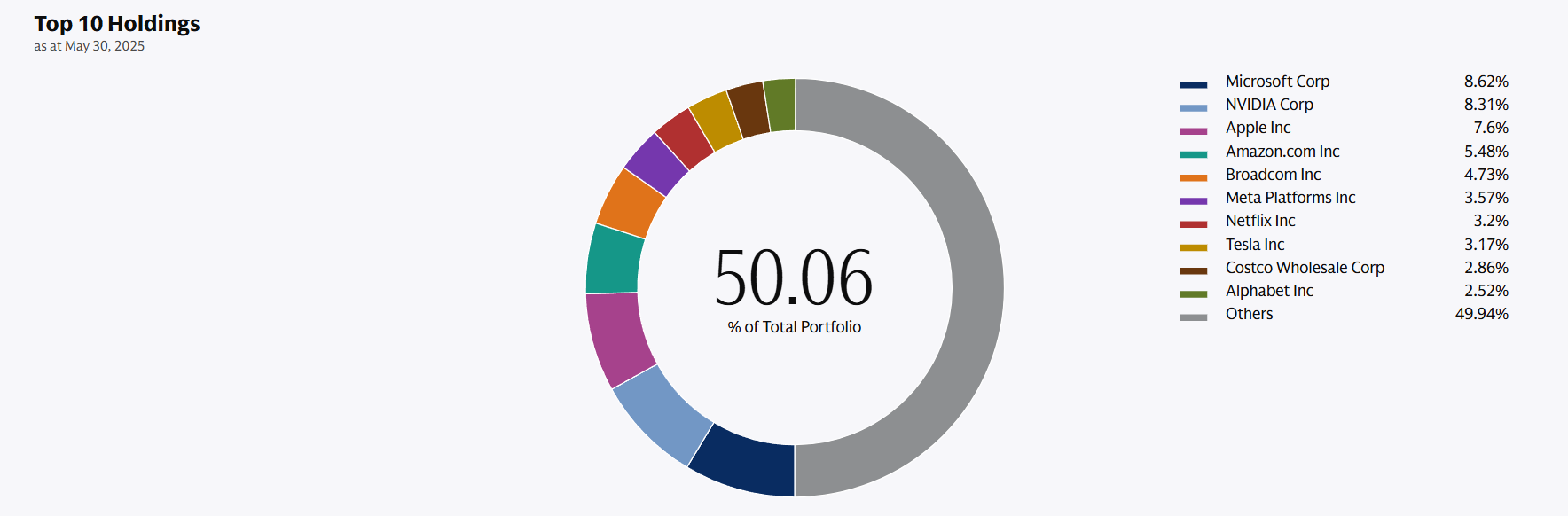
GPIX provides exposure to the Nasdaq 100’s tech-heavy growth companies while deploying covered calls for monthly income. It directly holds equities like Apple, Microsoft, and NVIDIA, giving it strong exposure to tech trends while dampening volatility through premium harvesting.
Income & Yield Profile
It yields slightly more than GPIQ, generally in the 8 to 11 percent range. Some of that income comes from dividends, but a good portion is generated by option premiums. Despite the higher yield, the fund avoids excessive distribution bloat.
NAV Behavior & Risk
Given its Nasdaq exposure, the fund will be more volatile than GPIQ, but less so than synthetics. Expect sharper NAV movement during tech drawdowns, but better rebound potential due to its equity holdings. Still, it avoids the dramatic erosion found in non-equity funds.
Who It’s For
Investors wanting income with long-term tech exposure will find GPIX compelling. It’s an effective hybrid — income-focused but with real upside potential. Works well in diversified portfolios needing growth and cash flow.
3) JEPQ – JPMorgan Nasdaq Equity Premium Income ETF
Structure & Holdings
JEPQ combines actively managed Nasdaq 100 equity exposure with an overlay of ELNs (equity-linked notes) that replicate call writing strategies. It physically holds stocks and allows for active rotation among positions, making it one of the most flexible covered call ETFs on the market.
Income & Yield Profile
Yields hover around 10 to 12 percent, with strong distribution consistency. JEPQ is known for delivering a high yield without completely sacrificing capital appreciation. Distributions come primarily from options income rather than dividends.
NAV Behavior & Risk
NAV decay is minimal over time compared to synthetics. The fund's active management helps it avoid concentration risks, and it typically maintains better NAV stability during both bull and bear cycles.
Who It’s For
JEPQ is arguably the most balanced fund in this group. It’s suited for long-term income investors who still want upside capture and smart risk management. Many use it as a core income engine in retirement portfolios or passive income strategies
4) FEPI – REX FANG Enhanced Income ETF
Structure & Holdings
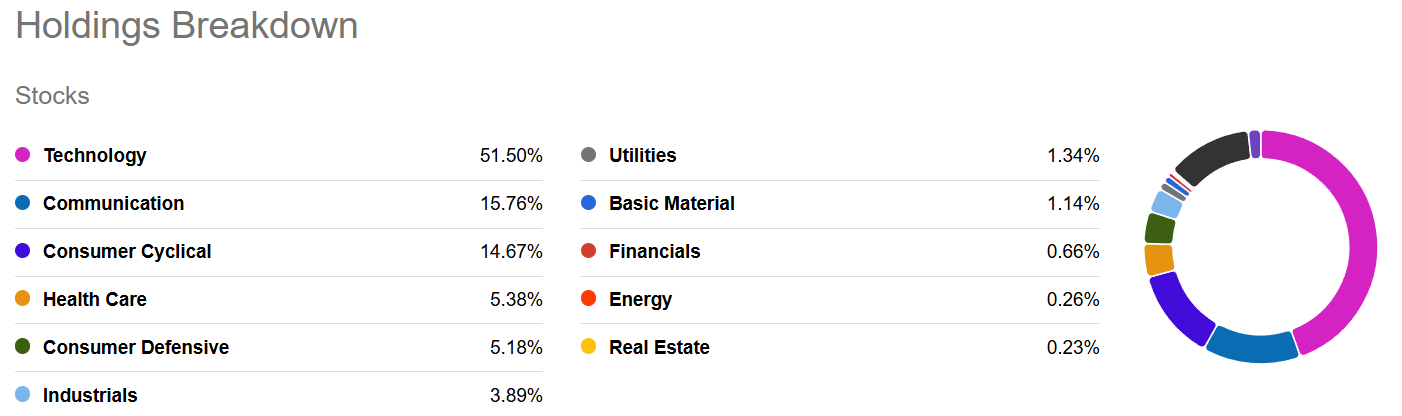
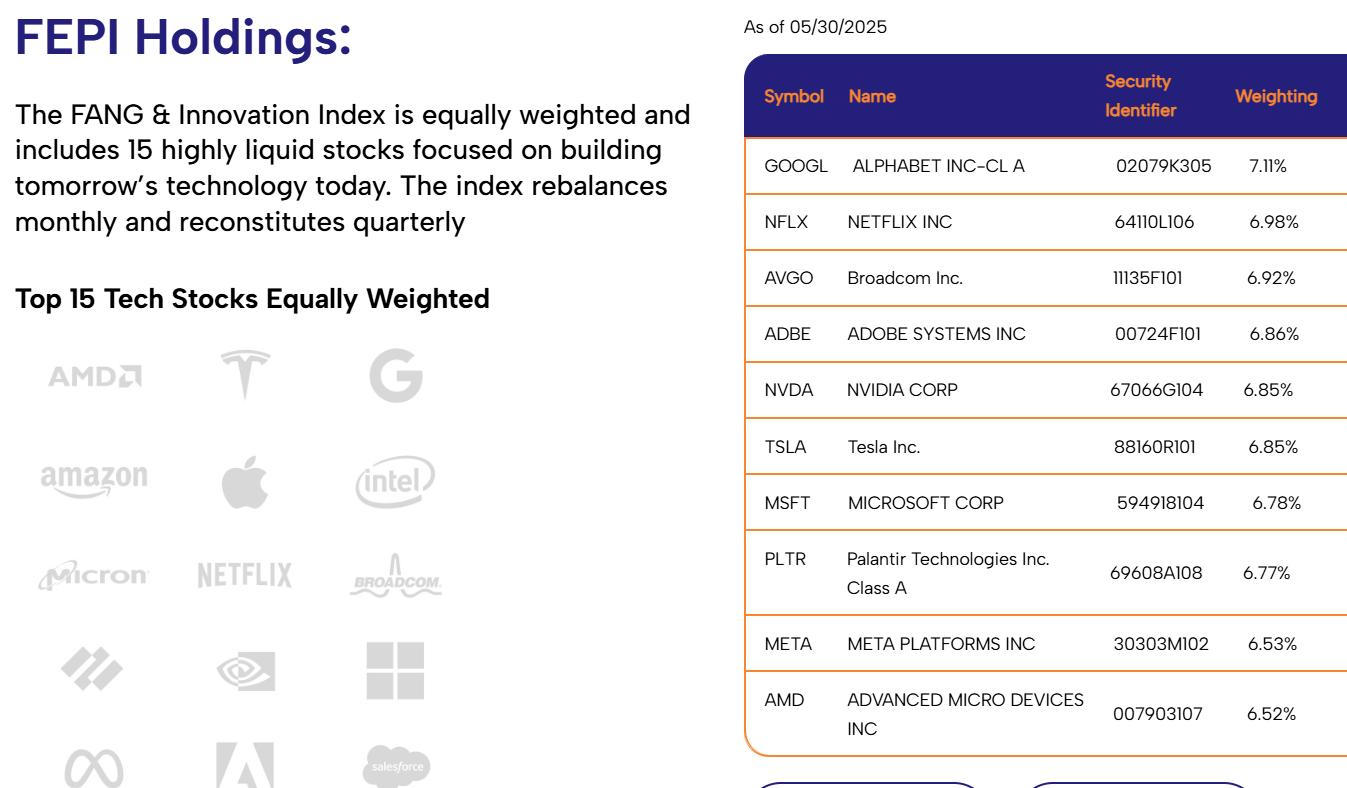
FEPI holds stocks from the FANG+ index — high-growth tech and internet companies — and writes options on them to boost yield. Unlike many YieldMax funds, FEPI owns the actual stocks and does not rely on synthetic exposure, making it a more structurally sound choice for growth-minded income investors.
Income & Yield Profile
One of the higher-yielding equity-backed ETFs on this list, FEPI often pays in the 18 to 25 percent range. This aggressive yield is possible because the underlying holdings are volatile and option premiums are rich. A portion of income still comes from stock dividends, but options drive the bulk of the yield.
NAV Behavior & Risk
Volatility is expected due to the growth nature of the FANG+ stocks, but the equity base helps prevent runaway NAV erosion. During tech selloffs, drawdowns can be sharp, but the fund tends to recover better than synthetic peers because the equities are real and rebound with the market.
Who It’s For
FEPI is a great option for those who want aggressive income from a tech-heavy portfolio while avoiding synthetic risk. It’s ideal for investors with a moderate to high risk tolerance who want exposure to innovation while collecting oversized distributions.
5) QDTE – Roundhill 0DTE Innovation ETF
Structure & Strategy
QDTE uses a synthetic overlay strategy that tracks the Nasdaq 100 index using 0DTE options — contracts that expire the same day they are issued. This gives the fund hyper-targeted exposure to intraday volatility, which it harvests for income using advanced derivatives.
Income & Yield Profile
The yield is high and appealing, typically falling between 20 and 35 percent annually. Because this yield comes from daily option harvesting, it is not dependent on stock dividends. However, the payout can fluctuate depending on volatility.
NAV Behavior & Risk
The biggest downside is erosion. While QDTE tracks the index directionally, its synthetic construction means it may lag sharply during sharp rallies or suffer deeper drawdowns during periods of low volatility. Over long periods, the NAV may trend downward unless markets stay consistently volatile.
Who It’s For
This fund fits best for tactical income investors looking for enhanced cash flow and willing to tolerate price swings. It works better as a cash-flow tool rather than a core holding.
6) XDTE – Roundhill 0DTE S&P 500 ETF
Structure & Strategy
Similar to QDTE, XDTE uses a 0DTE options strategy to synthetically track the S&P 500. Its exposure changes daily as it enters and exits new option contracts, making it an aggressive income-producing fund.
Income & Yield Profile
XDTE also offers high monthly income, in the same 20 to 35 percent range. Since it does not hold the actual stocks, the entire yield is derived from daily option trades. This makes it powerful in high-volatility environments.
NAV Behavior & Risk
NAV drift is a concern. Because of the synthetic structure, the NAV can degrade slowly over time during calm or choppy markets. Large uptrends may not be fully captured, and downtrends can cause deeper losses without the buffer of dividends.
Who It’s For
XDTE is a solid high-yield fund for income-focused investors who are willing to monitor performance and potentially rebalance. It is not designed for long-term wealth accumulation, but it can be a strong generator of cash flow in specific market conditions.
7) SDTY – YieldMax S&P 500 Option Income ETF
Structure & Strategy
SDTY is an unusual synthetic income play. Instead of tracking equities, it generates yield from short-duration treasury exposure using covered calls and cash-secured puts. The idea is to harvest premium on low-volatility bond assets.
Income & Yield Profile
SDTY provides a surprisingly high yield given its bond orientation. You can expect distributions in the 15 to 25 percent range, depending on interest rates and option premiums. The yield is all premium-based and does not include any bond interest.
NAV Behavior & Risk
Compared to other synthetics, SDTY is more stable. Since it synthetically targets short-term treasuries, there is less underlying volatility. However, the fund can still see NAV slippage over time due to friction from frequent option turnover.
Who It’s For
Investors looking for a conservative synthetic strategy may find SDTY compelling. While not as aggressive as the equity-focused options funds, it offers respectable income with reduced NAV pressure.
8) QDTY – YieldMax Nasdaq 0DTE ETF
Structure & Strategy
QDTY synthetically mirrors the Dow Jones Industrial Average using 0DTE options. It sells call and put spreads daily to extract income from intraday price movement, similar to QDTE and XDTE, but tuned to the Dow’s slower-moving composition.
Income & Yield Profile
Yields are high — in the 20 to 30 percent range — but may be slightly more consistent due to the Dow’s stability. The income comes entirely from options trading, not dividends or traditional interest.
NAV Behavior & Risk
While the Dow tends to be less volatile, the 0DTE structure still poses NAV decay risk. Like its siblings, QDTY can lag market rallies and does not preserve capital as effectively as equity-backed ETFs. It performs best in sideways markets with mild volatility.
Who It’s For
QDTY is best suited for investors who want high monthly income and are comfortable trading off capital appreciation. It can work well in rotation with other synthetic funds or as part of a barbell income strategy.
9) YMAX – YieldMax Universe Fund of Option Income ETFs
Structure & Strategy
YMAX is a synthetic ETF-of-ETFs, meaning it invests across the YieldMax lineup of single-stock synthetic funds. Instead of directly holding equities, YMAX provides exposure to option-based cash flow from a diverse mix of high-yield strategies, including those tied to stocks like AAPL, TSLA, AMZN, and NVDA. It uses swap contracts and derivative overlays to maximize weekly income potential.
Income & Yield Profile
YMAX is one of the highest-paying funds in existence, currently offering yields in the 60 to 100 percent annualized range. Payouts are distributed weekly, making it especially attractive for investors who want frequent income. However, the high yield is driven almost entirely by synthetic call and put premium capture, not by dividends or appreciation.
NAV Behavior & Risk
NAV erosion is a serious concern. Because YMAX is built on top of highly aggressive strategies that themselves do not hold equities, the fund lacks long-term capital support. While it can outperform in short-term bullish or sideways markets, sharp drawdowns or prolonged weakness in its underlying components can drag down NAV significantly over time.
Who It’s For
YMAX is best suited for experienced income investors looking for tactical yield deployment. It works well in short-to-mid-term windows, especially during market chop or slow uptrends. However, it should not be treated as a core long-term holding. Use with caution, and consider pairing it with equity-backed funds for balance.
10) MSTY – YieldMax MicroStrategy Option Income Strategy ETF
Structure & Strategy
MSTY is a single-stock synthetic income ETF tied exclusively to MicroStrategy (MSTR). It uses a similar structure to other YieldMax products, combining synthetic exposure with an aggressive call-selling strategy to generate elevated income. It does not hold MSTR stock directly but mimics its performance via swap contracts.
Income & Yield Profile
This fund pays monthly with an annualized yield that often exceeds 80 to 100 percent depending on MSTR’s implied volatility. Its payouts are some of the largest available in the options ETF universe. The income is entirely generated through aggressive premium capture, and it can spike when volatility is high.
NAV Behavior & Risk
MSTY is extremely volatile. MSTR is already a volatile underlying asset due to its Bitcoin exposure and high leverage. MSTY amplifies that volatility by layering synthetic positioning and constant options writing. NAV can rise dramatically in bull markets but may degrade just as fast in a pullback.
Who It’s For
MSTY is a pure tactical play. It is not a fund you hold long-term or dollar-cost average into without understanding the risks. When used properly, MSTY can produce incredible income, but you need to size it carefully, monitor its performance often, and be ready to rotate out when volatility dries up.
This is an excellent post! The details about each ETF is very helpful.
This is an excellent post! The details about each ETF is very helpful.