

The Salaryman Paradox
In Japan, they are called “Sarariman” (サラリーマン).
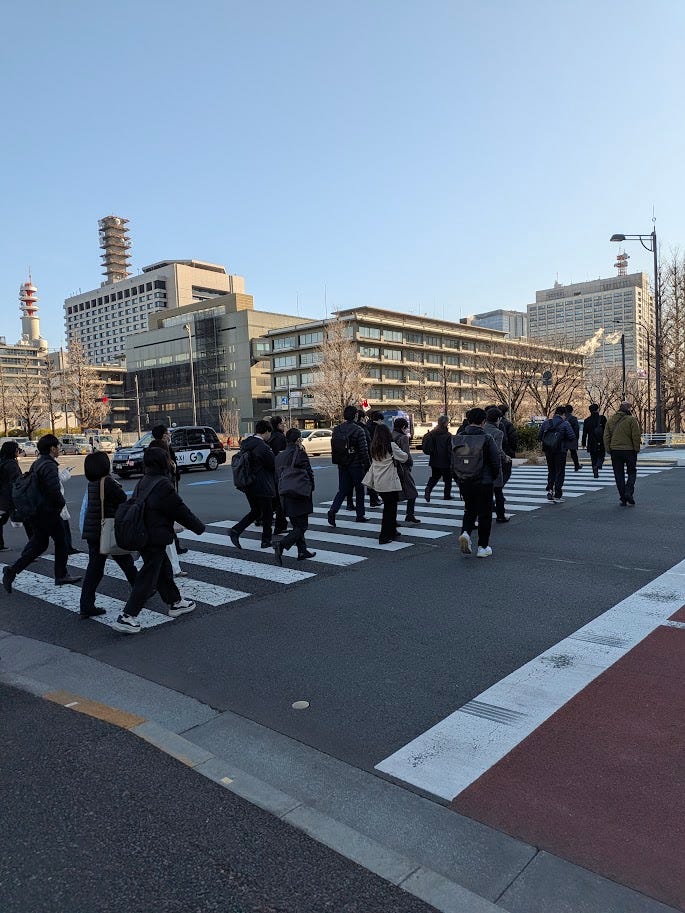
The term doesn’t just mean “office worker.” It is a cultural archetype that carries the weight of the entire nation’s post-war success. To be a Salaryman is to sign an unwritten social contract: you pledge absolute loyalty, lifetime service, and grueling hours to the corporation. In exchange, the corporation offers you stability and a place in the middle class. It is a life of immense honor. It is the gold standard of Japanese citizenship.
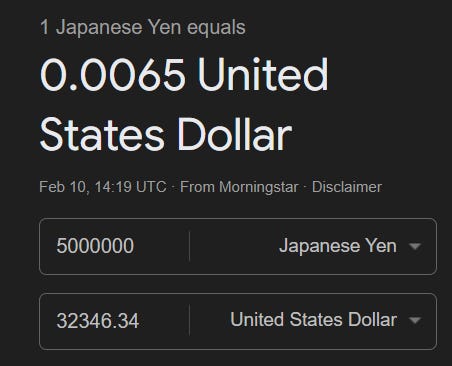
According to Japan’s National Tax Agency, the average annual salary for a private sector employee is roughly 5 million Yen.
At today’s exchange rate, that is $32,346 USD.
Even if you look at the upper echelon of men in their 50s at the peak of their careers—the average only climbs to about 7 million Yen (roughly $45,000 USD). My dividend portfolio now generates just as much passive income as the average Japanese salary.
I am looking at a workforce that is arguably the most disciplined, educated, and hardworking in the world. These men and women work 12-hour days. They commute on packed trains in silence. They rarely take vacations.
And yet, in terms of raw purchasing power, they are falling behind.
Why? Because they are playing a game of Labor, while the wealthy are playing a game of Capital. Working hard means nothing if you have to do it forever.
The Myth of Zen
Westerners have a romanticized version of Japan. We think of Nintendo, anime, minimalism, and silent Zen gardens. We imagine a society detached from material desire.
That is a lie.
The reality on the ground is that Japan, especially Tokyo, is a consumerist hellhole. It is a neon cage of endless spending designed to extract every single Yen from the exhausted worker.
I realized this standing in front of a centuries-old Buddhist shrine. I watched a line of people waiting to pray. But before they bowed, before they clapped, and before they asked for a blessing, they did one thing: They threw money into a wooden box.
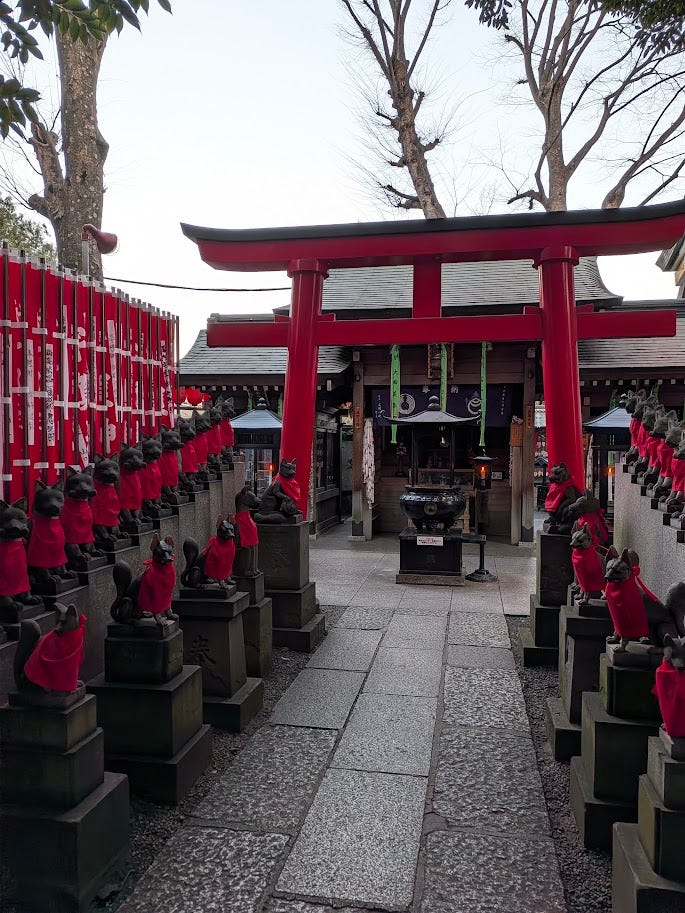
Even hope here has a price tag. It is a transaction. You pay the gods, and maybe they give you luck. It is masked as tradition, but at its core, I see it as a pay-to-play spirituality.
Turn away from the shrine and look at the streets. The “Zen” disappears instantly, replaced by the deafening noise of consumption.
The Shopping: Ginza and Omotesando are lined with the most expensive luxury brands on earth—Louis Vuitton, Dior, Gucci—packed with people buying status symbols they don’t need.
The Drinking: Walk through Shimbashi on a Tuesday night. You will see Salarymen in $500 suits passed out on the sidewalk, clutching empty cans of Strong Zero. They aren’t drinking for fun; they are drinking to forget the 12 hours they just spent in a cubicle.
The Japanese economy runs on this cycle. The system breaks you down with work, and then sells you a cure in the form of retail therapy and alcohol. It’s sad as fuck but social media portrays this as part of Japan’s charm. As someone that doesn’t care for shopping or drinking, it was hard to resonate with this aspect of the city.
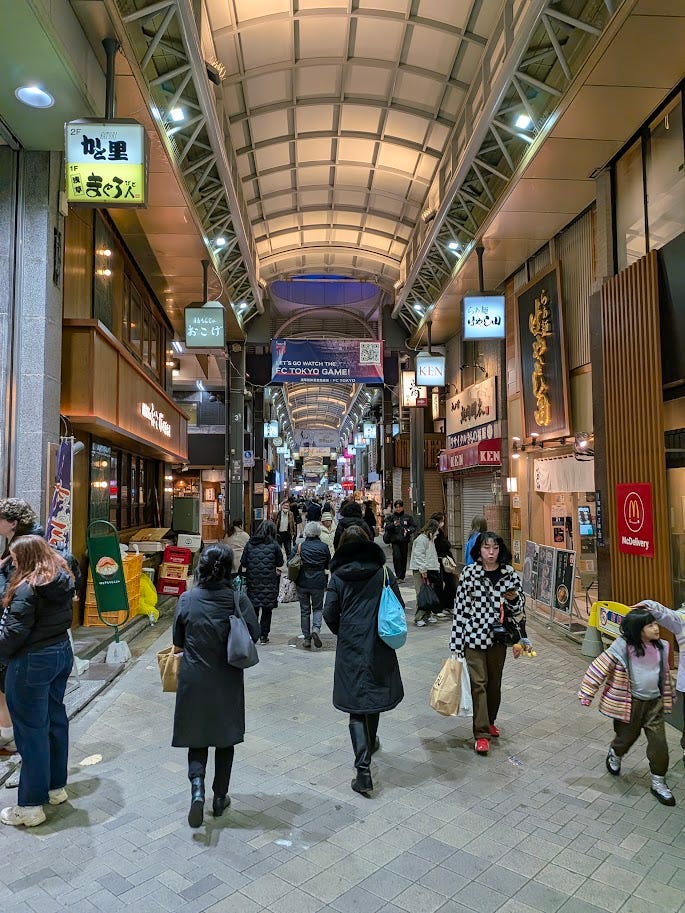
In America, we are told to buy things to feel rich. In Japan, they buy things to feel alive.
Standard of Living is how much you spend (Oversized clothes, luxury bags, nightly drinking).
Wealth is what you don’t spend.
The Japanese Salaryman works for the corporation, and then gives the money right back to the corporation at the bar or the department store. It is a perfect closed loop of servitude.
As a dividend investor, I refuse to participate in that loop. I don’t want the “Zen” of spending money to numb the pain of working. I want the freedom of not having to work at all. What’s the point of working hard if you never get the opportunity to stop?
The Fortress of Cash
Walk into any ramen shop or izakaya in Tokyo, and you will see a small machine near the door or a tray on the counter. It is for cash. Despite being marketed as one of the most technologically advanced nations on earth, Japan is still a society where Cash is King.
Japanese households are sitting on a mountain of cash. According to the Bank of Japan, households here hold over 50% of their financial assets in cash or savings deposits. In the United States, that number is closer to 13%.
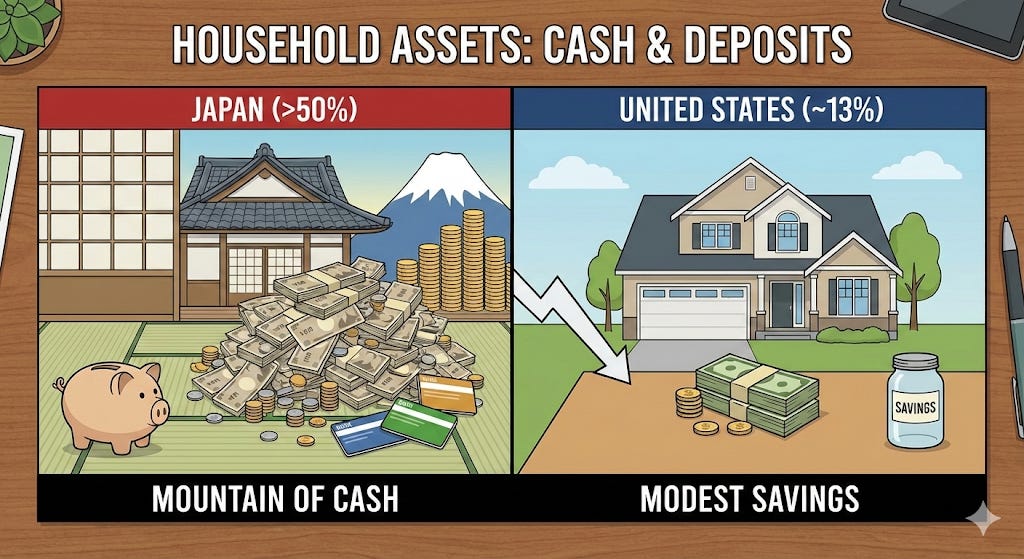
The Japanese collective memory is scarred by the asset bubble burst of the early 1990s. They watched the stock market collapse and property values disintegrate. For the last 35 years, they have lived through deflation—where prices didn’t go up, and cash actually gained purchasing power just by sitting under a mattress.
The Japanese money value here is clear: Safety above all else.
While I respect the discipline it takes to save 50% of your assets, I realized that adopting this mindset in America would be financial suicide.
In Japan’s deflationary past, Cash was a Fortress. It protected you.
In America’s inflationary present, Cash is an Ice Cube. It melts every single day.
The Asset That Rots (The Housing Trap)
In America, we are taught a simple lie: “Buy a house. It is the best investment you will ever make.” We view real estate as a ladder to wealth.
Here is a fact that shocks most Americans: In Japan, homes depreciate.
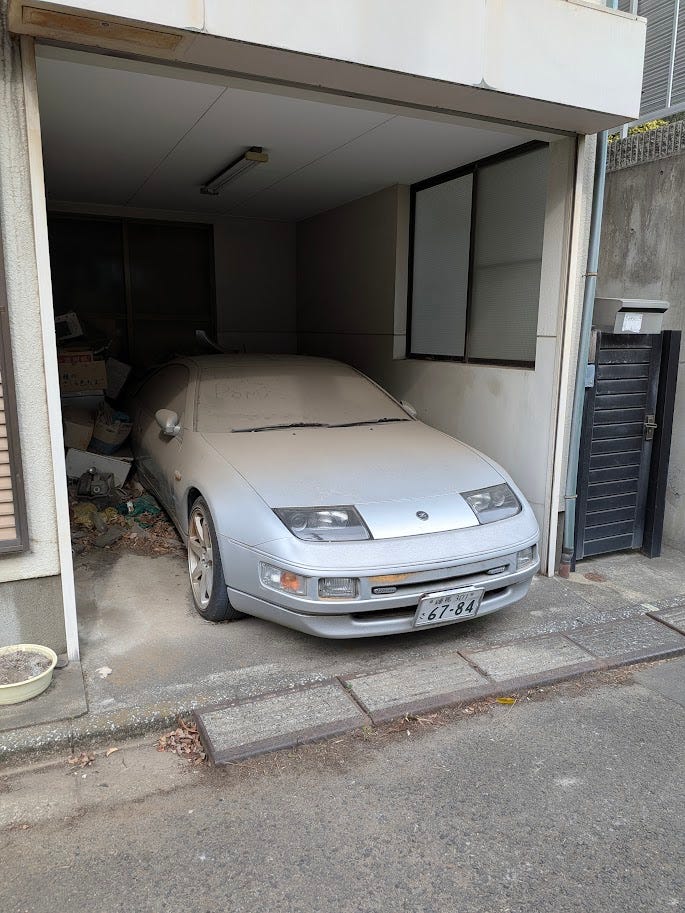
Unlike in the US, where a home purchased in 1990 is now worth 4x the price, a home built in Japan in 1990 is likely worth zero today. The land might have value, but the structure itself is considered “garbage” after 30 years.
Walk through the countryside—or even the suburbs of Tokyo—and you will see them: Akiya (空き家). These are “ghost homes,” abandoned by families because nobody wants them. There are over 9 million of them across the country.
In the US, we ignore these costs because the market keeps going up. But in Japan, where the market is stagnant, the truth is laid bare: Physical real estate is a liability disguised as an asset.
I used to feel guilty for not owning a rental property empire. But looking at these rotting houses in Kyoto, I realized why I love the stock market.
Stocks don’t rot.
Dividends don’t need a new roof.
REITs don’t get termites.
Japan taught me that I don’t want to own “things.” Things require maintenance. Things decay. Things anchor you to one spot.
Retirement is a Myth
There is one image from this trip that haunts me more than any other.
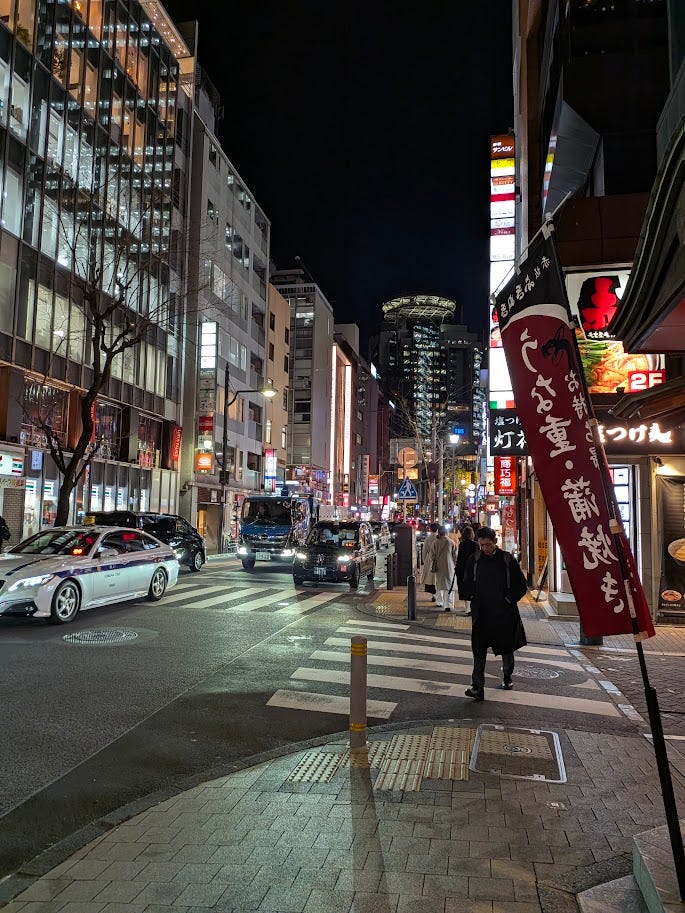
I was walking back to my hotel and saw a man waving a glowing red baton, directing traffic around a truck. He stood perfectly straight. He wore a uniform that was pressed and clean.
He was at least 80 years old.
In the West, we have a fantasy about retirement. We think we hit 65, the government sends us a check, and we drift off into the sunset.
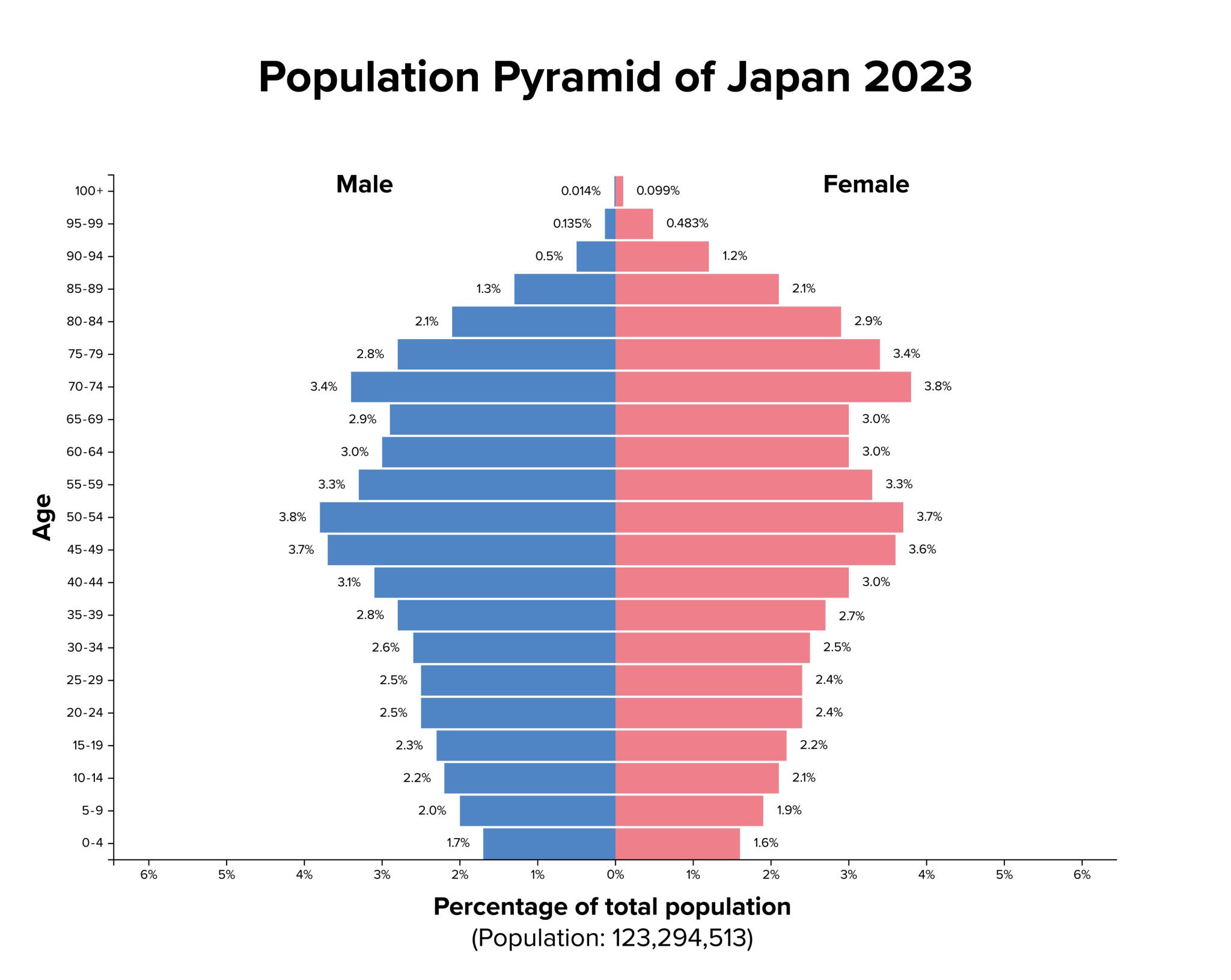
Japan is the oldest society in the world. 29% of the population is over 65. Because the workforce is shrinking, the pension system is strained to the breaking point. The result? Working Seniors.
You see them everywhere. The taxi drivers. The security guards. The cleaners at the airport. They are not working because they love the hustle. They are working because the math of their pension failed them.
Seeing that 80-year-old man waving a baton in the freezing cold was a visceral warning: The Government cannot save you. Get your shit together and take your financial health seriously.
This solidified my belief in Dividend Growth Investing.
A pension is a promise from a politician.
A dividend is a cash payment from a profitable business.
I don’t invest in BDCs and dividend stocks just to get “rich.” I invest so that when I am 80 years old, I am the one owning the building, not the one guarding it.
Takeaway
I am leaving behind a country that is undeniably beautiful, safe, and efficient. But I am also leaving behind a cautionary tale.
Japan is what happens when a society perfects Labor but forgets Capital. It is a glimpse into a future where you can do everything right. You study hard, get the job, save your money, and honor your elders. Yet you still end up waving a red baton at a construction site at 80 years old.
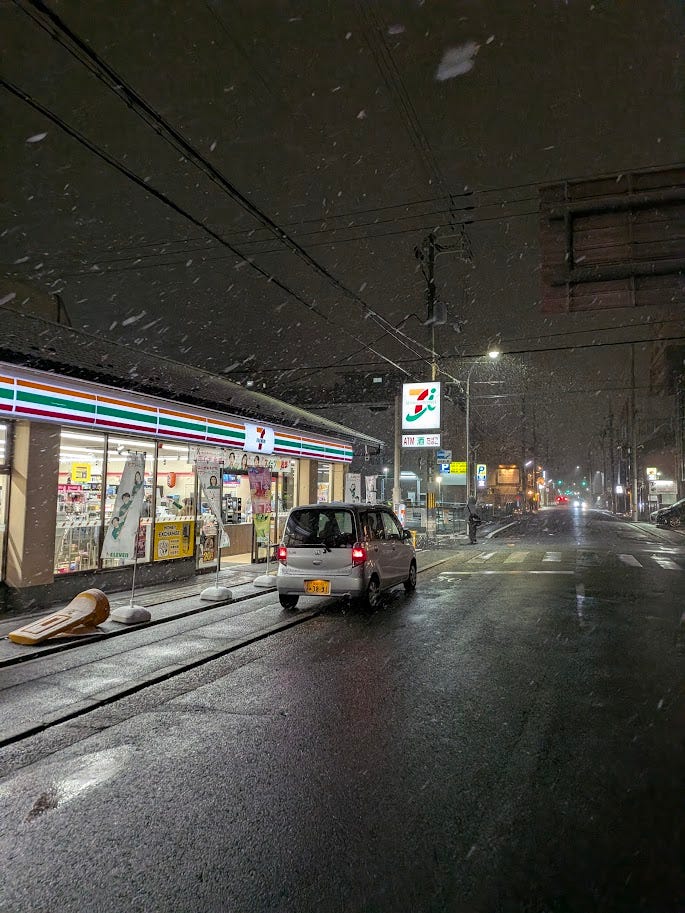
It was the sound of millions of people who have accepted that the only way to survive is to sell their time, hour by hour, until they run out of hours to sell.
I’m not bringing back souvenirs and useless garbage. I’m bringing back a terrifying clarity.
Savings will not save you.
A salary will not free you.
The system will not take care of you.
The only way out of the cage is to own the bars.
Dividend Investing for Beginners: How to Get the Snowball Rolling

With a bunch of new subscribers joining recently, I figured it would be great to take it back to the basics. The US government is on shut down, market indexes are trading near all time highs, and interest rates are starting to get cut. So what can you do to start building your dividends and how should you invest?
This was a great article and really put things into perspective for me at a higher level.
When you step back and look at how systems shape behavior, encouraging hard work, cash accumulation, and lifelong efficiency it changes how you see everything. On the surface it looks responsible, but over time it can quietly trade freedom for false stability.
What hit me most was time. Time is our most precious asset, and it should be deployed intentionally, not just exchanged endlessly for security that may not fully add up.
Just landed in Tokyo. One of my favorite cities in the world, but you are not wrong. Good food for thought over the next week.