

In my February report, I noted that the short month and payout cycles created a seasonal lull. I predicted a strong rebound for March and the numbers are in.
This month, my passive income from dividends totaled $4,118.26.
That is a 69% increase month over month. While the raw dollar amount is exciting, the real story is the strategic shift I am highlighting in this update. We are no longer just collecting checks. We are weaponizing those checks to buy the most dominant companies on the planet during periods of rotational weakness. I’ve highlighted this in a prior article, but the Mag 7 are trading at massive discounts due to tensions with Iran and worries around AI.
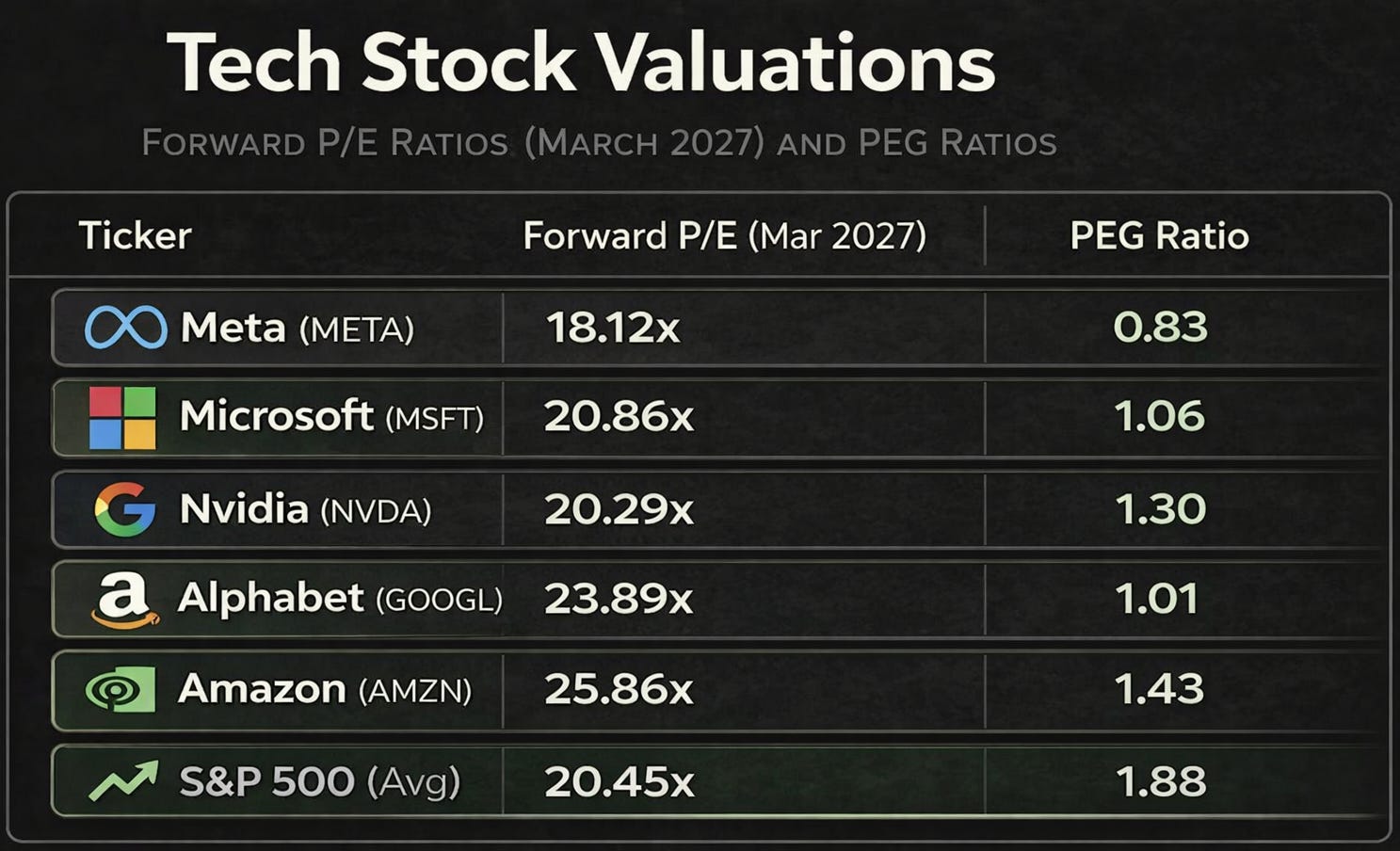
This report focuses heavily on how I am capturing tech at discount valuations. When the market rotates away from Big Tech, I see a massive opportunity to funnel high yield distributions into long term compounders. This builds my Net Liquidation Value, which provides a massive safety buffer for my margin use and ensures the portfolio’s total value grows alongside the income stream.
The goal for 2026 is simple: make the cash safer and leverage it for total return. The blueprint remains:
Buy income → funnel dividends to growth stocks → increase account equity → outperform.
Portfolio Analytics: The Quality Rotation
While the market at large has been navigating a correction—with the S&P 500 down roughly 7.4% and the Nasdaq 100 dropping over 8% in March—my focus has remained on the Net Liquidation Value.
The “rotational weakness” we saw this month was not a reason to panic; it was a reason to shop. High quality tech giants like META 0.00%↑, MSFT 0.00%↑, and AMZN 0.00%↑ saw significant pullbacks from their recent highs. By funneling my $4,118 in monthly dividends into these names, I am effectively lowering my cost basis on “infrastructure of the future” stocks using house money.
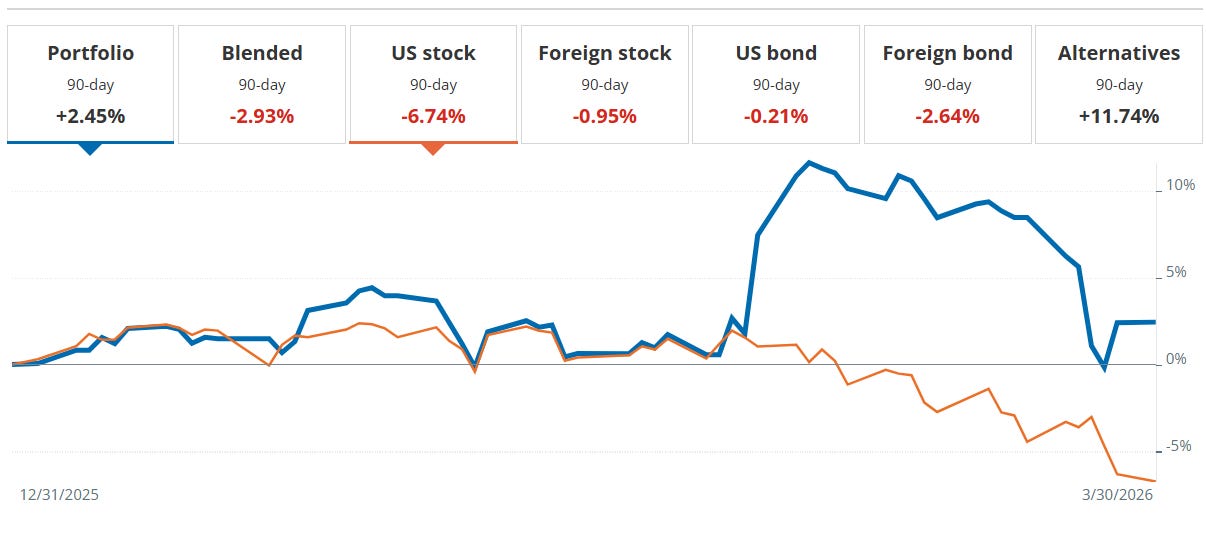
When looking at the performance on a YTD basis, we can see that the dividend portfolio has been able to hold up a bit better than US Stocks. My portfolio is still squeezing by a positive return at 2.45%, while US stocks are down by 6.74%. This can be attributed to my earlier rotation into energy stocks, like Bloom Energy BE 0.00%↑ and NEOS MLP Fund MLPI 0.00%↑ .
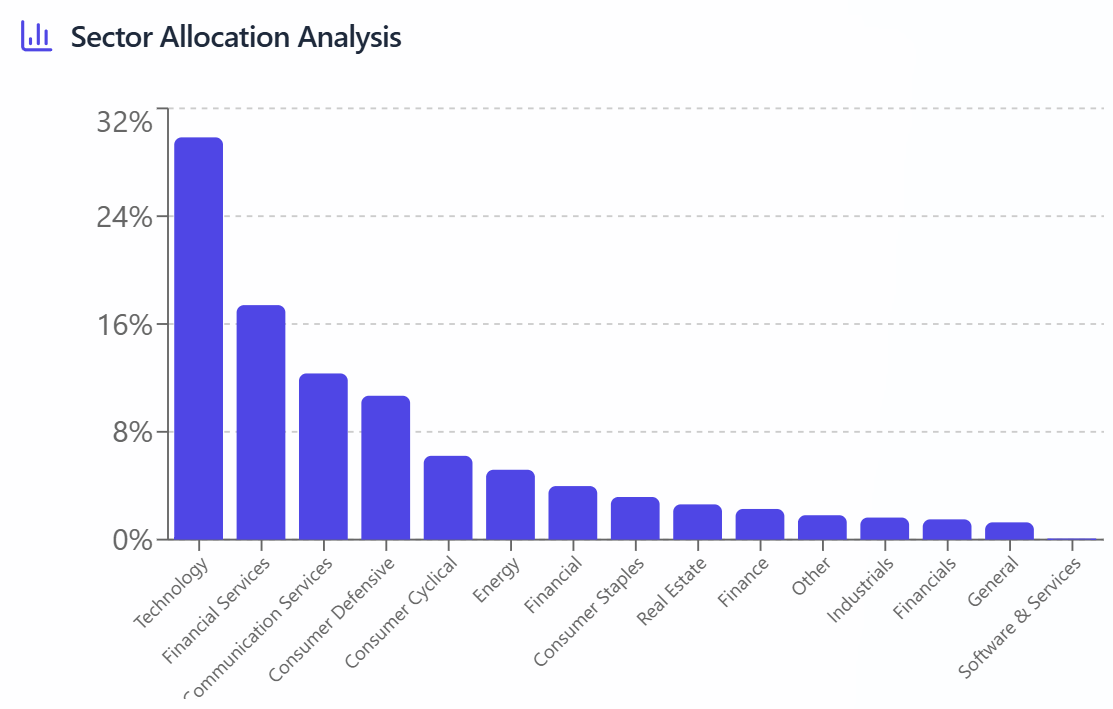
Portfolio Weight Snapshot (via Yieldly)
My strategy is evolving. I still utilize option ETFs for cash flow, but I am becoming ruthless about which ones deserve a spot. Reinvesting dividends into growth positions is the key method I am using to offset NAV erosion and build margin power.
👉 Paid subs get instant access to the Yieldly Dashboard!
Track your monthly dividend income, get stock insights, and personalized feedback to help you improve your financial situation.
Top Holdings by Weight:
QQQM 0.00%↑ (Invesco NASDAQ 100): 18.5%
META 0.00%↑ (Meta Platforms): 12.2% (Increased position)
AMZN 0.00%↑ (Amazon): 10.8% (Increased position)
MSFT 0.00%↑ (Microsoft): 9.5% (Increased position)
ASML 0.00%↑ (ASML Holdings): 8.2%
GOOG 0.00%↑ (Alphabet): 7.1%
MA 0.00%↑ (Mastercard): 5.4%
COST 0.00%↑ (Costco): 4.9%
The Strategy in Motion: Buying the Dip
I want to be clear on why I am accumulating these three specifically right now:
Meta Platforms (META): Despite recent volatility, their ad-revenue engine and AI integration remain best-in-class. I am using every dip to add fractional shares.
Amazon (AMZN): AWS continues to be the backbone of the internet, and their retail margins are showing incredible resilience.
Microsoft (MSFT): With the market slide putting MSFT at more attractive valuation levels, it is a no-brainer to tuck more away for the long term.
What we’re seeing across Amazon, Alphabet, Microsoft, and Meta isn’t normal capex but a coordinated buildout of AI and cloud infrastructure that will define the next decade of earnings growth; these companies are pouring hundreds of billions into data centers, chips, and compute capacity because demand for AI workloads is already exceeding supply, meaning this spending is being pulled forward by real usage rather than speculation.
Amazon and Microsoft are best positioned to monetize immediately through cloud revenue, while Alphabet is investing to lower long-term costs with custom infrastructure, and Meta is using AI to drive higher engagement and ad pricing power. For long-term investors, this wave of spending should be viewed as moat expansion rather than margin destruction, since it raises barriers to entry, locks in customers, and creates recurring revenue streams that compound over time, similar to how cloud and mobile ecosystems played out over the past decade.
Want a shortcut on your journey? You can get the dividend starter bundle so that you can skip the mistakes that I made.
👉 Here is what’s included:
✅ The Dividend Blueprint (ebook)
A step-by-step guide showing how I structure my portfolio, grow monthly cash flow, and reinvest for long-term income.✅ Monthly Dividend Map
50+ hand-picked tickers that pay monthly so you can ladder your income all year long.✅ Dividend Tracker (Google Sheet)
The exact spreadsheet I use to track yield, forward income, reinvestment, and portfolio growth.✅ Dividend Growth Legends: 50+ Stocks
50 stocks that have an established history of dividend increases.✅ List of ETFs for Beginners To Start With
The Breakdown: Who Paid Me in March? 💰
March is a powerhouse month for dividend investors. While February relies on the monthly payers and covered call ETFs to do the heavy lifting, March brings in the heavy hitters from the quarterly cycle.
The result was a $4,118.26 total payout.
The following positions paid me a dividend in March: