

As soon as markets experience a pullback, investors go into defense mode. Companies continue to deliver strong fundamentals and earnings growth, but the market confuses the downward markets as a decline. Through the last few market declines, instead of watching my portfolio shrink, I watched my income climb higher month after month.
According to Yieldly, my annualized dividend income actually grew by more than fifteen percent during that stretch, even though my total portfolio value temporarily declined.
That was the moment I realized something important.
The market does not determine my progress anymore. My dividends do.
Every investor wants to feel prepared for the next downturn, but most portfolios are built to thrive only when prices rise. Income investors have an advantage that few people recognize. When markets become volatile, income opportunities actually expand. Yields rise, option premiums increase, and defensive sectors begin to outperform. With the right structure, a recession does not reduce your income. It increases it.
In this article, I will share how to build a recession-proof dividend portfolio that continues generating cash flow even when the market slows down. I will highlight the types of funds that have historically performed best in downturns, how I structure my holdings for resilience, and the metrics I track inside Yieldly to make sure my income keeps growing through every cycle.
Why Dividends Can Rise in a Recession
Dividend income can remain strong and often rise during economic slowdowns. While prices fluctuate, the underlying cash flows that support dividends tend to stay stable. Think of all the essential services and products that people will continue to buy even if the economy collapses.
Energy
Fuel
Utilities
Food
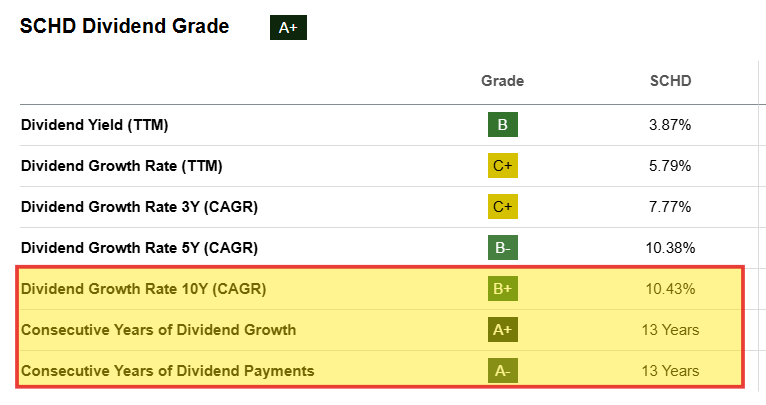
An ETF that makes this process easy is $SCHD. Its portfolio includes profitable, dividend-focused companies that continue generating steady earnings through different market environments. Even when share prices decline, SCHD’s distributions usually hold firm or increase because many of its holdings keep raising payouts regardless of short-term volatility.
👉 For instance, SCHD has maintained an average double-digit growth rate for over a decade straight. Does your job give you a double-digit raise every year?
Probably Not.
The same principle applies to utilities such as American Electric Power ($AEP), which has paid dividends for more than a century and raised them for fifteen consecutive years. Electricity demand does not fall during recessions, which allows AEP to maintain reliable cash flow and continue rewarding shareholders through every phase of the economic cycle.
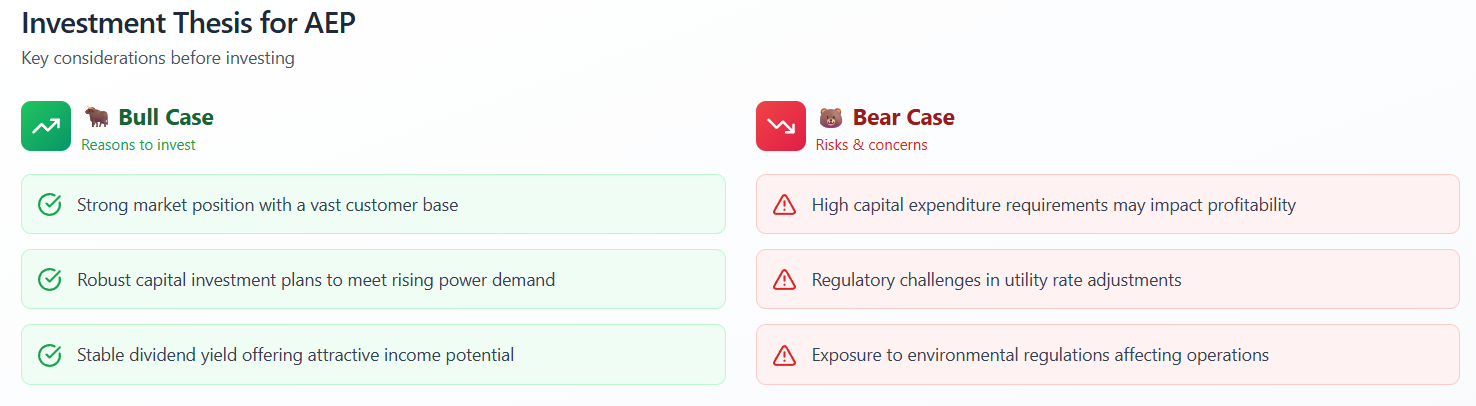
Everyone still has to pay their utility bills during a recession right? A screenshot from Yieldly reveals the current bull and bear cases.
👉 Earn Access To The Yieldly Dividend Dashboard. Lock In Your Discounted Rate!
That level of consistency is what makes dividend investing so powerful. Market values may fall, but high-quality income streams continue to rise.
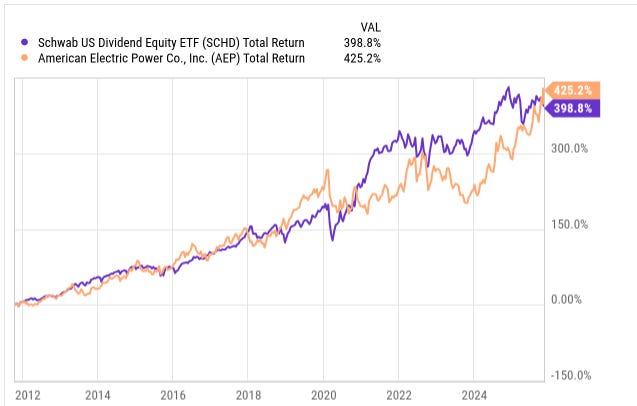
As we can see below, both SCHD and AEP have provided great total return (including dividends) over time.
The Recession-Proof Income Framework
A recession-proof portfolio is not built by guessing where the market will go next. It is built by layering income sources that work together in any environment. Each layer has a specific purpose that supports the next, creating a structure that continues to generate cash flow no matter what the economy is doing.
👉 Here’s the 3 pronged approach I have utilized to grow my annual dividends over $50,000, while outperforming market indexes.
1) The Defensive Base
This is the foundation of every strong income portfolio. These are the dependable dividend payers that have raised their distributions for decades. Dividends Kings are companies that have raised their dividends for more than 50 consecutive years. Dividend Aristocrats are companies that have raised their dividends for more than 25 consecutive years.
You build your foundation with companies you personally consume. These are companies that people consume even when the world is on fire. This includes dividend paying companies like:
Procter & Gamble (PG)
Coca-Cola (KO)
Johnson & Johnson (JNJ)
PepsiCo (PEP)
Verizon (VZ)
By using these companies as the foundation, your portfolio can provide the stability needed when markets become uncertain. Their business models are built around essential goods and services, which allows them to maintain earnings and increase payouts even through recessions.
2) The Income Boosters
This layer focuses on higher yields and cash flow acceleration. These holdings may carry slightly more volatility, but they compensate investors with stronger income potential. Examples include:
Ares Capital (ARCC): one of the largest and most consistent business development companies.
Realty Income (O): which pays dividends monthly from long-term property leases.
Black Hills Corporation (BKH): electric and natural gas utility company in the United States. The Electric Utilities segment generates, transmits, and distributes electricity to approximately 225,000 electric utility customers.
Roundhill Universe Of Weekly Paying ETF (WPAY): weekly payer that thrives during periods of higher market volatility. This fund uses leverage to provide a dividend yield above 50%!
Together, these income boosters raise your overall yield without sacrificing too much stability. By generating an income stream within your portfolio, you can effectively offset market declines by getting paid from your investments, unlike other investors that are simply at the mercy of the market.
