

Story time. It’s about to get personal.
A decade ago, I was heavily into trading stocks. I was a college kid looking to make the quick cash, while naively doing very little research, not understanding the fundamentals, and not even knowing what I was buying at times.
I was fortunate enough to land a big boy job that paid me a whopping $38,500 per year. To a college kid back in 2015, I felt rich. I worked full-time and took night and Saturday classes to keep up with my college credits.
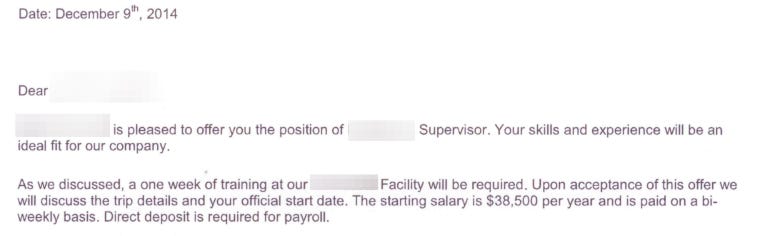
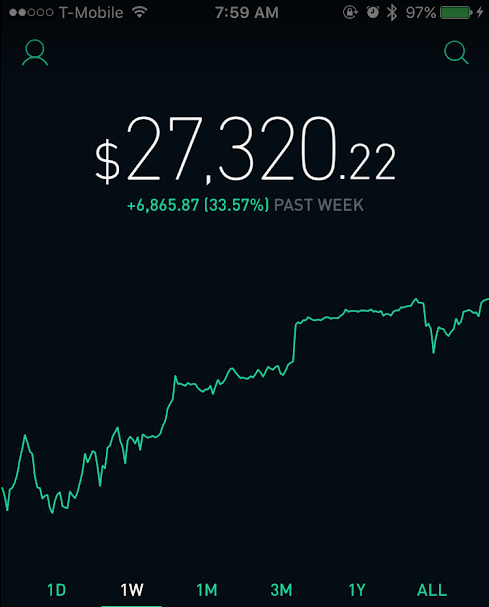
This job allowed me to save up $10,000 and I excitedly deposited this money into my Robinhood account. I was trading 3x leveraged ETFs without even understanding what that meant. Well, the worst thing possible happened to me.
I was able to trade my $10,000 up to $30,00 and at a young age and I felt fucking unstoppable. My confidence was at an all-time high. This is the only screenshot I still have from over ten years ago, but it helps conceptualize how much money I was earning by essentially gambling. Earning nearly $7K in a single week as a college student made me understand that concept of having my money work harder than I was. From that point, I was hooked on the stock market.
And I am not exaggerating. I was hooked. All I talked about was money and trading. I watched trading content on Youtube religiously, I started failing classes because my attention was elsewhere, and I walked around with a superiority complex because I wasn’t around anyone else that was able to replicate this sort of ‘success’.
I was extremely cheap so I didn’t want to pay for any tools or education that could make me a better trader. I suffered for that mistake. Instead of paying $10 for a mentorship guide, I ended up losing even more in the long-run.
Well it all eventually came crashing down when I gambled $25,000 into a single position and it collapsed. I lost 90% within a two week span and I was devasted. All of that confidence I had was gone and my identify was lost. Turns out that I wasn’t the genius stock picker that my friends knew me as. I actually just felt like a dumbass.
The worst part is that I took these losses while on a back-packing trip across Italy, Spain, and Greece at the time. It completely ruined my ability to enjoy the trip and I tainted the experience with my miserableness and short-temper. It took me years to eventually reverse the psychological fear I had about losing money.
While on that trip, I was constantly on my phone watching stock prices, I was consistently giving myself stress-induced migraines, and I started getting gray hairs (I’m not joking).
So while this looks like a cool picture that was snapped back in 2015, I was actually miserable and felt like everything I worked for was lost.


After this experience, you would think that I’d take a break from trading, right?
Wrong.
I managed to save another $5K and basically repeated the pattern a year later. But I didn’t quit because I was still hooked to the idea that my money could earn money. This is when I discovered what dividends were and how I could create a second income stream without actually working a job.
Moving Away From Trading
Fast forward a few years and I’ve graduated and landed my first job out of college. The risks have changed now because I couldn’t afford to gamble my savings away trying to day trade. I had student loans and I wanted to eliminate that as soon as possible. Here’s the structure that I followed:
When I got paid, 50% of my check would automatically go to my savings. The majority of the rest would go towards the loan.
Any extra money that I earned, I deposited into my brokerage account.
Rather than day trade it, I started buying companies that I personally consumed.
Apple AAPL 0.00%↑, $McDonald’s MCD 0.00%↑, Microsoft MSFT 0.00%↑, Coca-Cola KO 0.00%↑, Netflix NFLX 0.00%↑, things like this.
I was still hooked on the idea of letting my money work for itself, so I understood that it was more important to fund my account, more than trying to get this huge returns. I had a process in place that allowed me to reduce debt while staying exposed to the markets. During this time, I started to unknowingly receive dividend payments from these positions.
$10 here. $7 there. $15 here.
Then one month it hit me. I counted up all my dividends and realized that my stocks paid me $50 for the month. This was enough to go out for a nice dinner. Rather than take on risk by trading random stocks and making a small $50 profit, I could do nothing and let these companies pay me $50.
Funding my account was more important than gains because it would lead to more dividend income. This is the snowball effect that I consistently talk about.
I continued this process for the next 7 years non-stop. As I earned more, I invested more. There was even a time where I worked two full-time jobs to fund my account faster. I was locked in and I was on a mission to grow my dividend income as fast as possible.
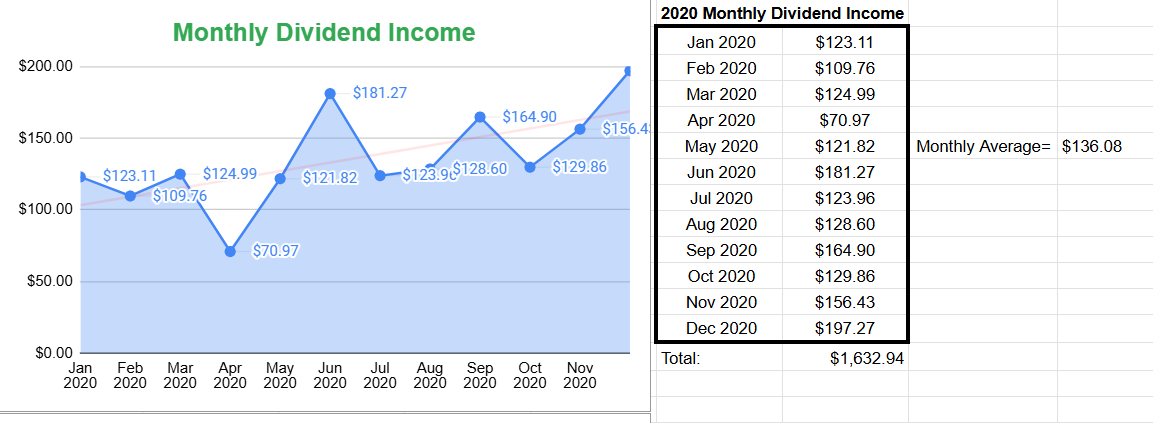
2020 is when I finally crossed an average of $100 per month.
Not ready to commit to a paid membership? That’s fine! If you are ready to take these principles and build a real plan for your finances, I have two ways to help you go at your own pace.
My Book — The Dividend Income Blueprint
This is my step-by-step guide for building a portfolio that pays you consistent monthly income for the rest of your life. It walks you through exactly how to find, buy, and manage income-producing assets so you can create financial freedom without gambling or guessing. Want to get a well-rounded idea of where to start your investing journey? I have you covered here as well!
One-on-One Consulting
If you want personal guidance tailored to your situation, I offer private consulting sessions where we map out your income goals, investment strategy, and the exact steps you can take right now to start building wealth. This comes with a written report for your to reference.

As ridiculous as it sounds, that $100 meant more to me than the $7,000 trading week I once bragged about. Because this time, I didn’t have to time anything. The money showed up automatically. I didn’t earn it with luck or speculation. Instead, I earned it with patience.
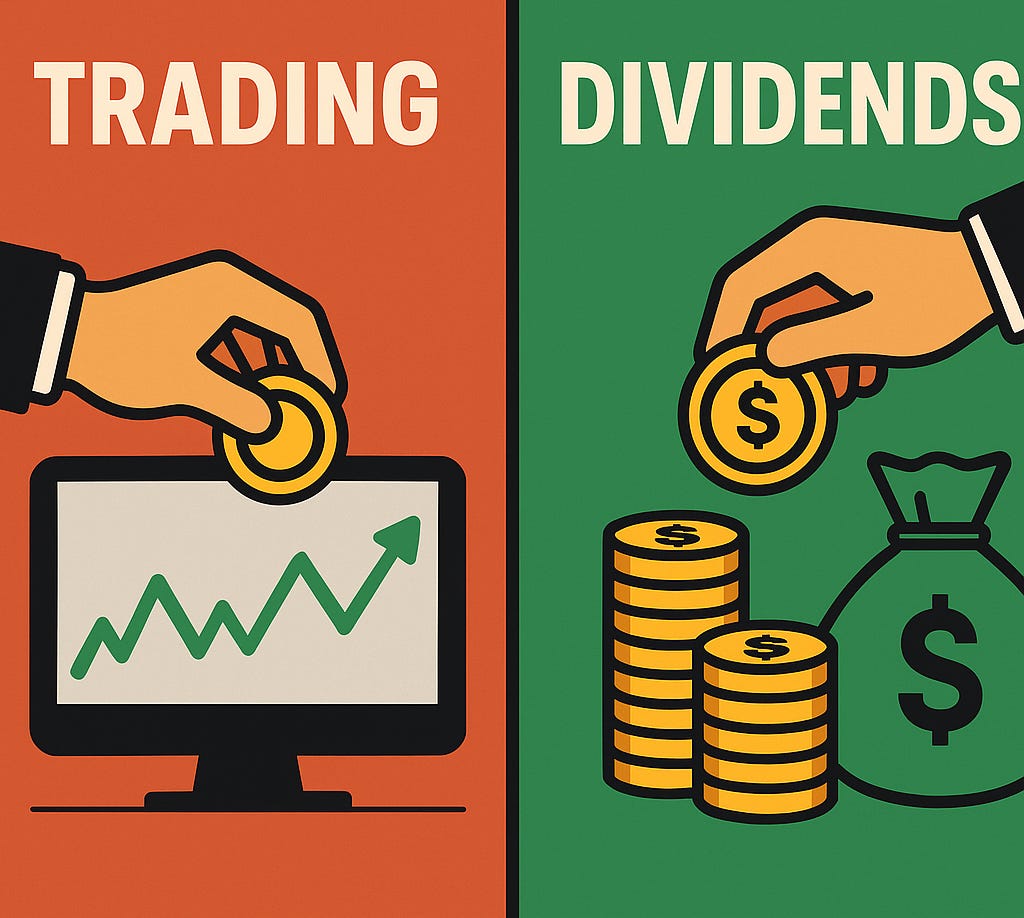
That was the moment I realized the real difference between trading and investing. Trading makes you feel powerful, but only when you’re right.
Dividends make you feel free, even when the market isn’t.
Over time, I began to notice a few things about why dividends quietly outperform in the real world, not just on paper but psychologically and mathematically.
Trading profits are episodic and you only get paid when you sell.
Dividend income is recurring and you get paid simply for holding.
Trading requires prediction, while dividends require time. And every trade is a taxable event, whereas dividend reinvestment compounds more efficiently in the background.
The Blueprint & 5 Stocks I’m Buying
When I first started focusing on dividends, I didn’t have a formal strategy. I just wanted to buy great companies and get paid for owning them. Over time, I realized there was a structure behind this approach. This was an approach that could scale quietly in the background while I lived my life.
I began treating my portfolio like a business. The goal wasn’t to chase price movements anymore; it was to generate cash flow. Every dividend payment, no matter how small, became a form of revenue. The larger my “business,” the more income it produced.
Here is the actual blueprint for building a second income stream with dividends.
👉Get 10% off an annual place FOREVER. Offer ending on October 30th. You will automatically get access to the Yieldly Dashboard, which comes with the subscription.
The process was simple but required consistency. Every paycheck, I set aside money for my brokerage account before spending anything else. I stopped trying to predict market direction and focused on adding capital regularly. That shift changed everything.
As I earned more, I refined my approach toward investments that worked for me rather than against me. I wanted assets that rewarded patience instead of timing, so I built around funds and companies that paid reliable income month after month. It was less about chasing growth and more about building stability that compounds on its own.
When I reached five hundred dollars a month in dividend income, it didn’t feel like much, but it represented progress I could see. At one thousand a month, it began covering my rent. At two thousand, it paid most of my living expenses. And now, as my portfolio generates several thousand each month, I finally understand what freedom feels like.
September 2025 Dividend Income Report

For the month of September, my dividend portfolio paid me $3,635.57 in dividend income. On a year-to-date basis, I’ve now collected over $31,600 in passive income from dividends. That’s income I didn’t have to trade my time for, and every month gets me closer to my goal of $100,000 annually. Unlike my prior dividend repots, I will be utilizing the
There’s a calm that comes from knowing money is working in the background while life goes on. The market can swing up or down, but my income continues. Trading never gave me that sense of security.
Over time, I learned that the magic of dividends isn’t in the yield itself, it’s in the compounding. Reinvested payouts accelerate growth in a way that speculation never can. A portfolio yielding ten percent doesn’t just return ten percent. It steadily increases the income base each year as new shares generate even more dividends. That growth doesn’t depend on luck or timing; it happens automatically as long as you stay invested and keep contributing.
If you want to move from trading to true income investing, start small and focus on cash flow. Here’s what I would do, step-by-step:
Add to your portfolio consistently, even in small amounts.
Track how much it pays you, not what it’s worth on paper. You can utilize Yieldly for that.
Work on increasing your active income. Whatever your main source of income is, figure out how to amplify that. The path looks different for each of us.
Eliminate unnecessary spending. It doesn’t need to be hardcore but cutting down on your expenses is almost the same thing as earning more money.
Focus on debt pay down. Stop playing the credit card point game. The credit companies are smarter than you.
Reinvest all dividends. You are stealing from your future if you are spending all of them.
Don’t get tempted by FOMO. Everyone is talking about the latest AI hype. Ignore it. Lock in and focus on your mission.
To close, here are a few of the stocks and funds I’m currently adding to:
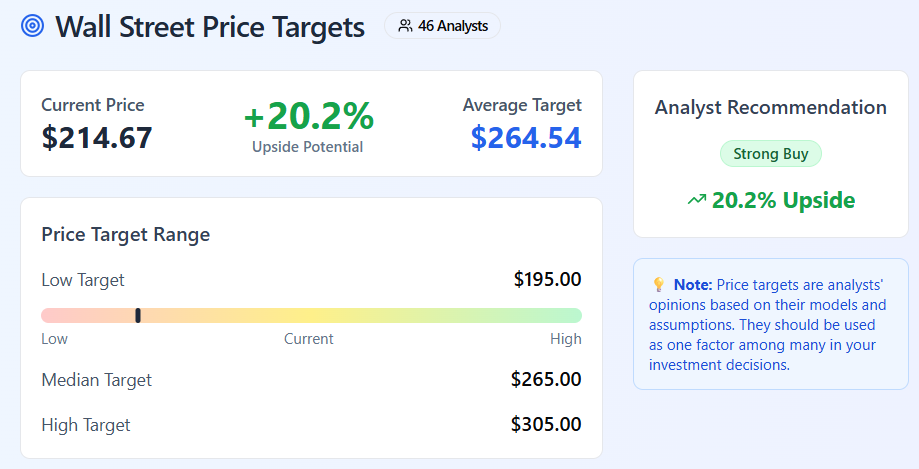
Amazon AMZN 0.00%↑ – A long-term growth engine with expanding free cash flow. While it doesn’t pay a dividend, I view Amazon as a reinvestment machine that eventually could. It balances my portfolio’s income-heavy side with durable growth exposure.
Based on the analysis from Yieldly, analysts are currently estimating a 20.2% upside. However, I believe that Amazon will continue to ride the momentum of AI even higher.
Roundhill Weekly Pay ETF WPAY 0.00%↑ – One of my favorite income vehicles. It pays dividends every week, with a yield hovering near 40–60% annualized depending on market conditions. It’s ideal for generating consistent cash flow while maintaining broad equity exposure.
I plan to reinvest these distribution until I accumulate enough shares that WPAY is paying me $100 a week.
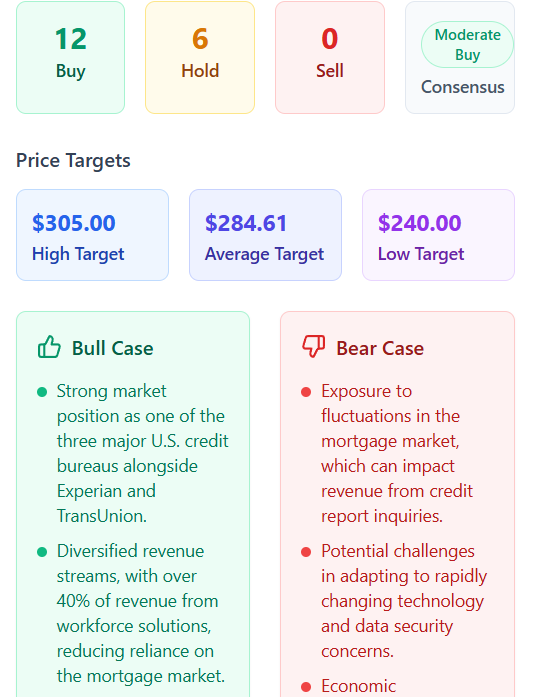
Equifax EFX 0.00%↑ – A steady compounder in the credit and data space. Its business model benefits from recurring revenue and high margins, and it offers a modest but growing dividend yield around one percent. This is a classic example of a dividend growth stock that complements high-yield holdings.
Here’s a snapshot of the bull and bear cases, provided by Yieldly.
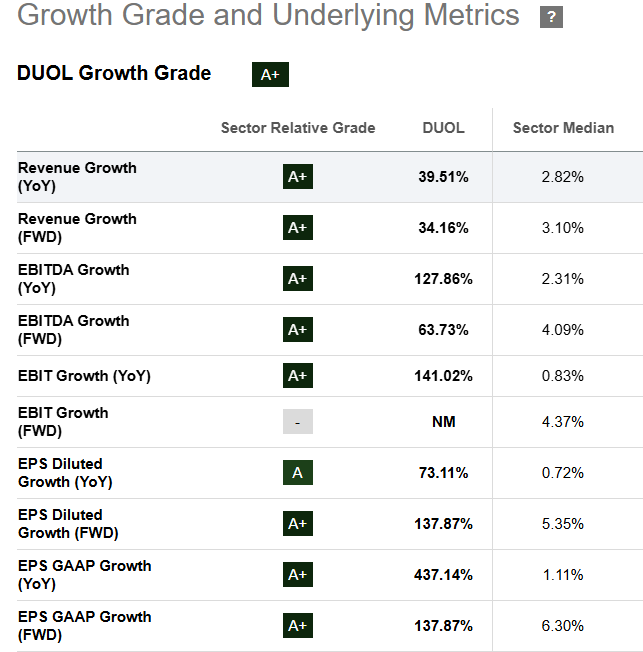
Duolingo DUOL 0.00%↑ – I bought this one for growth potential, not income. It’s a unique digital education platform with expanding subscription revenue and high brand loyalty. Duolingo gives me exposure to long-term secular trends while I fund it through cash flow from my income positions.
I believe this is one of the most attractive opportunities in the market right now. Look at the growth metrics below - they’re spectacular!
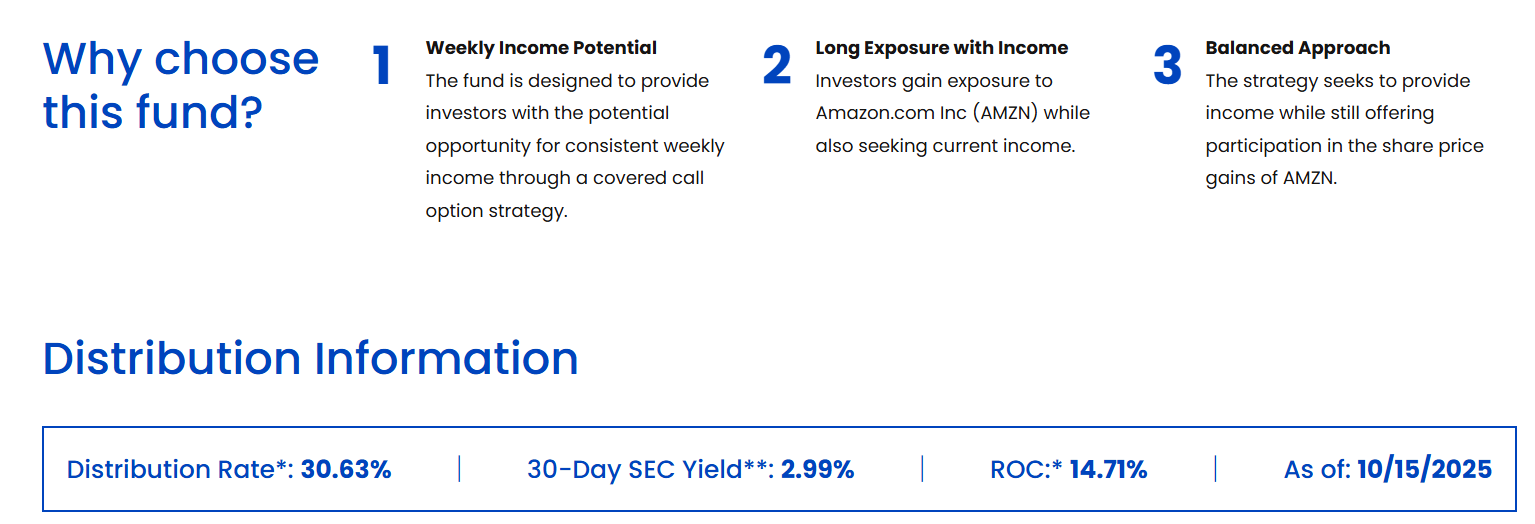
YieldMax AMZN Option Strategy ETF AMZY 0.00%↑ – A newer income ETF built around Amazon’s stock. It sells covered calls on AMZN to generate high monthly income, offering a way to monetize volatility on a top-tier growth name. I use this as a tactical yield play when I want exposure to Amazon without directly holding the shares.
AMZY offers a massive dividend yield of over 30%. This means that $1,000 invested is estimated to generate you $300 in annual dividend income. $10,000 invested is estimated to earn you $3,000 in dividend income. Building dividend income is incredibly easy nowadays.
Enjoyed reading about your back history bro. Didn’t know you used to day trade. I’m glad you made that transition over to true investing. 👏🏻