

If you own an S&P 500 fund, a Nasdaq fund, or basically any growth ETF, you own these four companies whether you picked them or not. Therefore, there’s a chance that you continue to see your accounts drop through the remainder of 2026. The headlines say “AI spending fears.” That’s true and also useless, because it doesn’t tell you what the fear is or whether it’s justified.
In my opinion, all of this is being overblown but that is why it is an opportunity for us.
Two things you’ll walk away with:
Here’s why tech is selling off. The one number all four reports share, why three companies tripped it and one didn’t, and whether the fear is justified.
Here’s how to structure your dividends as the defense. The exact way I pair these growth stocks with income funds that get PAID when they swing, so a month like this one costs me nothing in cash flow.
👉 Upgrade Your Subscription for $0.82 a day and get every buy alert first, plus the Yieldly Dashboard and the High Yield ETF Database on day one. The Yieldly Dashboard also has my active positions.
#1: The Businesses Are Growing
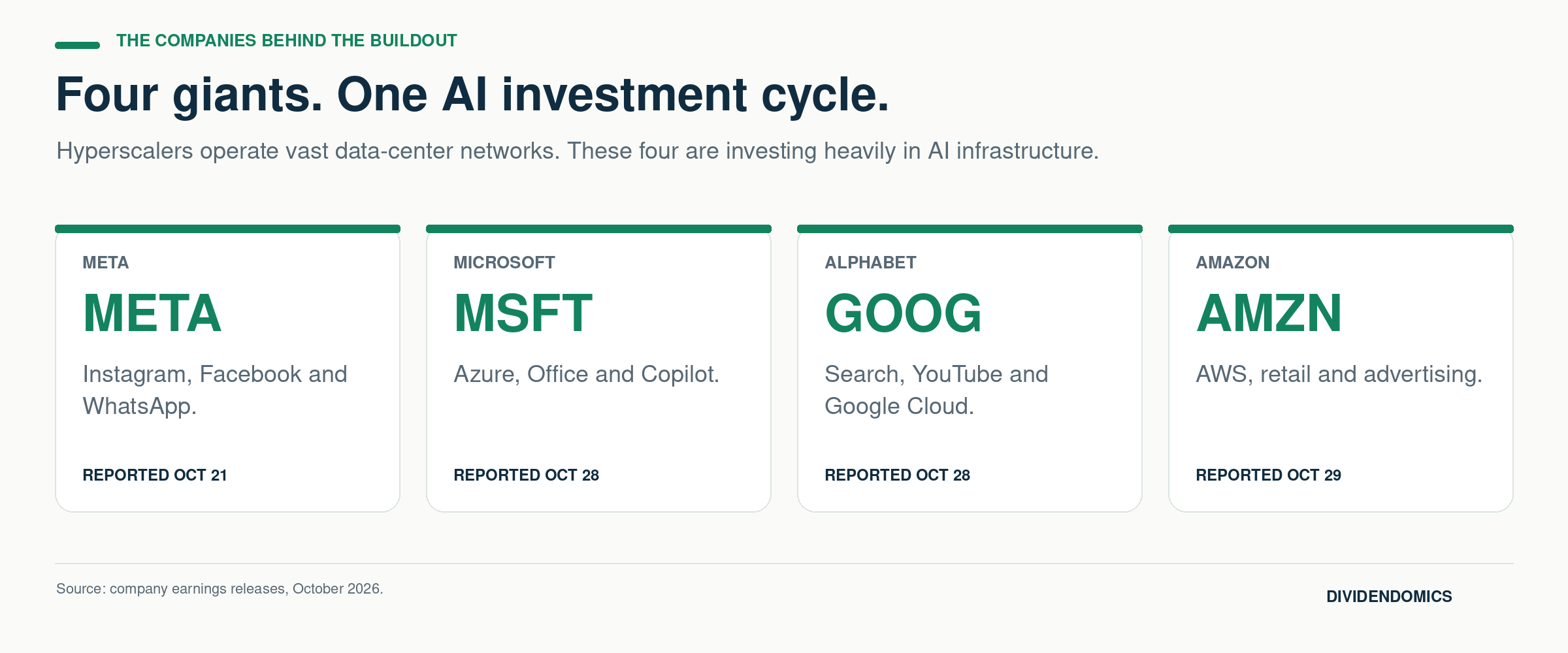
Start with the part the headlines skip, because it’s the part that matters most. A “hyperscaler” is a company that owns giant data centers and rents the computing power inside them to everyone else, and four of them, Meta, Microsoft MSFT 0.00%↑, Alphabet GOOG 0.00%↑, and Amazon AMZN 0.00%↑, just reported.
Every single one grew revenue by double digits, per their earnings releases.
Meta grew 26%.
Alphabet grew almost 25%.
Microsoft grew 19%.
Amazon, the biggest of the four by sales, grew 12%.
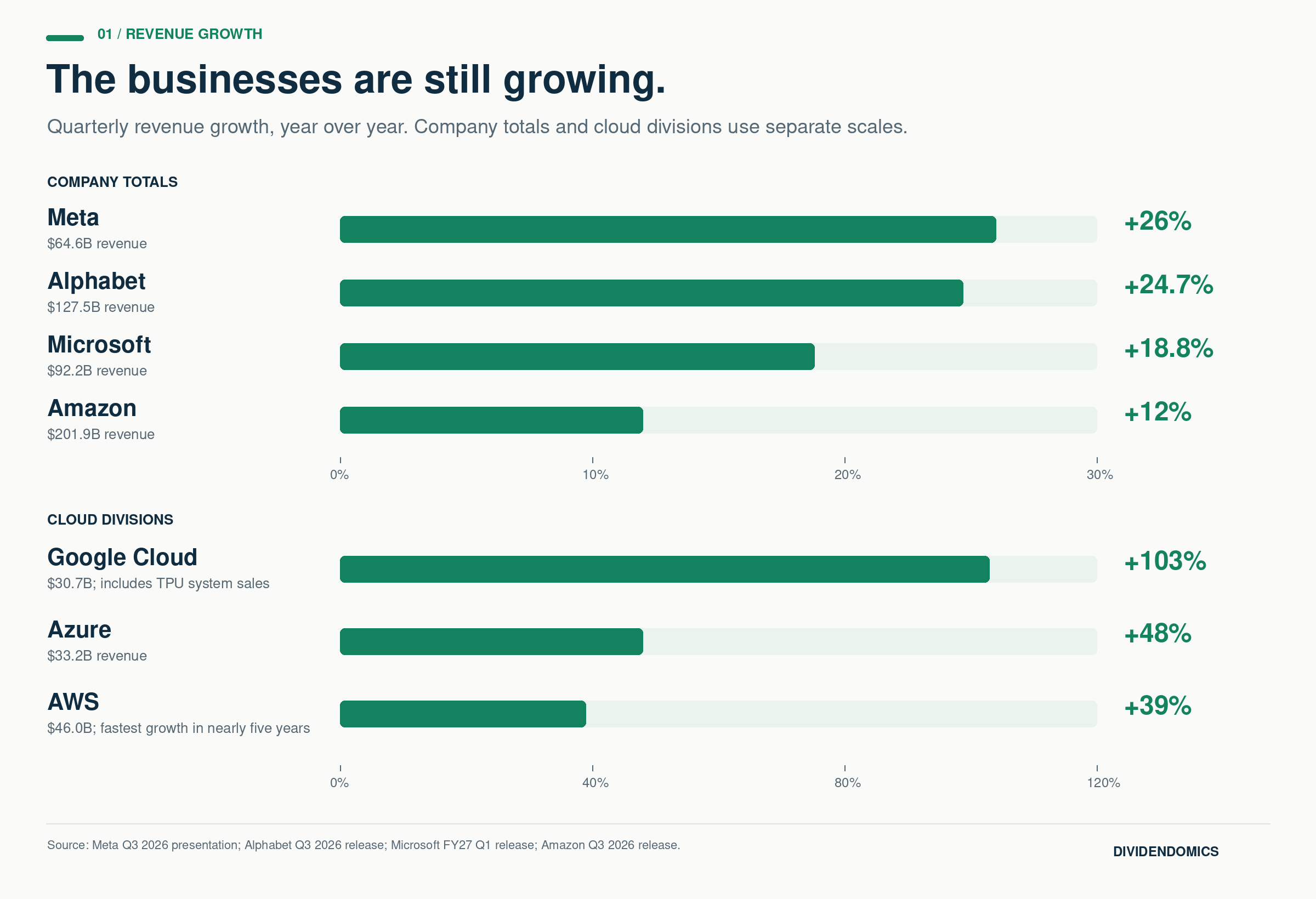
The cloud divisions, which is where the AI money actually shows up, grew far faster than the companies as a whole. Azure grew 48%, AWS grew 39%, its fastest pace in nearly five years, and Google Cloud more than doubled because Alphabet started selling entire TPU chip systems to customers. If you only looked at the growth, you'd assume all four stocks went up. Three of them went down, and to understand why you need one more concept.
#2: What Free Cash Flow Is, And Why It Went Negative
Free cash flow is the cash a business makes minus the cash it spends on buildings and equipment. Wall Street calls that spending capex. If a company makes $100 and spends $110 on data centers, free cash flow is negative $10.
The business didn't lose money.
It spent more than it made on assets that are supposed to produce more revenue later. That's it. That's the number everyone is panicking about.
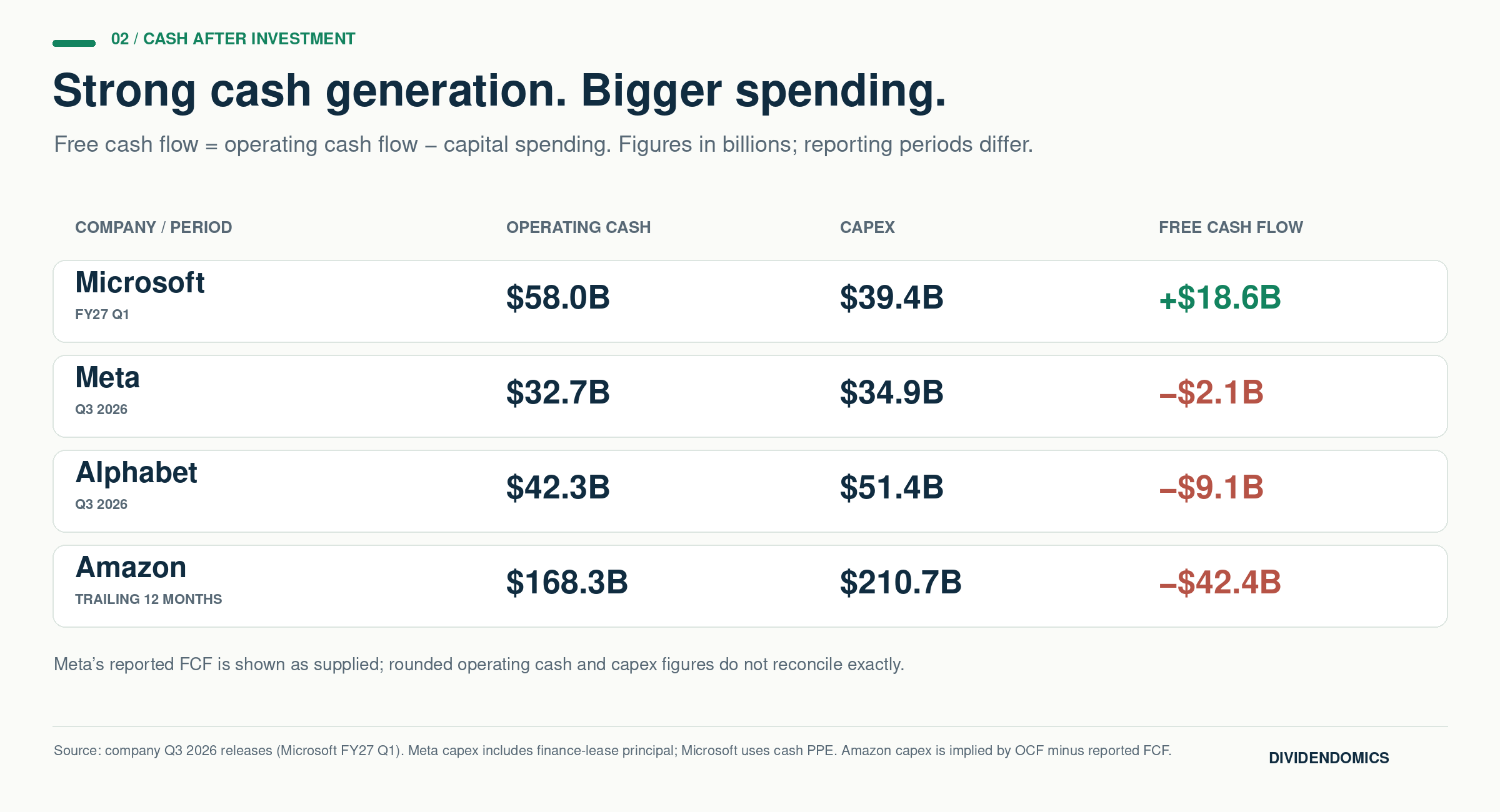
Meta produced $32.7 billion of operating cash this quarter, more than it ever has, and spent $34.9 billion on data centers and chips, so free cash flow came in at negative $2.1 billion, per its Q3 presentation. Alphabet did the same thing at a bigger scale, negative $9.1 billion. Amazon spent $77.3 billion in the quarter alone, more than double a year ago, and its twelve-month free cash flow is negative $42.4 billion. Microsoft spent heavily too, and still came out $18.6 billion positive.
For fifteen years these companies printed cash every quarter, and now three of them just printed a negative number in the same month. Nobody thinks Instagram stopped making money. The worry is that the AI buildout costs more than management says, takes longer to pay off, and gets funded with debt in the meantime. I understand the concern. I just think it’s being overdone, and the next three steps are why.