

For decades, the dream of financial freedom was built around one idea: owning real estate. It sounds a lot easier than it is though:
You buy a property
Rent it out
Collect monthly income
Eventually, enjoy passive cash flow that covers your expenses.
It sounds perfect in theory, but the reality often looks very different. Tenants leave. Repairs pile up. Taxes rise. The “passive” part of real estate becomes anything but passive.
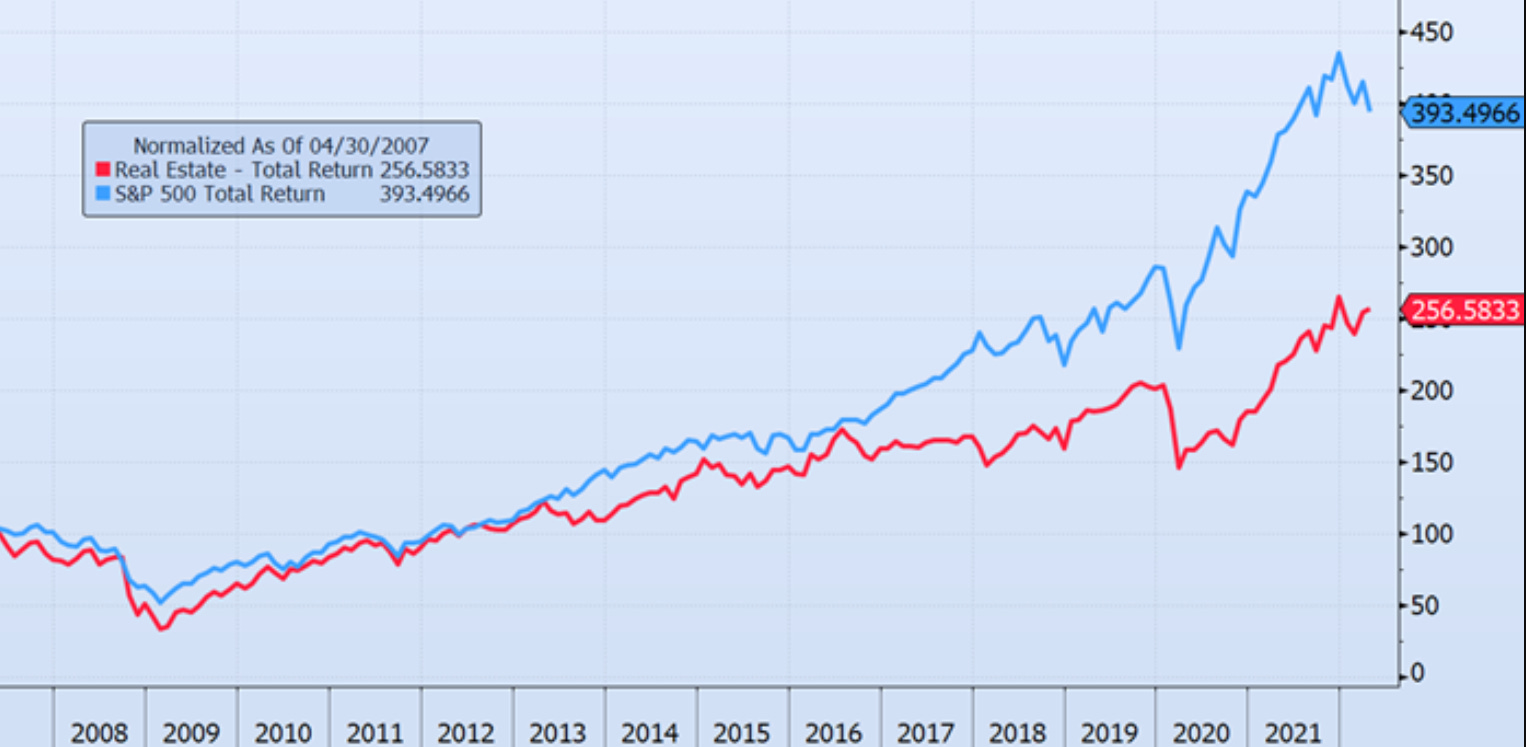
Looking at the data below, we can see that the S&P 500 has outperformed the growth of real estate.
Today, investors have better options. High-yield dividend funds have the potential to replace rental properties as a new path toward financial independence. These funds do not call you at two in the morning because of a leaky roof. They do not require mortgages, property management, or surprise capital expenses. Yet, they can generate similar or even higher levels of recurring income with far less effort.
For instance, a fund like NEOS Real Estate High Income (IYRI) can provide an 11% dividend yield on invested capital, while giving you exposure to some of the highest quality real estate businesses in the world.
👉 $100,000 invested generates ~$11,000 in annual dividends.
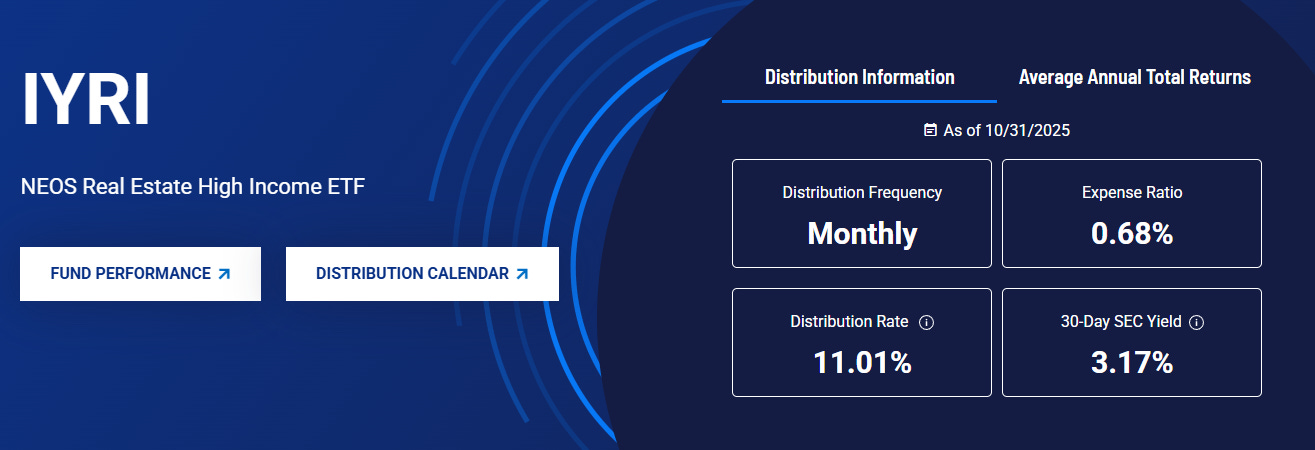
Depending on where you live, it may be impossible to get a yield like this with real estate.
Imagine a portfolio that pays you every single week or month, no property maintenance required. That is exactly what many modern high-yield ETFs are designed to do.
3 Cash Flow Alternatives
High-yield dividend ETFs are the new form of digital real estate. Instead of collecting rent from tenants, investors collect distributions from companies, options strategies, or income-based portfolios that operate automatically. The goal is the same: consistent, predictable income, but the process is much simpler.
👉 Here are a few examples that highlight how powerful this approach has become:
IYRI (NEOS Real Estate Income ETF)
This fund provides exposure to the U.S. real estate sector without owning physical properties. It combines traditional REIT holdings with an options strategy that enhances monthly income, giving investors both real estate exposure and a steady cash flow stream.
WPAY (YieldMax Weekly Pay ETF)
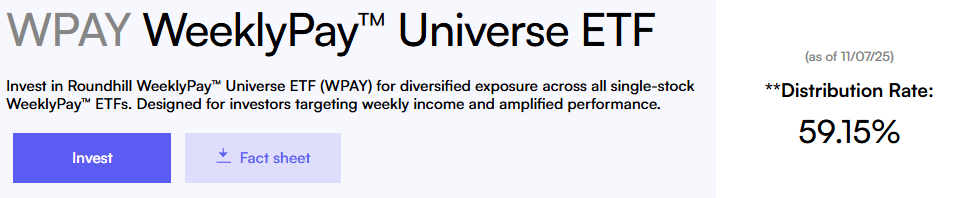
One of the first funds to distribute income every single week. WPAY generates income by using leverage on large technology companies, converting short-term volatility into steady income. It is the closest thing to collecting rent four times a month, except the tenants are corporations instead of people.
WPAY has a massive dividend yield over 59% and pays out every Wednesday.
GPIQ (YieldMax Nasdaq 100 Option Income ETF)
This fund provides access to the innovation of the Nasdaq while still paying a high monthly yield. It allows investors to benefit from growth sectors without relying solely on price appreciation. I’m willing to bet that GPIQ outperforms the growth of the real estate sector over the next decade.
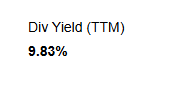
Each of these funds represents a modern version of what rental income used to symbolize: steady, automated cash flow that grows over time.
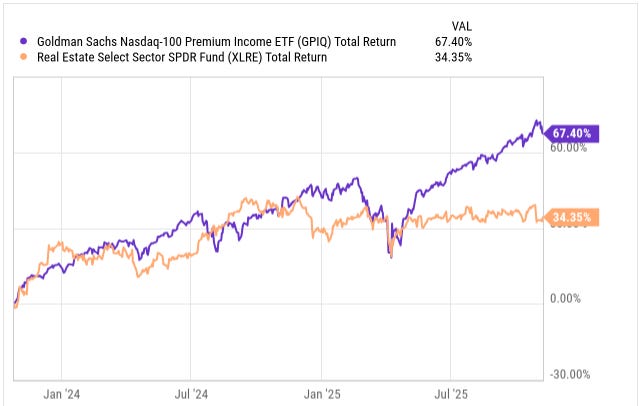
Even if we compare the performance of GPIQ versus the real estate sector ETF, we can see how GPIQ severely outperforms over the same time frame.
👉 I put together a dedicated option ETF guide to help you amplify your income.
Real Estate Vs High-Yield Funds
Let’s put the numbers side by side.
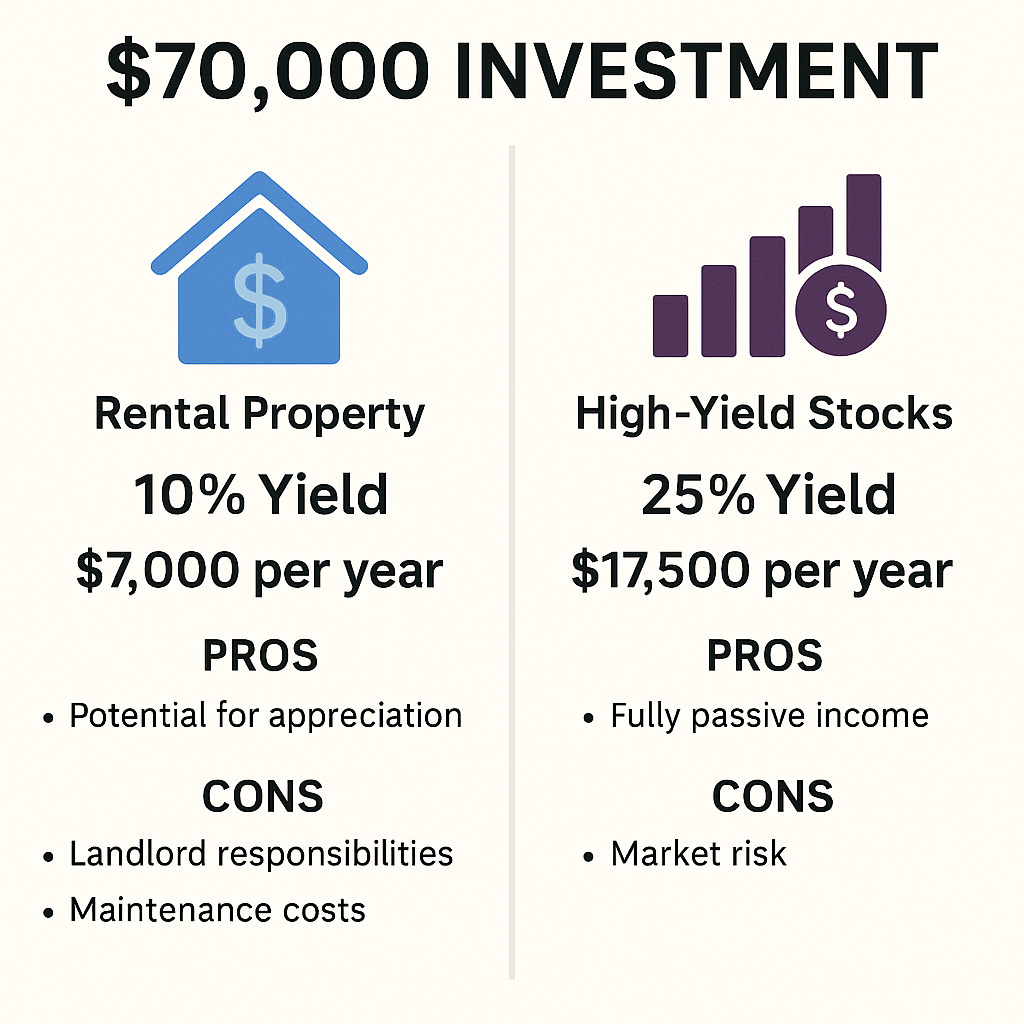
Imagine you purchase a rental property for $300,000. After making a 20 percent down payment and covering closing costs, you will have about $70,000 invested in cash. If the property rents for $2,000 per month, then after accounting for property taxes, maintenance, insurance, and vacancies, you might clear around $1,000 per month in profit. That equals roughly $12,000 per year in net income.
On the surface, that looks appealing. However, you also take on the role of landlord, deal with repairs, and risk losing income when tenants move out or the market slows.
Now consider a high-yield dividend portfolio. A mix of funds such as WPAY, IYRI, and GPIQ can generate yields between 10 and 15 percent annually. Investing the same $70,000 in these income-focused ETFs could produce $7,000 to $10,000 per year in completely passive income. There are no tenants to manage, no property taxes to pay, and no surprise repair costs.
The outcome is similar income with far less effort, greater liquidity, and the ability to reinvest dividends automatically for long-term growth.
Over time, that reinvestment creates a compounding effect that can rival or even surpass the appreciation of a typical rental property. This compounding effect is how I’ve been able to increase my annual dividend income above $50,000.
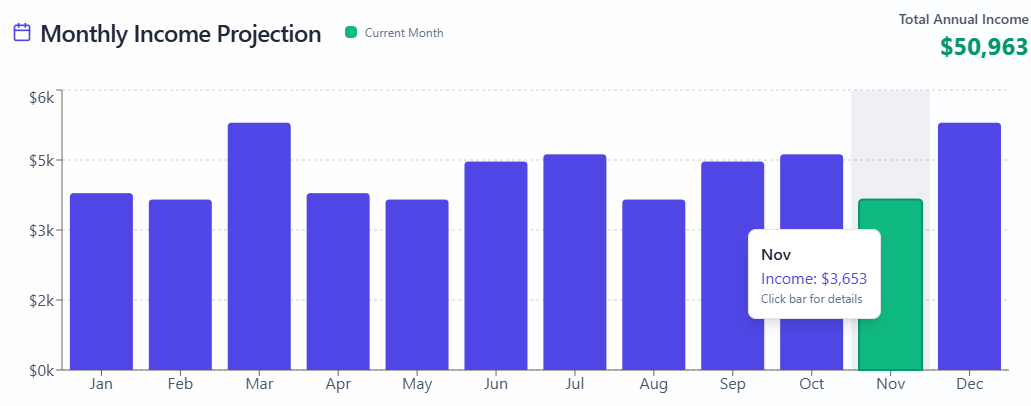
👉 If you need help tracking your dividend income, try the Yieldly Dashboard!
👉 Lock in a discount rate on Yieldly access forever!
Why This Model Scales Better Than Real Estate
Real estate can make you wealthy over time, but it scales slowly and demands more from you with every new property you buy. Each additional unit brings:
More taxes
More maintenance
More debt
More responsibility.
Even if you have a property manager, your income still depends on physical assets that need constant attention.
Dividend portfolios do not have that limitation. When you invest in high-yield funds, scaling your income does not require more effort or complexity. You can increase your holdings with a few clicks:
Reinvest automatically
Reallocate those funds to other sectors
Live off margin.
Expand your portfolio without worrying about tenants, mortgages, or repairs.
The beauty of this system is that it compounds without friction. Your money continues to work in the background, collecting income from hundreds of companies across multiple sectors. Every dividend reinvested becomes another “digital property” that adds to your income base.
Think of it this way: while traditional landlords may collect rent from a few tenants, a dividend investor collects from thousands of businesses across the economy. Each one contributes a small part to a much larger, more diversified stream of cash flow.
That is the difference between financial freedom and financial management. Real estate demands your time. Dividend income gives it back.
Closing Thoughts: Dividends Buy Freedom, Not Stress
The path to financial freedom no longer runs through physical properties or tenant calls. It runs through ownership of scalable, income-producing assets that pay you automatically while your capital continues to grow.
High-yield dividend portfolios are the evolution of the real estate model. They deliver recurring income, compound faster, and require none of the physical upkeep or emotional strain that comes with being a landlord.
The math is simple, and the results speak for themselves. Real estate investors have earned steady returns for decades, but the broader market has consistently outperformed. The chart above shows that since 2007, the S&P 500’s total return has far exceeded real estate — and that does not even include the compounding potential of reinvested dividends.
When you own high-yield funds like WPAY, IYRI, or GPIQ, you are not just earning yield. You are building a self-funding system that pays you whether the market is up or down. It is your own form of digital real estate — one that scales instantly, compounds automatically, and keeps your time completely free.
Absolutely — this makes so much sense! High-yield dividend funds feel like digital real estate: steady, scalable income without the headaches of tenants, repairs, or taxes. The power of compounding and liquidity really gives you freedom that traditional rentals just can’t match.