

My portfolio generates a little more than $41,000 in annual dividend income. Most of that gets reinvested automatically. But this year, I am making a deliberate decision with a portion of it.
I will be slowly rotating into disruptive growth subsectors that I believe will define the next decade of wealth creation. I believe this is the golden age for tech and we need to allocate our capital accordingly. These are companies that are disruptors and offer products or services that are truly innovative.
The income machine keeps running. What I am doing is using a slice of that cash flow to buy into the sectors that will power the next leg of compounding growth. This is why dividends are an essential piece of the puzzle.
Collect Dividends → Reinvest In Growth → Take Gains → Reinvest In Dividends → Repeat

While I haven’t started to add to any specific positions yet, I believe there are clear themes that we should track. With new markets literally being created in front of our eyes, such as AI-linked Robotics, this the time where we can find multi-bagger stocks that 10x our returns.
I will be sharing more than 21 tickers as part of this article.
I will be tracking six disruptive subsectors. Here is every single one that I think will see massive growth over the next decade. However, I like risk-adjusted returns; the lowest risk positions that have potential for massive returns.
👉My portfolio is up more than 37% YTD, compared to US Stocks being up 11.4%.
Subsector 1: Memory and Storage
There is a pattern that repeats in every major technology cycle. The headline hardware gets all the attention. The supporting infrastructure that makes that hardware actually function gets ignored until it is too late to buy it cheap.
Right now, that supporting infrastructure is memory and storage. This is why we’ve seen companies like Sandisk SNDK 0.00%↑ explode higher.
Every GPU shipped by NVIDIA requires high bandwidth memory stacked directly onto the chip. Every inference request processed in a data center burns through enterprise-grade solid state storage. Every large language model trained is consuming DRAM at rates no previous workload class ever required. The memory layer is not optional. It is the feedstock for everything the AI economy runs on.
And yet the names supplying it trade at a fraction of the multiples attached to the chip designers above them in the stack.
The HBM market was valued at $2.93 billion in 2024 and is projected to reach $16.72 billion by 2033 — a 21% compound annual growth rate driven almost entirely by generative AI demand. HBM4 supply is already fully committed through year-end 2026. Micron’s HBM4 allocation is sold out before a single unit has shipped at scale.
Why This Sector Can Explode Higher
Supply is structurally constrained. IDC projects 2026 DRAM supply growth of only 16% year over year, well below the 20 to 30% historical norms. Manufacturers are diverting capacity to HBM. The shortage is expected to persist into 2027.
HBM demand is growing at 70%+ annually. TrendForce projects HBM consumption growth exceeding 70% year over year in 2026 alone. NVIDIA, AMD, and Google are all migrating their AI chips to newer HBM generations with more stacks and higher total memory per chip.
Pricing power has arrived. NAND contract prices rose roughly 60% in Q1 2026. DRAM pricing followed. HBM generates three to five times the margin of standard DRAM. The companies producing it are price-makers for the first time in the industry’s history.
Four Names Worth Researching
These are the four companies I am watching in this subsector. Each one covers a different part of the memory and storage stack. Do your own due diligence before buying anything.
Micron Technology MU 0.00%↑
Western Digital WDC 0.00%↑
Seagate Technology STX 0.00%↑
Lam Research LRCX 0.00%↑
Subsector 2: Drones
Commercial drone adoption is moving faster than most income investors realize. Defense contracts are accelerating. Last mile delivery is no longer a pilot program. The FAA regulatory framework for beyond visual line of sight operations is finally taking shape, which removes the single biggest barrier that held this sector back for years.
Add the commercial side, and the opportunity compounds further. The global drone market was valued at $63.6 billion in 2026 and is projected to reach $127 billion by 2032. Investors put $1.7 billion into drone companies in just the first two months of 2026 alone.
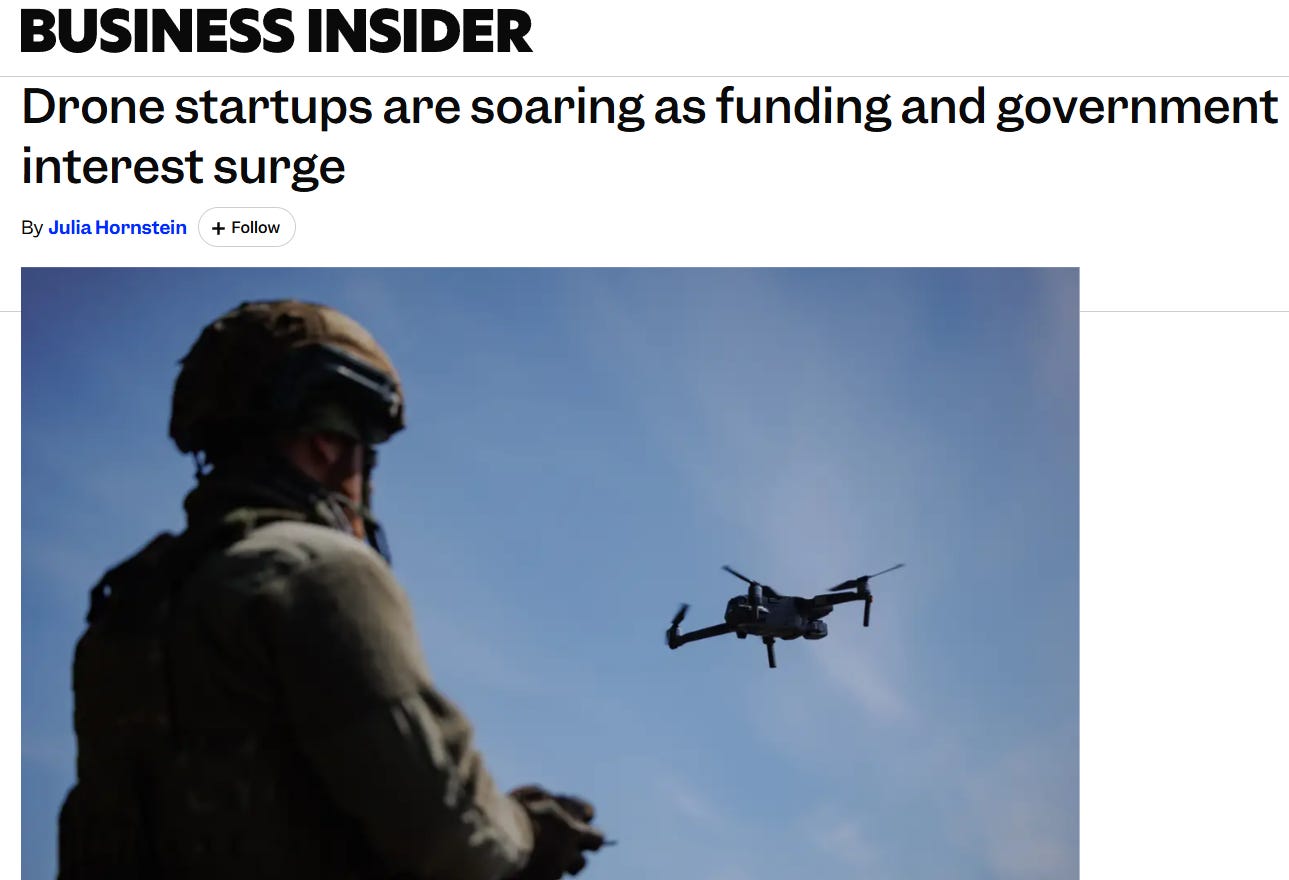
In December 2025, the FCC banned new foreign-manufactured drones from the U.S. market under the National Defense Authorization Act. DJI held 80% of the U.S. consumer drone market. That share now has nowhere to go except to domestic manufacturers. The reordering of the supply chain is already underway, with Skydio committing $3.5 billion to U.S.-based drone manufacturing in 2026.
This is an early stage infrastructure play with real government and enterprise revenue behind it today. The window to buy before the institutional pile-in is closing.
Why This Sector Can Head Higher
The Pentagon is buying at scale. The DoD is spending over $1 billion on 300,000 attack drones in 2026, with Army procurement targets extending into the millions of units. Defense contracts of this size create multi-year revenue visibility for the companies that hold them.
The foreign ban is a demand accelerator. With DJI and other foreign manufacturers locked out of new U.S. certifications, roughly 80% of the consumer market and a significant portion of the commercial market needs to be absorbed by domestic suppliers. That kind of forced demand shift is rare and powerful.
BVLOS regulations are finally arriving. The FAA’s Part 108 framework expected to finalize in 2026 would allow commercial drones to fly beyond the operator’s line of sight without individual waivers. That single regulatory change opens up last mile delivery, infrastructure inspection, and agricultural applications at national scale.
The market is doubling over the next six years. At a 9.5% CAGR from 2026, the global drone market reaches $127 billion by 2032. The fully autonomous segment is growing faster at 12.7% annually. The companies positioned in defense and commercial autonomy today are riding that curve from the start.
👉 Upgrade Your Subscription - $0.82 per day to become a better investor. Paid subs get buy alerts first.
Four Names Worth Researching
This list covers established defense revenue, commercial aviation adjacency, and a high-risk small-cap pure-play for those who want maximum exposure to the procurement cycle. Do your own due diligence before buying anything.
