

At the beginning of the month, I published at article that highlighted 4 stocks that give bigger raises than most jobs. This time, I wanted to highlight one specific company that sits at a discounted valuation and has the potential for attractive dividend raises going forward.

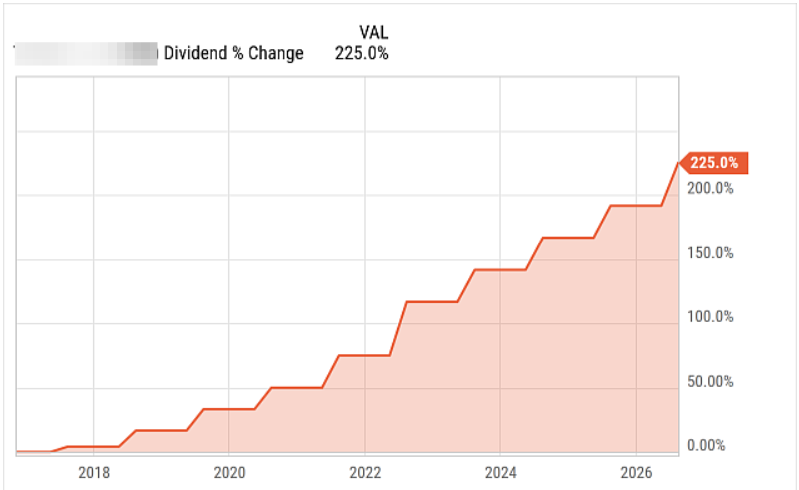
The company that I am highlighting has increased its dividend by 225% over the last decade. So if you invested in this company for ten years, your annual dividend income would have more than tripled.
Walk through any grocery store right now and pay attention to what actually goes into people’s carts. The store brand sits on the shelf next to the name brand, usually a couple of dollars cheaper, and more often than it used to, it’s the one that goes in the cart.
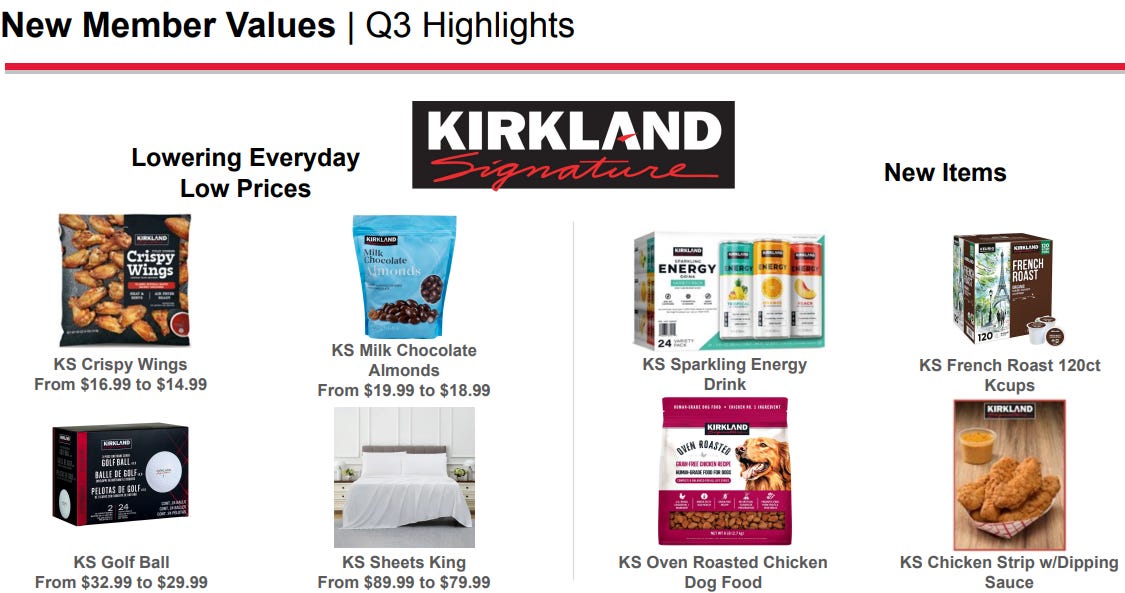
Costco COST 0.00%↑ is a good example of this — people love Kirkland products because it offers quality at a discounted price. Times are changing and consumers are more open to buying store brands, especially if the quality is the same or better than national brands. When I go to Costco, I walk right past the Poland Springs water and grab the Kirkland water instead.
It’s all seems to operate in cycles. Groceries get expensive, people switch to the cheap version to get through it, and then wages catch up and the big brands run promotions until everyone comes back. Store brands would pick up a point or two of market share during the rough stretch and hand it right back when things improved. That pattern held for about three decades, through every recession anyone reading this has lived through.
What broke the pattern is that none of that happened this round. Store brands took 23.8% of every item sold in American grocery stores in the first half of 2026, which is a record, while national brand unit sales actually fell 0.5%. That is happening with employment strong and wages rising, which is exactly when the old pattern says people should be trading back up.
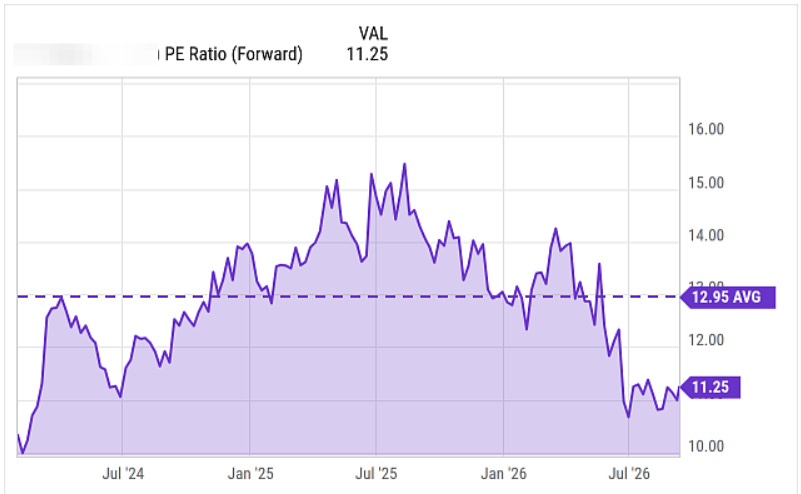
I believe this is an opportunity for investors to accumulate high quality consumer businesses at a discount. The company I am highlighting today trades at a lower forward price-to-earnings ratio than its average range over the last three years. Buying at a discount is my specialty, so I will be adding shares here as well.
👉 My June buy alerts are up more than 25%. Paid subscribers get every alert first.
What Actually Changed In The Cart
Bank of America tracks card spending across its entire customer base, and in July total spending per household was up 5.0% from a year earlier. In that same month, after-tax wage growth for lower income households passed higher income households for the first time since December 2024.
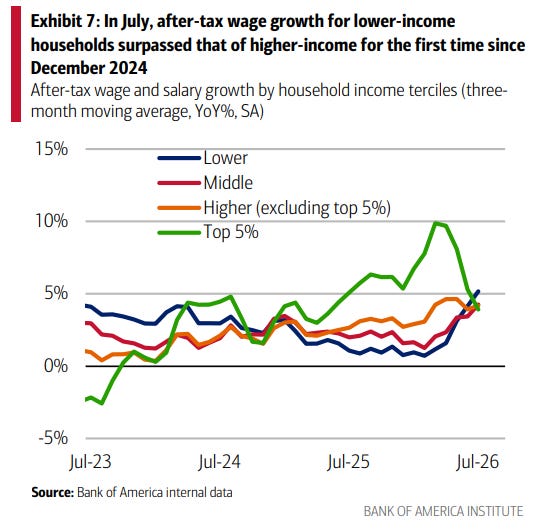
People have more money than they did and they are still buying the store brand, which makes this a clear customer preference. So the question worth answering is how a preference like that forms, because preferences are a lot harder to reverse than a budget problem.
I think it all starts as a price decision. Grocery inflation ran into double digits in 2022, people reached for the cheaper version to get through the month, and everyone in the industry treated that as a temporary trade. What nobody accounted for is that the products had gotten good. Retailers had spent years upgrading their own lines while the national brands were busy raising prices, so the shopper who grabbed the store brand yogurt out of necessity opened it, ate it, and could not tell the difference.
Once that happens, there is no going back to paying thirty percent more for the label.
People will stretch a grocery budget in a dozen places before they downgrade what they feed the dog or what they pour on a Friday night. When store brands start winning there, you are watching people buy what they actually want.
The obvious pushback is that people are going broke and putting groceries on a credit card. The data says the opposite.
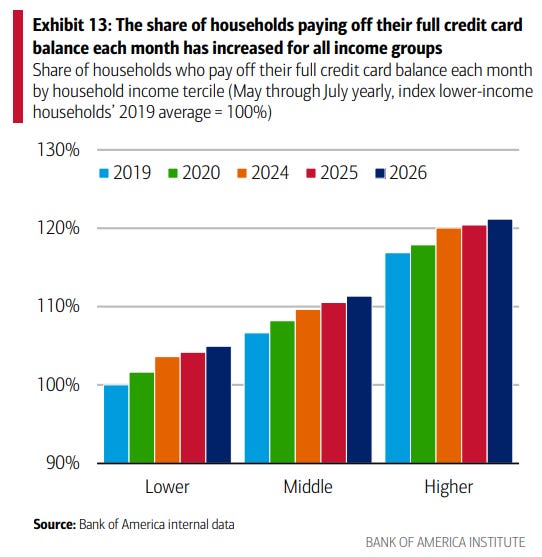
Households in all three income groups are paying off more of their balances than they were, not less. Nobody is funding groceries with revolving debt and then choosing the cheap yogurt out of desperation. They just prefer it now.
Aldi and Trader Joe’s run roughly three quarters store brand by volume, so a shopper who grew up in those aisles never had national brand loyalty to lose. For them the store brand is simply what the product is, and the name brand is the more expensive thing sitting beside it.
Store brands now take nearly 39 cents of every dollar spent in the refrigerated aisle. That’s the center of the store and the highest traffic section in the building. Ten years ago everyone assumed dairy and deli were too personal for shoppers to give up.
One large American grocer reported earnings yesterday. Its own private label line grew more than 14% in the quarter.
I’ll name the company below.
