

I own Meta shares directly, and I've been very bullish on them. But if you've ever looked at what Meta actually pays you to hold it, you already know the problem: the dividend is so small it doesn't change anything about your month. As you’d expect, META 0.00%↑ is a dedicated growth position for me that has performed well since the initial buy alert.
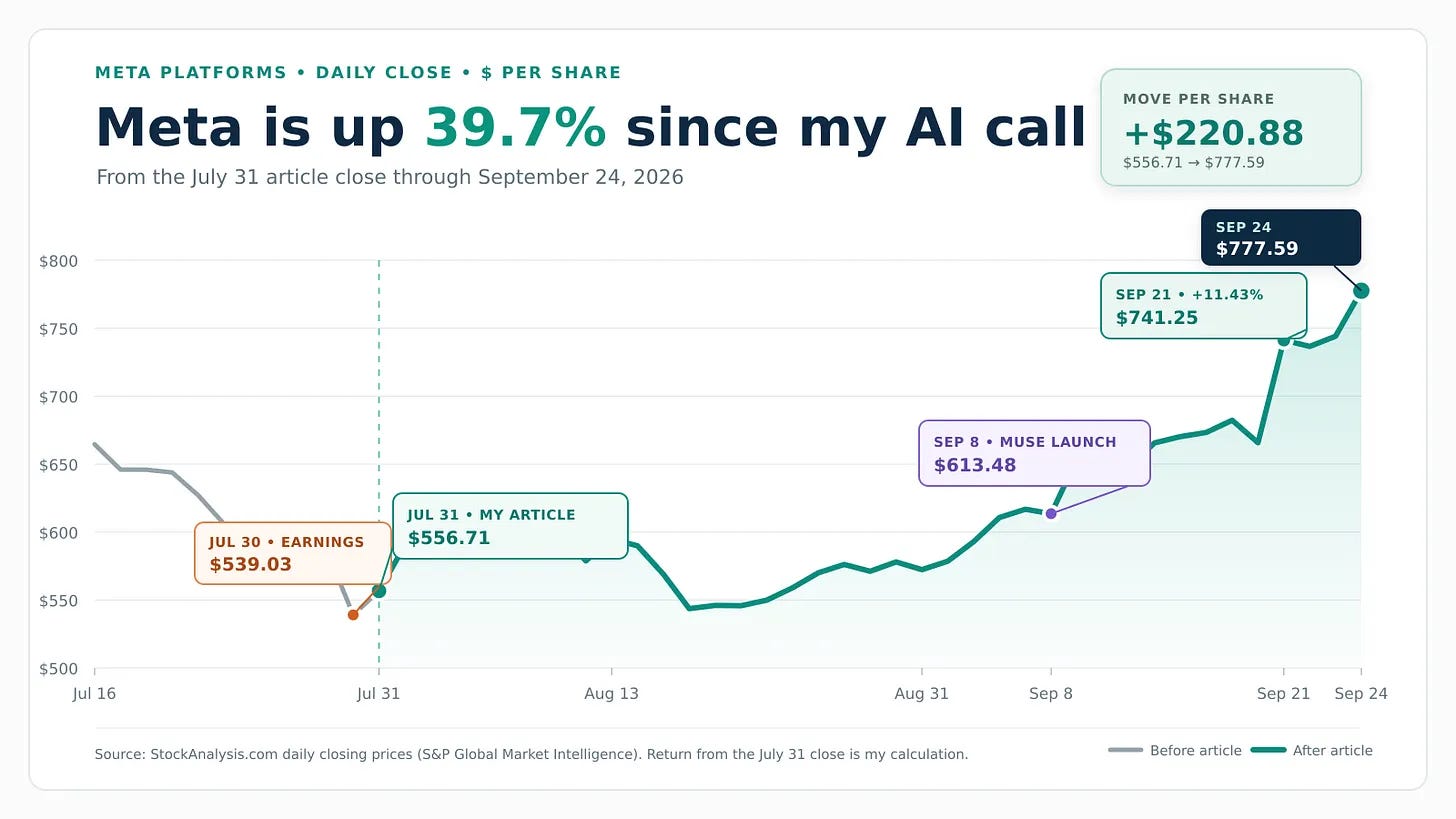
This fund is how I fix that without selling a single share, and on $5,000 its payouts over the last year add up to about $2,221 (my math), although what you should realistically expect from it depends on what Meta does next.
👉 This fund I will be highlighting today offers a massive 44% dividend yield.
👉 $10,00 invested = $4,400 in estimated annual dividend income.
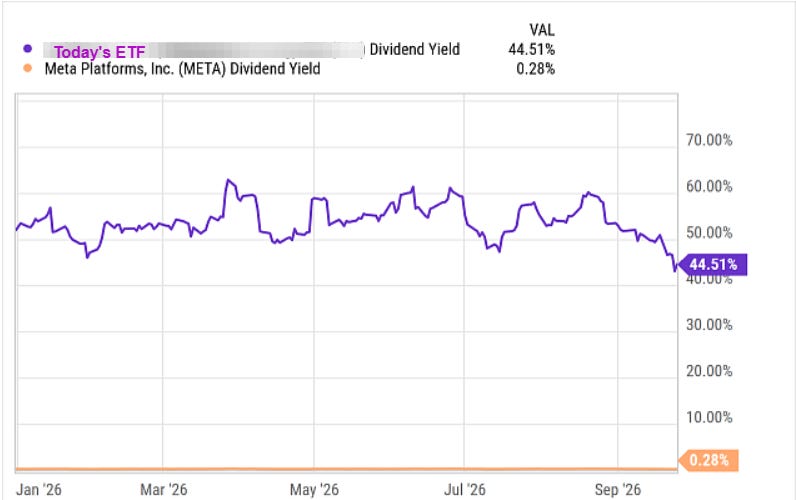
👉 The caveat here is that this ETF only makes sense if you currently hold regular META shares as well.
Key takeaways
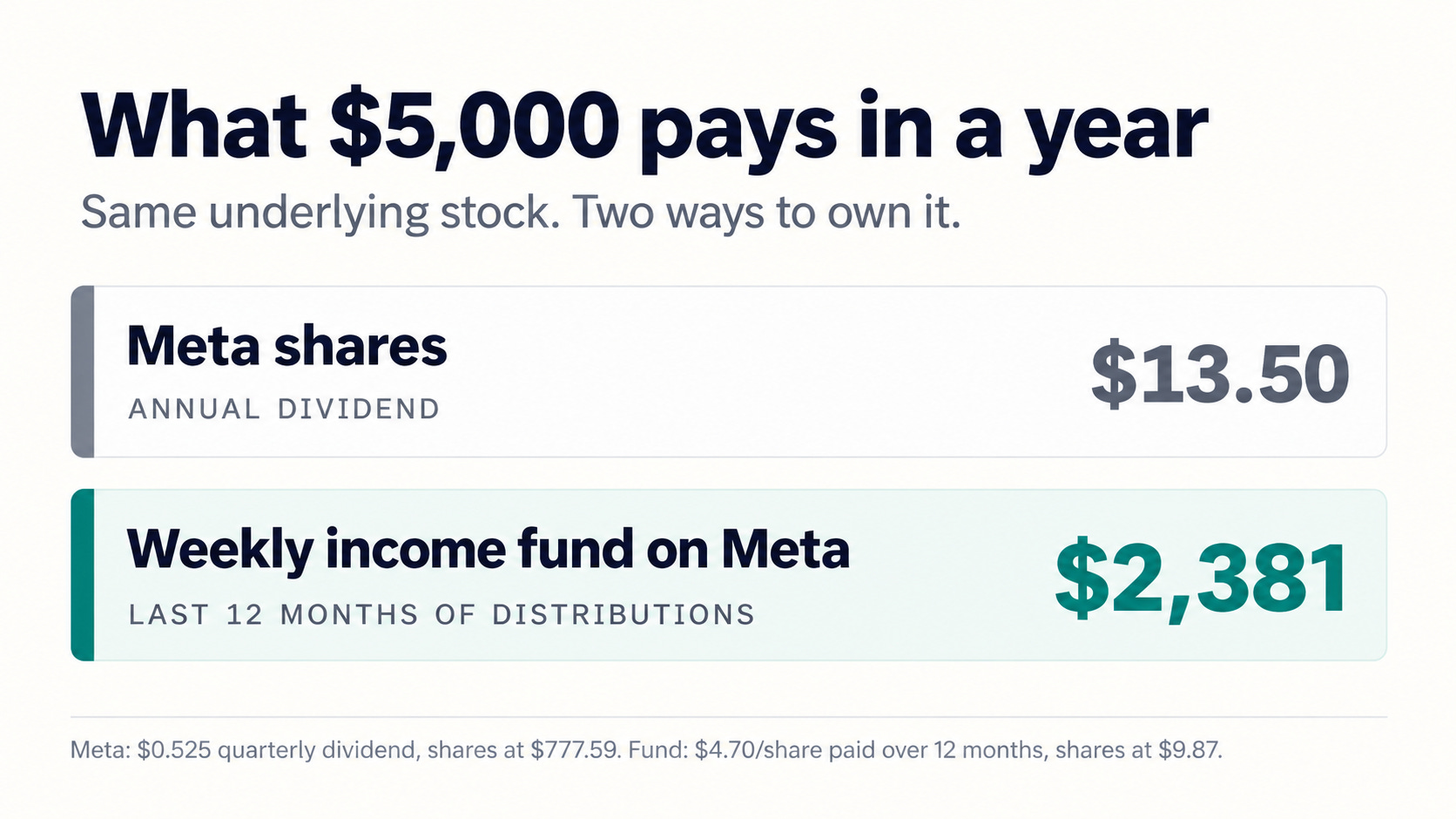
$5,000 in Meta stock pays about $13.50 a year in dividends at today’s price.
The same $5,000 in the weekly income fund I use would have collected about $2,381 over the last 12 months of payouts.
The fund’s payout doubled in the three weeks after Muse launched, because bigger stock moves mean bigger option premiums.
It captures part of Meta’s rallies and most of its drops, which is why it sits next to my Meta shares instead of replacing them.
Why Doesn’t Meta’s Dividend Pay My Bills?
Meta pays $0.525 a share every quarter, according to StockAnalysis, and at $777.59 a share that works out to a yield of about 0.27%. Put $5,000 into Meta and you own about 6.4 shares, which pays you roughly $13.50 a year, or about $1.13 a month.
That’s fine for a growth position, and I’m not asking Meta to change anything. The company expects to spend $130 billion to $145 billion this year building out AI, per its Q2 results, and I’d much rather it put its cash there than into a bigger dividend.
So I split the job in two. My Meta shares handle the growth, and I never sell calls against them because I want every dollar of upside on the run I laid out in my last piece. A separate fund handles the income, and it paid out more than 170 times as much per dollar invested as Meta’s dividend over the past year.
How Does A Stock’s Swings Become Weekly Income?
Picture someone paying you a fee every week for the right to buy your Meta shares if the price jumps past a certain level. That’s what selling a call option is, and the fee is called the premium. The more a stock swings around, the more people will pay for that right, because a big move is more likely to happen.
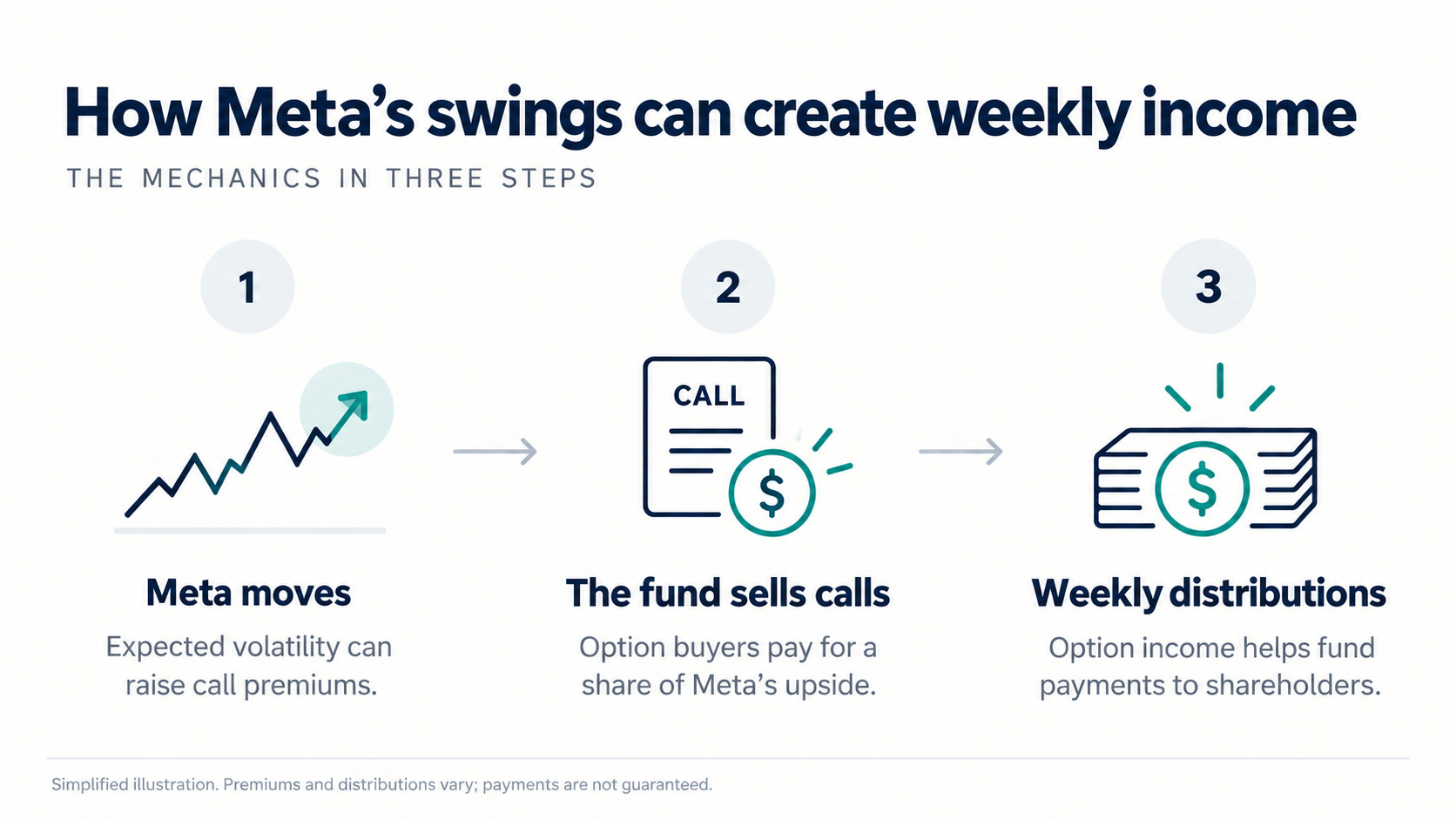
The fund I own does this every single week on Meta and passes the premium out to shareholders as a weekly distribution. So yes, you can get paid passive income every single week with this ETF.
It doesn’t need to own Meta shares to do it, since it holds options that track Meta’s price and keeps most of its money in short-term Treasuries as collateral.
September showed how that plays out: Meta jumped 11.43% in a single day on September 21 after Muse hit number one on the App Store, according to TipRanks, and a stock that moves like that suddenly makes its options a lot more valuable. The fund’s weekly payout DOUBLED in three weeks, from the first week of September to the last.
When Meta goes quiet and trades in a tight range, option buyers pay less, and the weekly checks shrink. You’re collecting income from Meta’s volatility, so the size of the paycheck moves with how exciting Meta is on any given week.
What Does Weekly Income Actually Do For Me?
Every one of those Friday deposits goes straight back into my growth positions, which is what I call the dividend wheel. The income fund throws off cash, the cash buys more of the companies I want to own for the next decade, and none of it requires me to trim a winner or time the market.
👉 Learn The Dividend Wheel Strategy
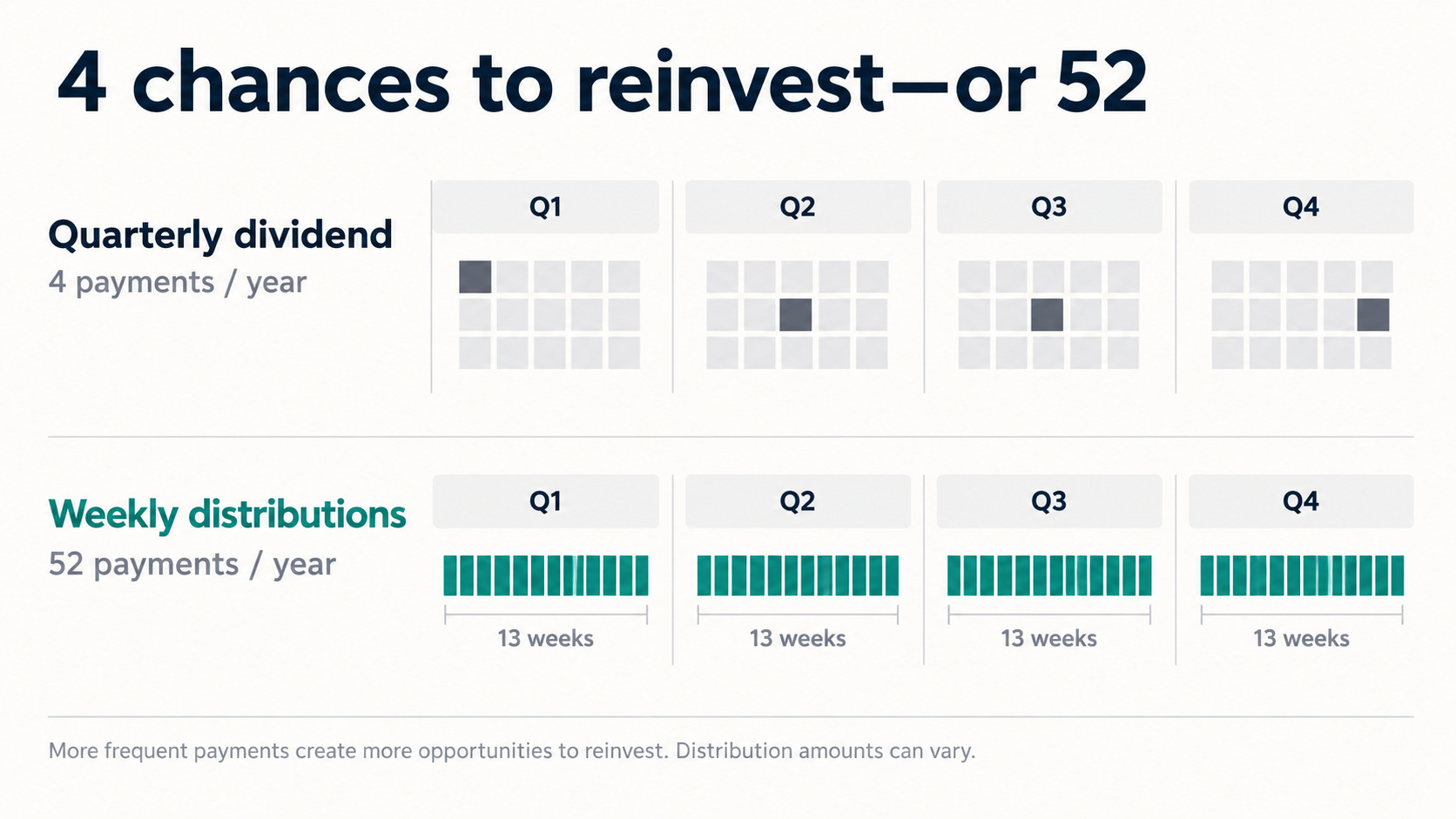
A quarterly dividend gives you four chances a year to put money to work, and a weekly one gives you 52, so I’m buying on the dips as they happen instead of waiting three months for the next check. It also gives me a buffer of cash coming in every Friday no matter what the market did that week, which makes it a lot easier to sit tight through a bad stretch.
If option income is new to you, I compared ten of these funds side by side in I Analyzed 10 Option Income ETFs, and it’s a good primer before you go further.
Paid subscribers get the exact fund I’ve built into a $5,000 position below, its full payout history, what that $5,000 pays me each week, and the real numbers on how it behaves when Meta rallies and when Meta drops, so you know what to expect before you own it.
Paid subscribers get the rest
The fund’s name and ticker, and how it’s built under the hood
Every weekly payout in 2026, and the planning number I actually budget off
Real results from Meta’s last rally and last drop, side by side
Why 95% of the latest payout wasn’t taxed right away, and my position
