

If you put $500 a month into the market, that’s $6,000 of new money going to work in 2027, and most people end up deciding where it goes one trade at a time, usually right after a headline rattles them. I invest at least $3,000 every month, which works out to $36,000 of new money next year, and I’d rather settle where it goes before January starts.
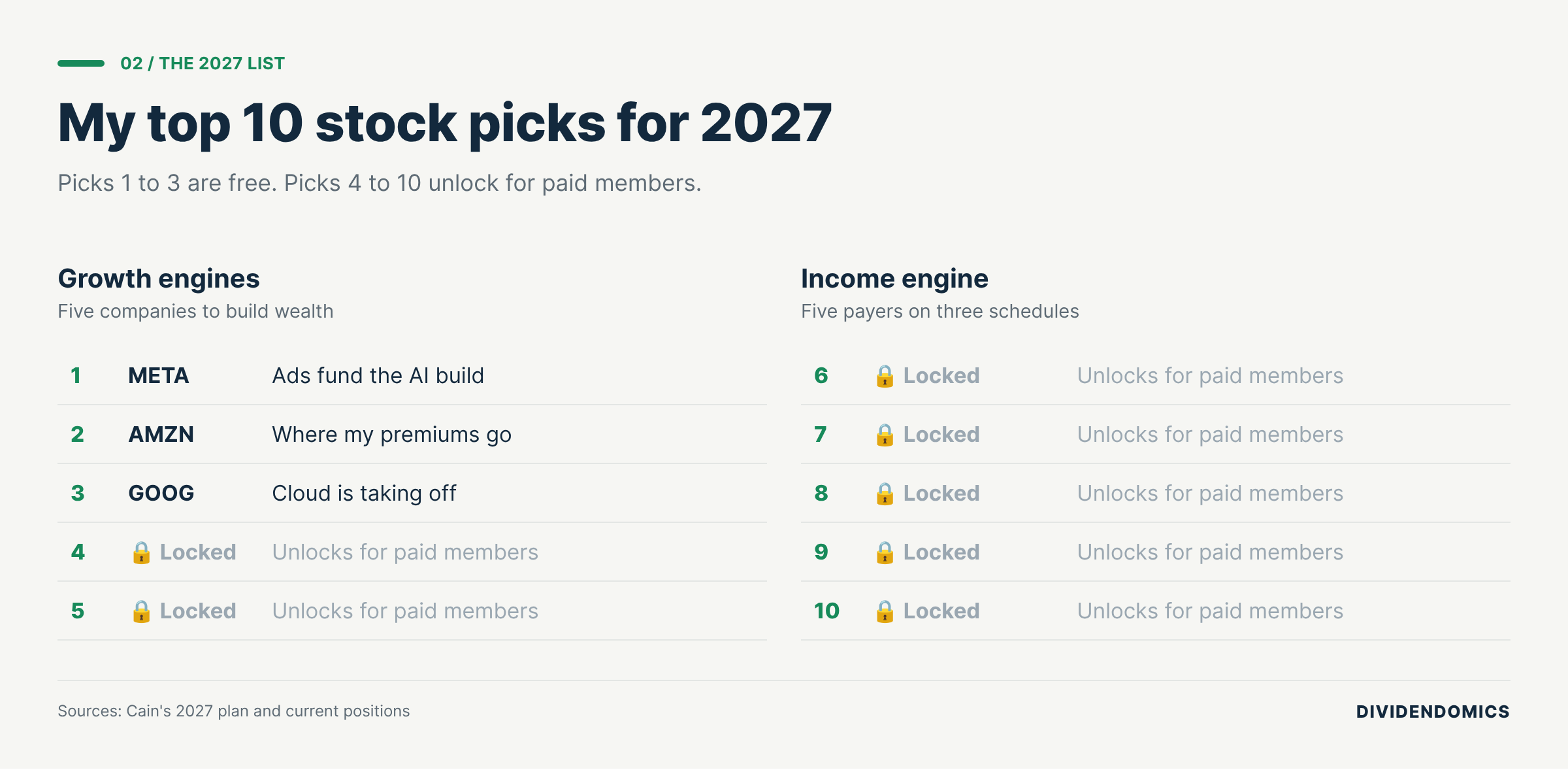
So this is where that money is going. Last January I published my ten picks for 2026, and this list follows the same idea: five growth engines that build wealth and five income payers that send me cash while I wait. The income side funds the growth side, which is exactly how I run my own portfolio, with every covered call premium I collect going into Amazon each week.
Meta and Amazon are the two names from last year’s list that made the cut again. I took profits on Bloom Energy in August and moved that money into Uber, Netflix and CGDV, and in September I moved on from the weekly-pay fund that used to trade as WPAY. Everything below is something I own right now and plan to keep buying.
How I Picked These Ten
Every name on this list had to pass three tests. I have to own it already with my own money, the growth names have to pay for their own spending out of real cash flow, and the income names have to pay me on a schedule I can count on, whether that’s every week, every month or every quarter.
That’s why there are no long shots on the list this year. I’d rather show you ten positions I’m adding to with real dollars than a list built to sound exciting, and every number below comes straight from the company’s latest results or the fund’s own page.
Part 1: The Growth Engines
1. Meta Platforms (META)
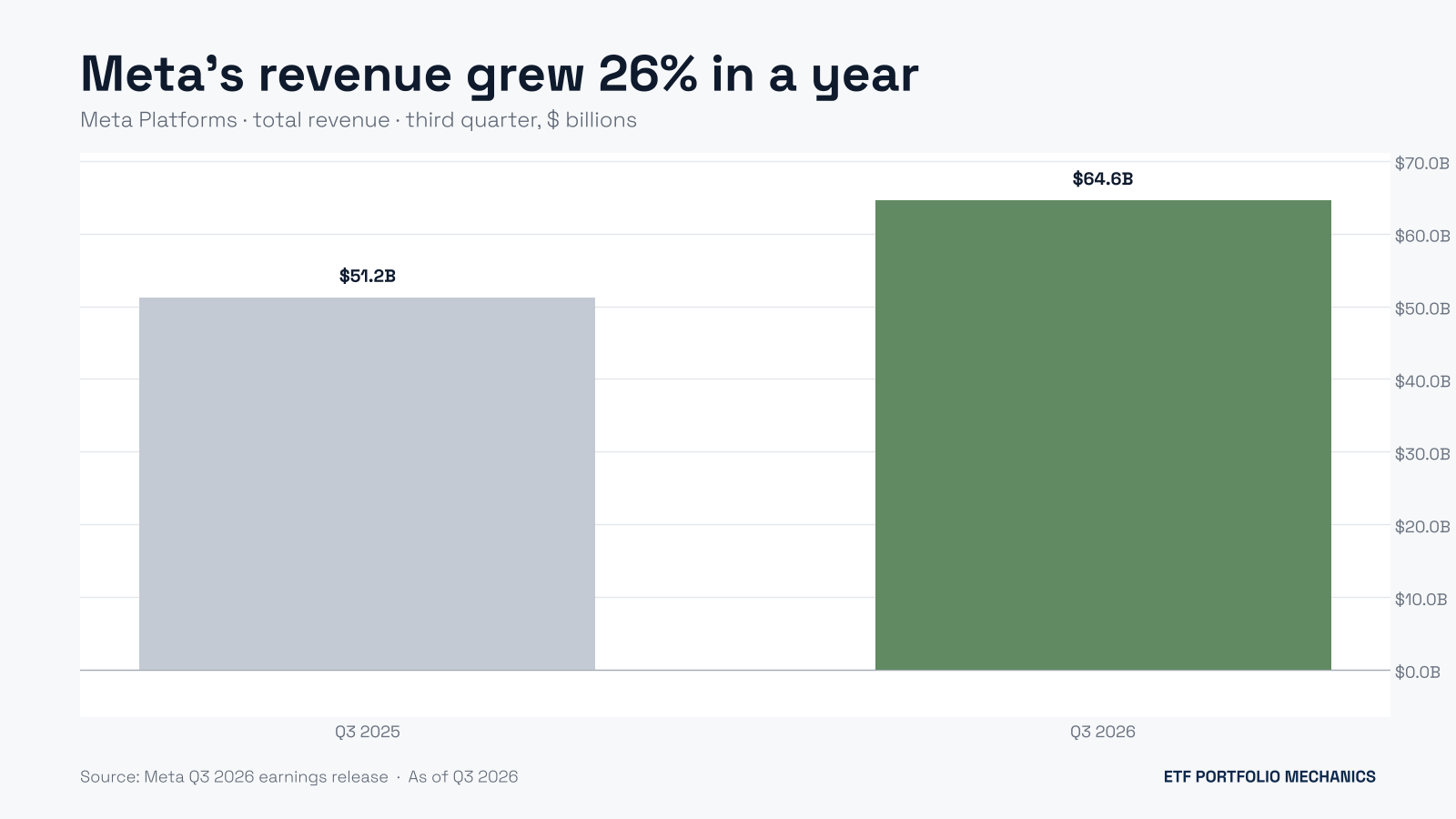
Meta is my largest position and it stays at the top of the list. Revenue hit $64.6 billion in the third quarter, up 26% from a year ago, and that growth comes from an ad business billions of people already use every day. That’s why I own Meta for AI instead of waiting for a private AI lab to go public: the ads pay for the build.
The cost of that build shows up in the margins, with Meta’s operating margin falling to 20% from 40% a year earlier as the data center spending landed. I’m comfortable with that, because the money goes into the computing power that makes its ad targeting better, and I’d rather own the company writing the checks than the ones waiting to cash them.
Meta guided its 2026 capital spending to between $135 and $145 billion. That number scares some investors, and I read it as a company with enough cash coming in to build its own AI future without borrowing someone else’s.
2. Amazon (AMZN)
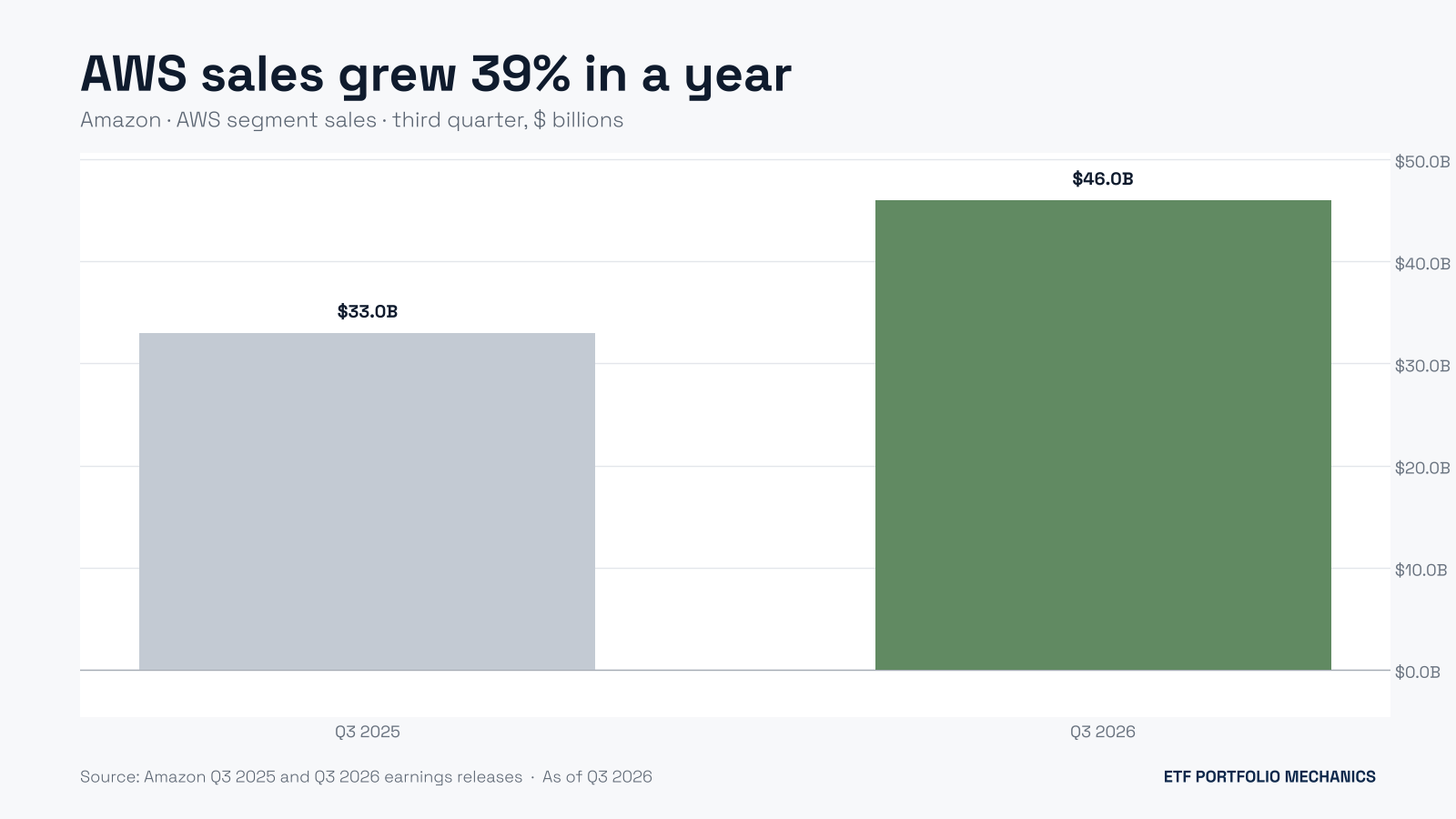
Every covered call premium I’ve collected since August has gone into Amazon each week, and I plan to keep doing that all through 2027. The reason is the cloud: AWS sales grew 39% in the third quarter to $46.0 billion, which makes AWS the part of Amazon I’m really buying.
Profitability is improving across the whole company too. Amazon’s operating margin reached 13.9% last quarter, which the company called its highest ever, and higher margins on a business that size leave more cash to fund AI without leaning on shareholders.
Management’s outlook points the same way, with fourth quarter sales guided to between $240 and $247 billion. I don’t need a price target to keep buying a company that expects its next quarter to be even bigger than the one it just reported.
3. Alphabet (GOOG)
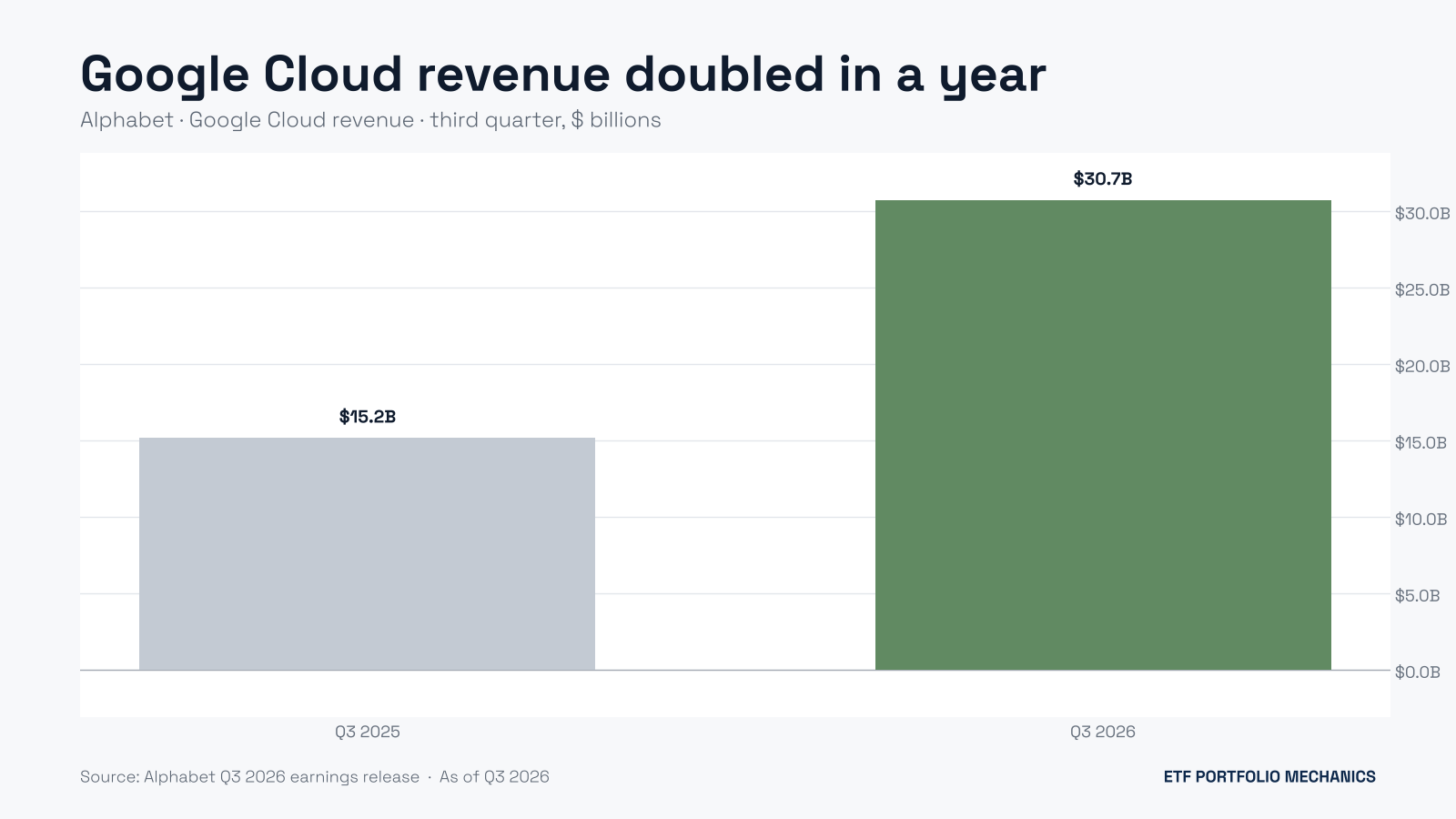
Alphabet is the pick I’m most excited about for 2027. Google Cloud revenue more than doubled in the third quarter, up 103%, while total revenue grew 25%, which works out to the cloud growing about four times faster than the company as a whole. Cloud used to be the side project next to search, and it’s turning into a second engine.
I own Alphabet for the same reason I own Meta: an established business pays for the AI spending, so I’m not relying on a chatbot to turn a profit someday. It also pays me a dividend of $0.22 a share this quarter, which is small, but it tells me the board expects the cash to keep coming.
The operating margin came in at 31.8%, so Alphabet is doubling its cloud business while still keeping almost a third of its revenue as operating profit. That mix of fast growth and fat margins is hard to find at this size.
See Everything I Own In Yieldly
A list of ten names only tells you so much, which is why paid members also get the Yieldly Dashboard. It’s the tool I built to track my own dividend income, and inside it you can see my holdings, what each one pays and when the next payment lands.
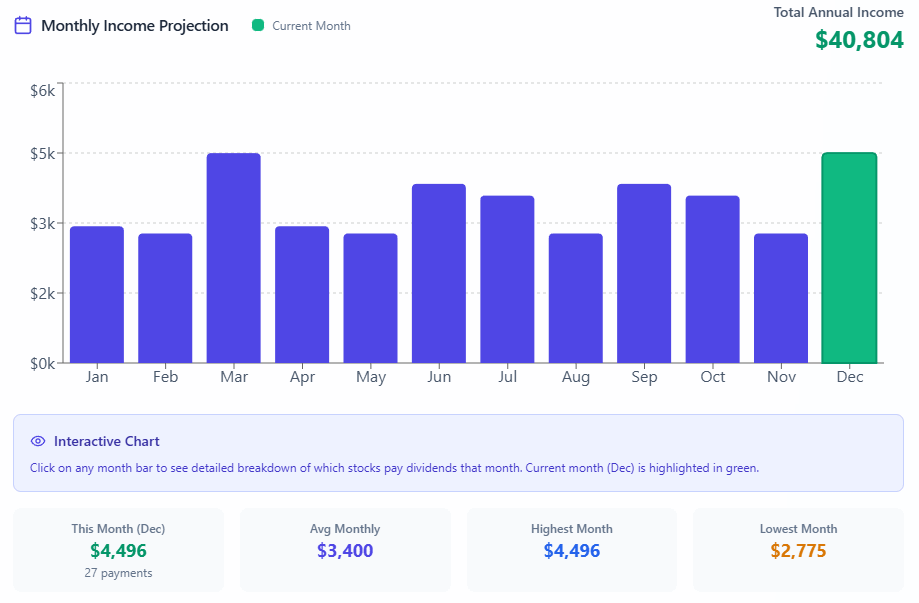
You can load your own portfolio too and see your income by year, month, week and day, along with a calendar of every upcoming payment. It answers the question I care about most, which is what my portfolio is going to pay me next.
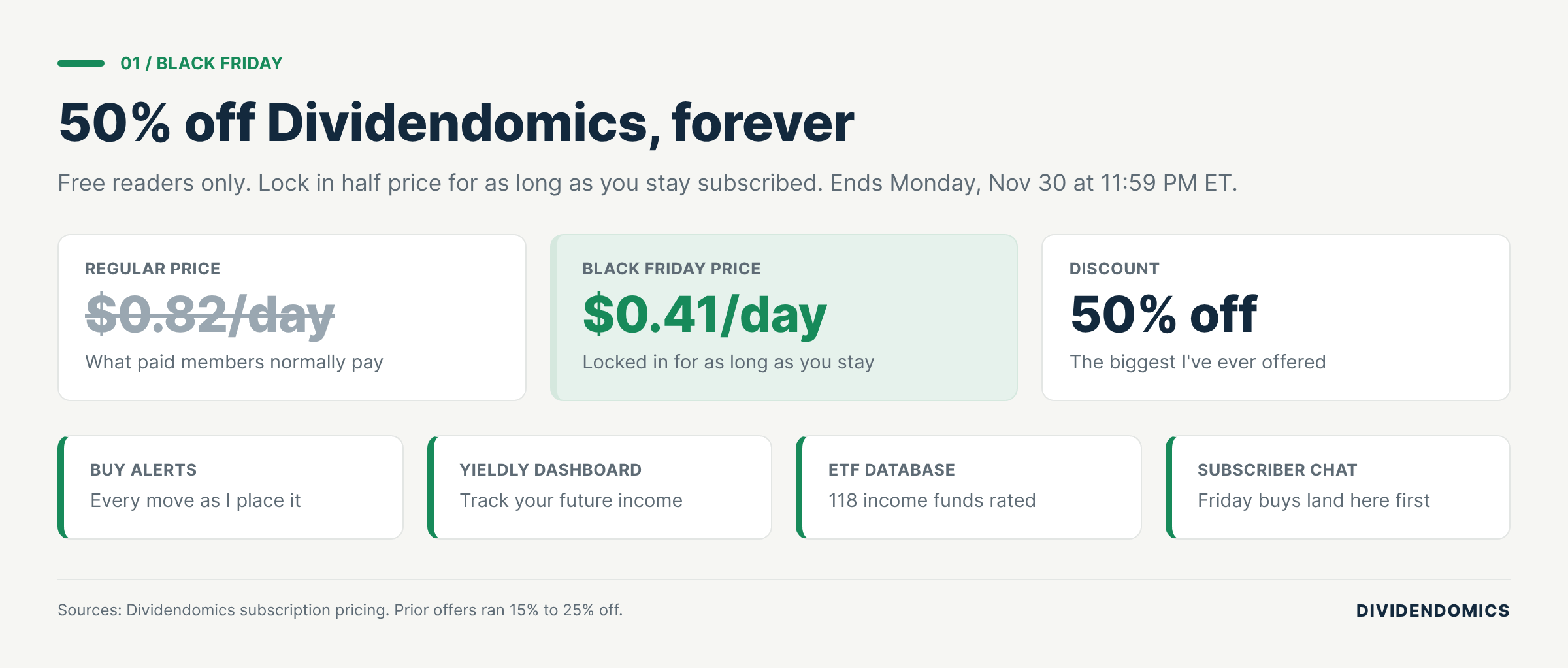
The rest of the list is for paid members. That includes the two growth stocks I’ve been adding to since the summer and the five payers that send me cash every week, month and quarter. Through Monday, Nov 30, free readers can lock in 50% off forever, which takes a membership from $0.82 a day to $0.41 and gets you every pick, every buy and sell alert, and my holdings inside Yieldly.
