

I truly believe that investing in the businesses leading AI will get you rich. It doesn’t have to be complicated. Amazon AMZN 0.00%↑, Microsoft MSFT 0.00%↑, Nvidia NVDA 0.00%↑, and Meta Platforms META 0.00%↑ continue to be an easy way to get exposure.
But what happens several years from now when you’re sitting on hundreds of percentage points worth of gains? Taxes.
Imagine a financial landscape where the tax on your capital gains, interest, and dividends is a flat zero.
In Puerto Rico, it is currently the law. Under Act 60, the incentive is simple. Move your life here and keep every penny of your post-residency growth. It is the ultimate arbitrage. It is a legal exit from the federal tax system that has turned the island into a magnet for high-net-worth investors and digital nomads.
I recently visited the island to look at a few properties and I wanted to share some discoveries with you all.
The window for this perfect trade is officially closing. Under the new Act 38-2026, the 0% rate is now on a countdown.
Anyone filing after December 31, 2026, will be subject to a 4% preferential tax. While 4% is still low compared to the mainland, the shift signals a major change in the island’s economic weather.
The Arbitrage of Living
The draw is not just the numbers. My buddy 60 Seconds to FIRE talks about it a lot; it’s called location arbitrage.
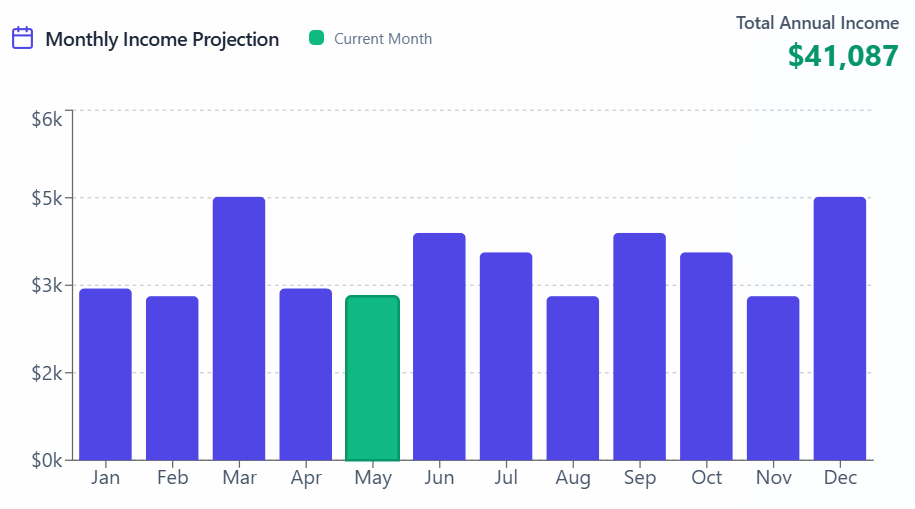
It is the lifestyle that the 0% rate buys. For instance, my $41k in expected dividends would be 100% tax free in Puerto Rico.
👉 Earn $100/Day With Dividends
On the mainland, an investor in the top tax bracket might lose nearly 24% of their capital gains and up to 37% of their interest income to the federal government. In San Juan, that money stays in your brokerage account. This is the ultimate “arbitrage of living.” You are essentially trading your zip code for a massive increase in compounding power.
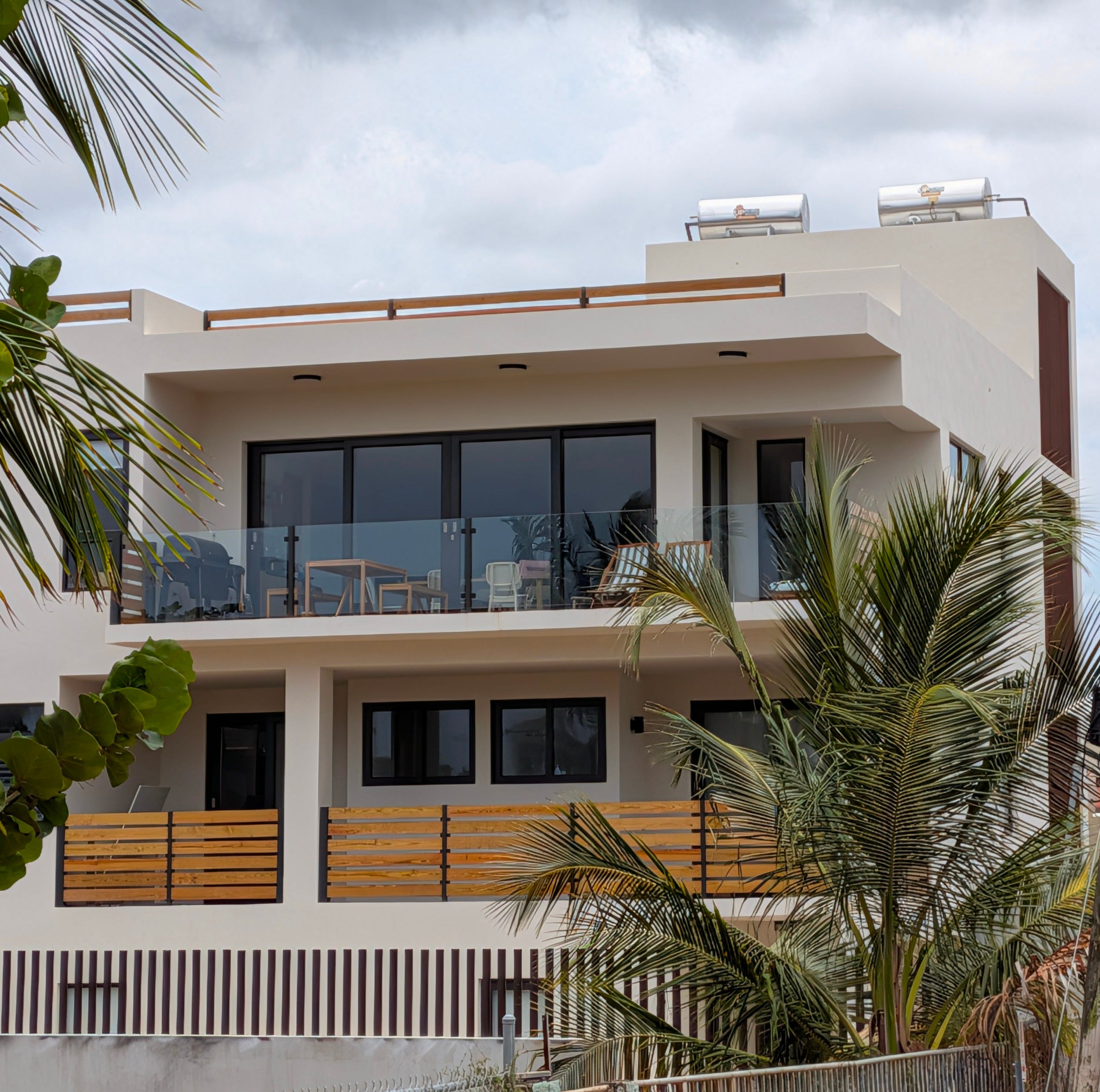
This is why you will see lots of luxury scattered around the island. Foreign cars, penthouse condos, and high end brands sprinkled around the wealthier parts of the island.

But this trade comes with a unique set of constraints. To qualify as a bona fide resident, you cannot just own a condo and visit for the winter. You must prove your life is centered here. This means spending at least 183 days on the island and demonstrating a “closer connection” to Puerto Rico than to any other location. You have to move your primary place of business.
You have to file annual reports and pay $10,000 every year to local charities. One half of that donation must go specifically to organizations focused on child poverty.
Under the new 2026 rules, the barriers are getting higher. If you miss the December 31 deadline, you are no longer playing for a 0% return.
You are playing for 4%. While that is still a significant discount compared to the states, it signals that the era of the “free ride” is evolving into a regulated tax regime. Moving here is no longer a simple tax hack. It is a long term commitment to an island that is increasingly demanding more from its guests than just their presence.
The Infrastructure Needs Improving
The money saved on taxes often disappears into the cost of basic survival. Puerto Rico offers futuristic economic math, but the physical world is still playing catch-up. Living here means accepting that you are often your own utility company.
The power grid is the primary hurdle. It is fragile and unpredictable. In high-end neighborhoods, the most important appliance in a luxury condo is the backup generator. A blackout causes a total business shutdown for anyone relying on a steady connection.
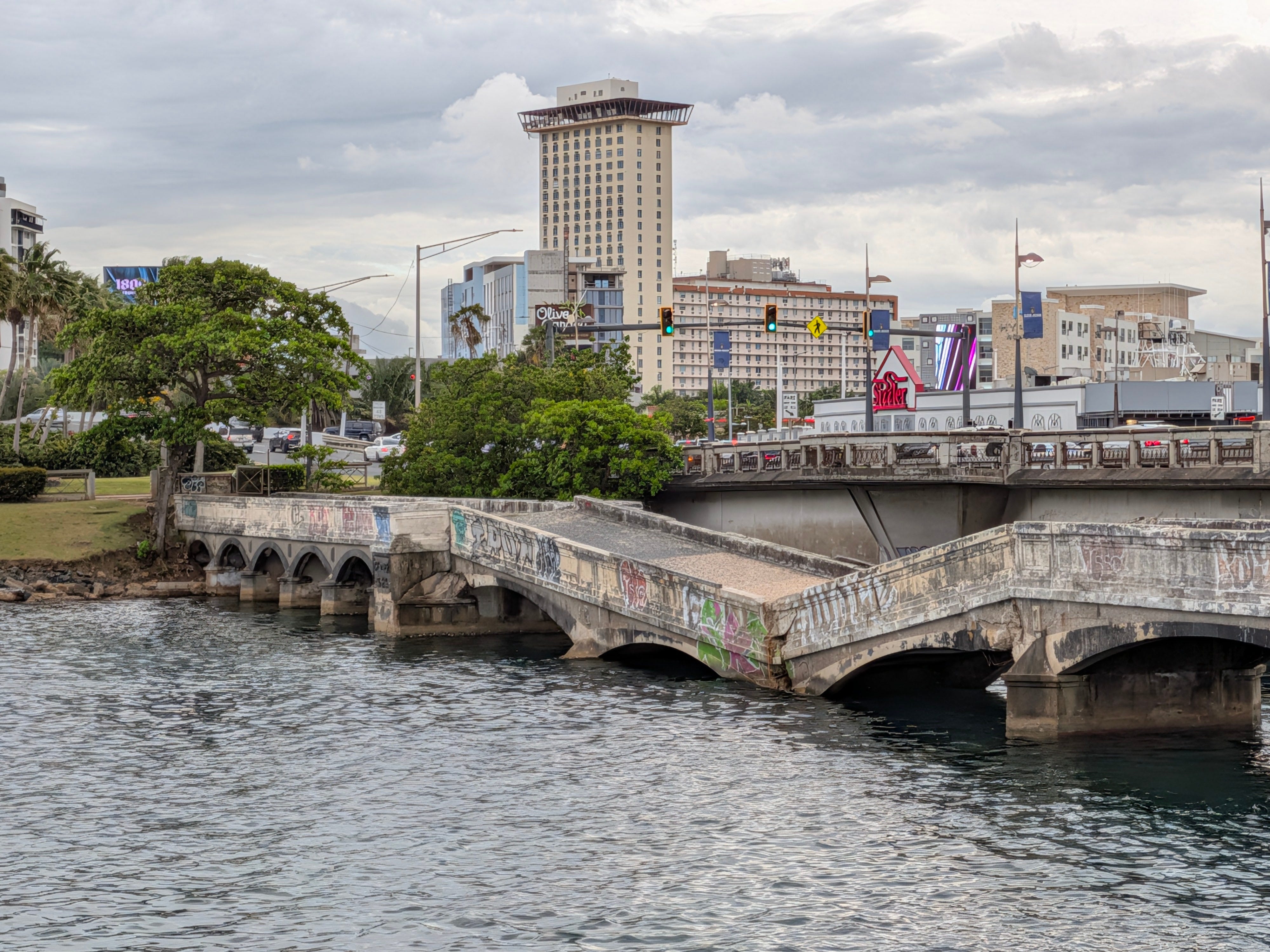
The roads and water systems are in a similar state of neglect. Once you leave the main tourist strips, the pavement frequently gives way to dirt and deep potholes. Heavy tropical rains regularly overwhelm the drainage systems. Streets turn into rivers. Aging pipes burst and flood neighborhoods that have already seen years of deferred maintenance.
This is the trade-off for the 0% rate. You keep your capital gains, but you lose the ability to take basic services for granted. The local population has navigated this reality for decades. They have developed a resilience that many newcomers are forced to learn the hard way.
The Wealth Gap
The financial benefits for investors have a direct impact on everyone else living here. Puerto Rico is split into two different worlds. In areas like Condado and Miramar, luxury high-rises are going up fast to house the people moving here for tax breaks. These neighborhoods feel completely separate from the reality of the rest of the island.
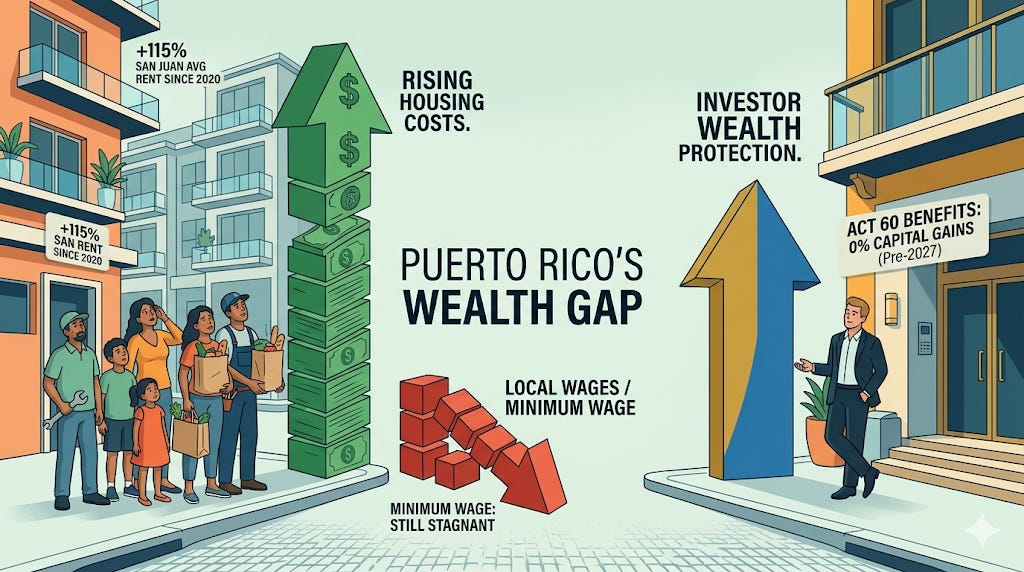
This influx of money has caused a massive spike in housing costs. Rents in San Juan are now too high for most people who actually work on the island. Local families are being pushed out of their own communities as apartments are turned into expensive condos or short-term vacation rentals.
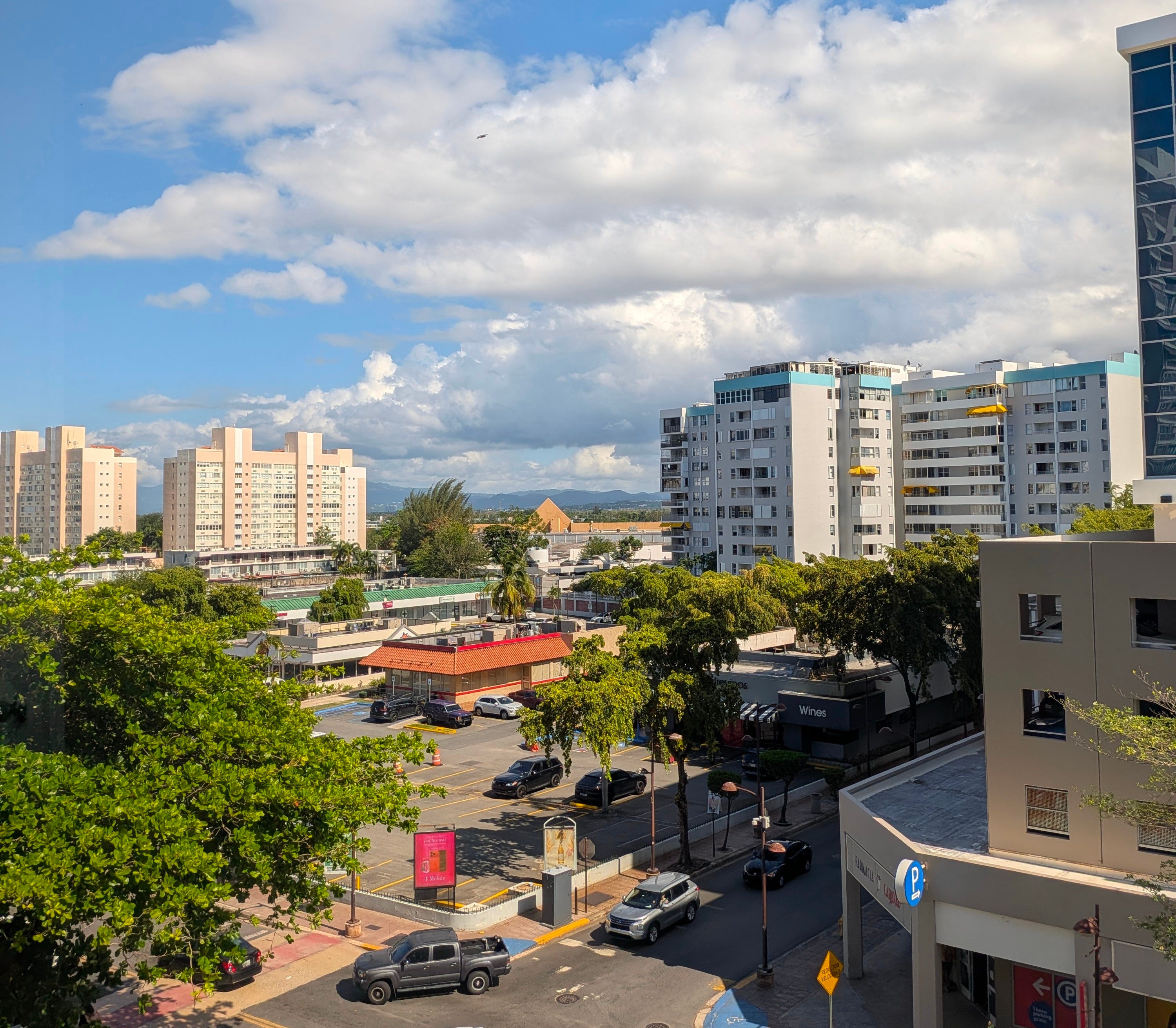
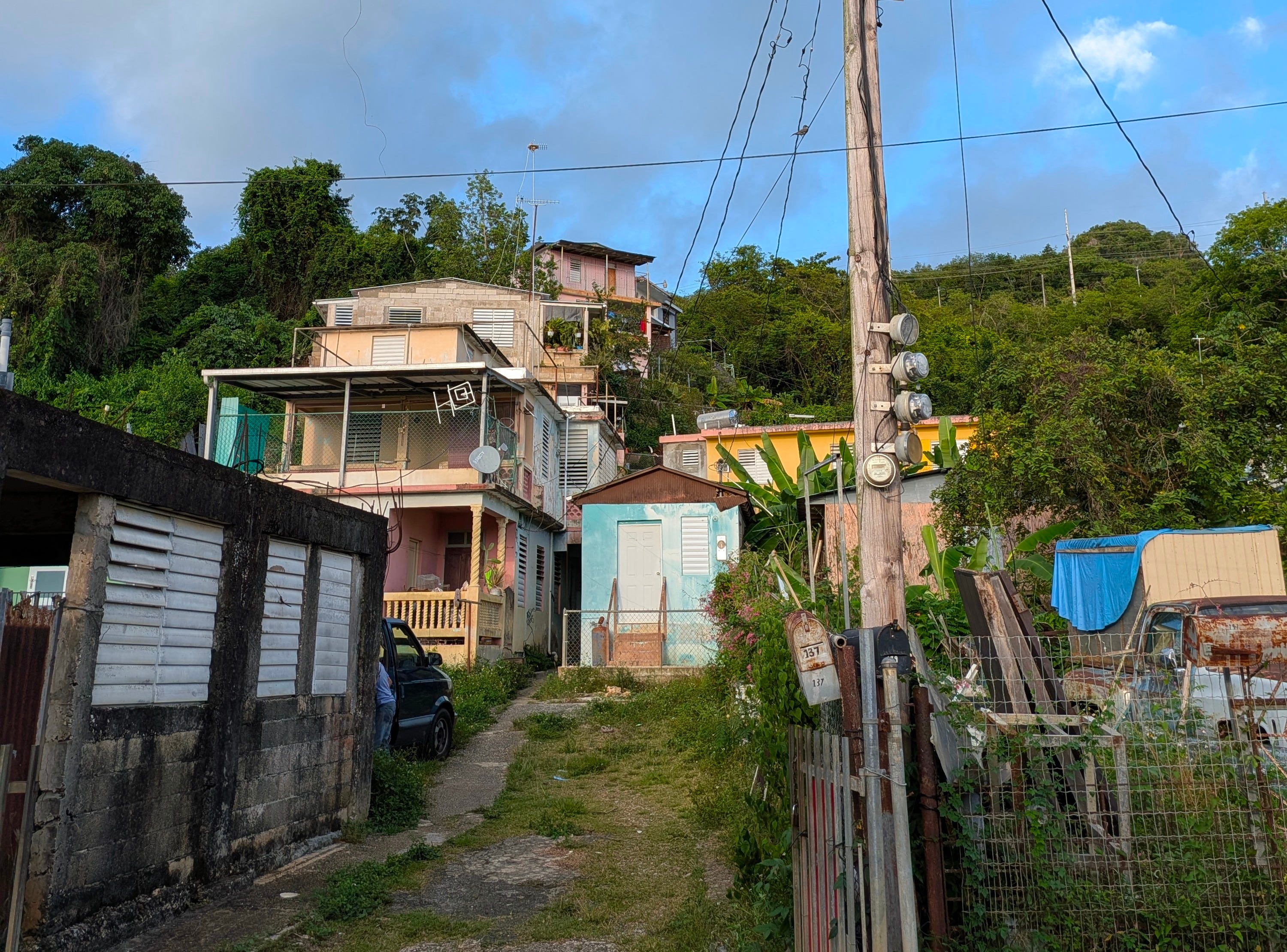
This has created a lot of tension. An investor sees Puerto Rico as a smart way to protect their wealth. A local sees it as a place where the cost of everything is being driven up by outsiders who might not be contributing much back.
The government is trying to address this with the new 2026 tax laws. By switching from a 0% rate to a 4% tax for new arrivals, they are finally asking for a direct contribution to the island’s budget.
The Final Trade
Puerto Rico presents a complex equation for any investor. The financial benefits are significant if you move before the December 31, 2026 deadline. However, these benefits come with clear costs. This is not a simple tax strategy. It is a long term commitment that requires constant adaptability and strict legal compliance.
The real test for a newcomer is not just surviving an audit. It is building a respectful life on an island that both welcomes your money and struggles with your impact on the local housing market. The requirement to show a closer connection to the island is not a minor detail. It is the core of the agreement. If you move here, you have to be physically and economically present.
The closing window for the 0% rate sends a clear message. The era of the unconditional tax hack is over. The future involves a more regulated and expensive participation in the island’s economy. Every investor must decide if the specific financial gains are worth the social and infrastructure price required to live here.
Great breakdown and I like how you dig into the impact of the rich moving there and its impacts on the local economy.