I have spent most of my investing life buying income. High-yield funds, BDCs, REITs, and covered call ETFs have all been part of the toolkit at some point because I was obsessed with generating income that could eventually replace a job. For a stretch of that, margin was part of it too because of the attractive spreads I was able to get.
While I did eventually achieve that goal, life priorities shifted and I know try to focus on maximizing total returns. Therefore, I’ve been trying to refine my use of leverage and minimize exposure to the riskier funds.
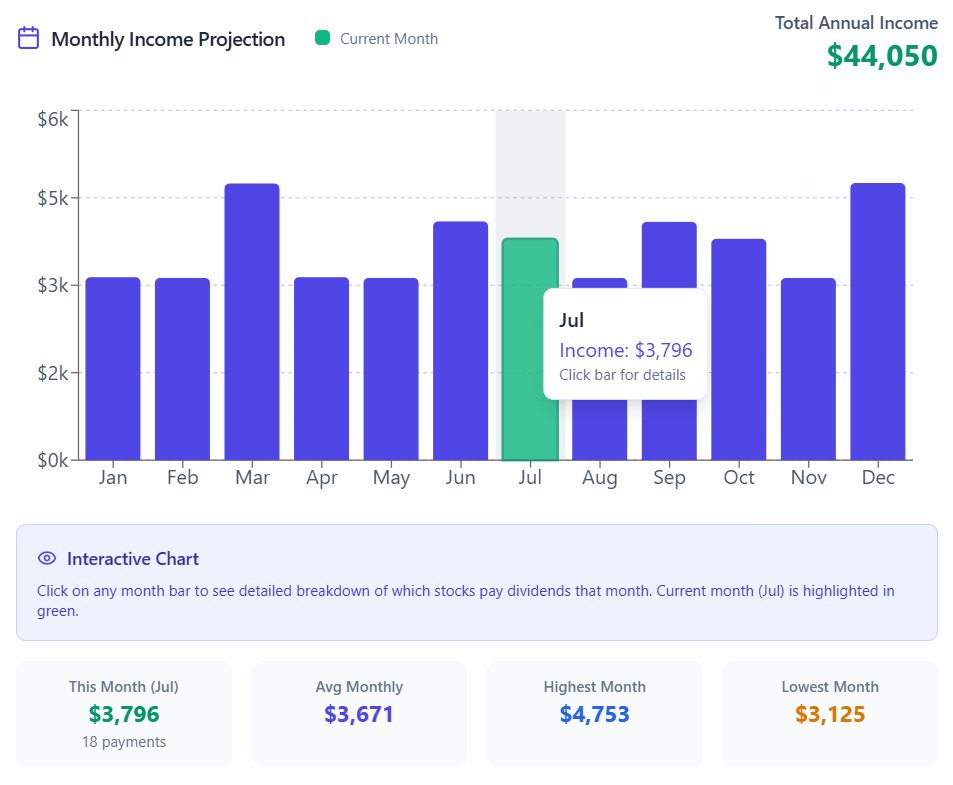
It almost felt like free money. The basic concept is that you can borrow money at a 5% interest rate, but buy an asset that pays you 15%. That 10% spread is your profit, before including all interest paid. This concept has helped me expand my annual dividend income above the $44k mark.
I want to walk through why I no longer think about it that way, and how I have refined the approach for a market that is being pulled higher by AI and could just as easily slow down.
A small group of AI-driven names are carrying the index and the cost of borrowing is nowhere near where it sat a few years ago. In fact, I think that interest rates are likely to trend higher by the end of 2026.
All of the richest people in the world use leverage to their advantage and that’s why I think we should as well. What matters is how disciplined you are when using it, the asset you borrow against, and whether you have a plan for the day the market stops with your original plan. So I want to lay out the framework I use now, which is built around surviving a slowdown rather than squeezing the most out of a bull market.
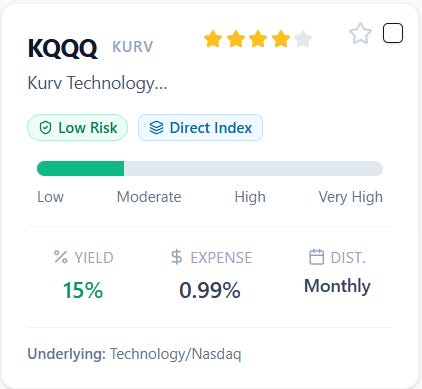
I'm also going to use the Kurv Technology Titans Select ETF KQQQ 0.00%↑ as the working example, because it fits this structure well. It pays a monthly dividend, it currently distributes at a rate that clears the borrowing cost several times over, and it keeps direct exposure to the technology names carrying the index.
$40,000 invested into KQQQ can effectively generate an income of $473 a month in passive dividend income. This unlocks the potential to implement your own income wheel and increase the pace of your wealth building.
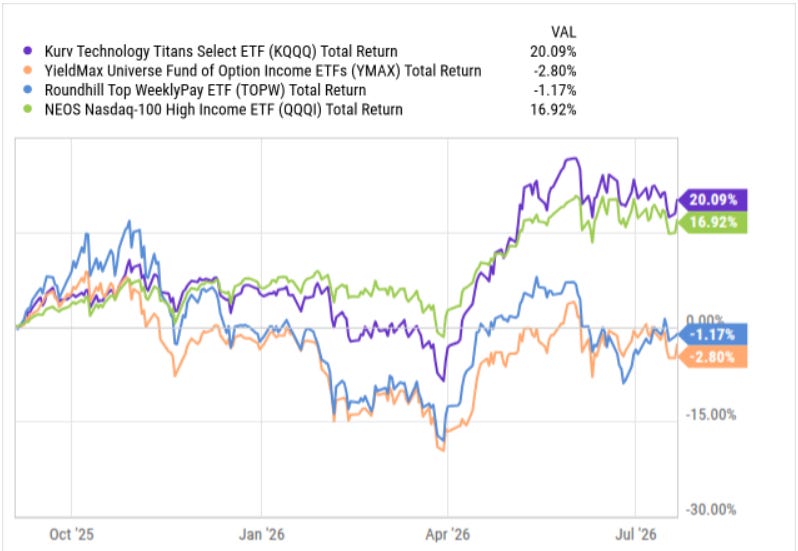
As we can see below, KQQQ has outperformed other high yield funds I’ve talked about here in the past. I believe this outperformance can continue against funds like YMAX, TOPW, and even QQQI. While these funds aren’t the most efficient way to participate in a rally, they work as accompanying positions.
The Math Can Change
The appeal of margin for an income investor is pretty simple. You borrow at one rate, you buy something that yields a higher rate, and you keep the spread. This is basically the universal model for many businesses across the world: out-earn the cost of your borrowing. When the Fed raises interest rates, this directly impacts the cost of margin that brokerages offer you.
When margin cost 1.5% back in 2020, it was a lot easier to make this strategy work. Times are changing and we have to make sure we evolve the strategy as well to focus more on quality.
Here are some of the margin rates by brokerage. As we can see, the rate varies by how much capital you actually borrow. Robinhood still has some of the best rates out there, making it the best choice for investors looking to use this income spread method.
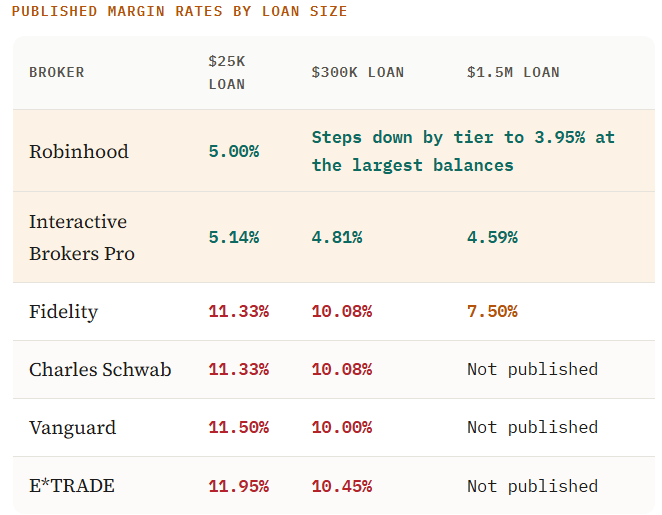
If you borrow at 5% to hold a 9% yield, you still clear a four point gross spread, and that's a workable trade. But if you're borrowing at 11.33% against that same 9% yield, you are paying more than two points a year for the privilege of holding the position, which frankly doesn’t make any sense.
While it is possible to use leverage to buy growth positions, I prefer to take this calculated approach of KNOWING the cash flow can support the paydown. When you buy a growth position, you are speculating and putting your capital at risk of declining further.
4 Important Rules For Margin
High-yield assets tend to be the most sensitive part of the market. BDCs carry credit risk, REITs carry rate and spread risk, and leveraged or option-based income funds tend to fall harder than the broad market when volatility spikes. These are exactly the positions a yield-focused investor is most likely to borrow against.
When a slowdown hits, three things happen at the same time and they compound each other.
The value of your collateral drops, which shrinks your equity cushion.
The distributions you were counting on to service the loan can get cut, because the same stress that pushes prices down also pressures the payouts.
If the drawdown runs deep enough, your broker issues a margin call and forces you to sell into the decline at the worst possible prices.
That last part is what turns a bad year into a permanent loss, which is why I follow a specific set of rules to ensure that I am never at the risk of a margin call. The leverage that amplified your income on the way up amplifies your losses on the way down, and it does it at the exact moment you can least afford it.
My collateral is the stable, lower-volatility part of the portfolio. Quality dividend growers and broad index exposure that hold their value far better in a drawdown, and that keeps my equity cushion intact when it matters most. So while I talk about individual companies, I hold plenty of ETFs like QQQM, CGDV, and VTI across different accounts. The rules I try to implement is as follows:
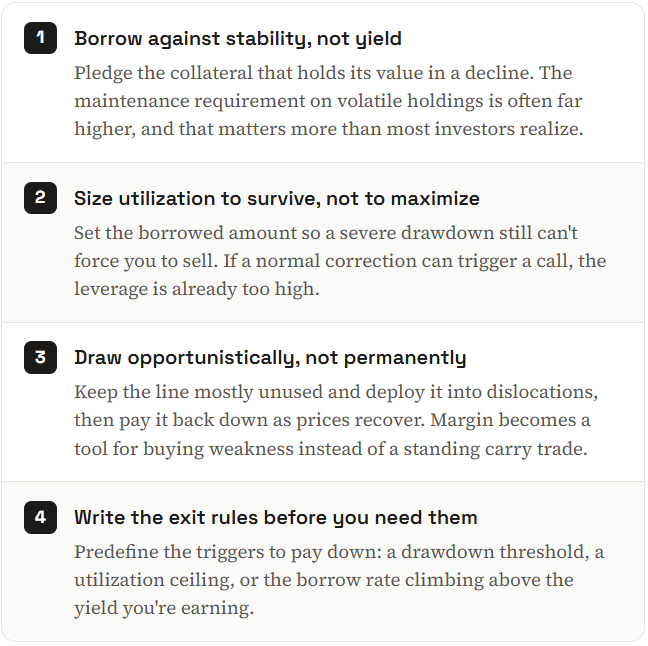
The main goal is to limit exposure to a margin call. I never want to be forced to pay down these loans before I want too. A margin call fires when your equity falls below the maintenance requirement as a share of the position value. Working that backward gives you the exact drawdown each utilization level can absorb, and the answer depends heavily on what you pledged in the first place. Here’s a helpful guide that can serve as a reference point:
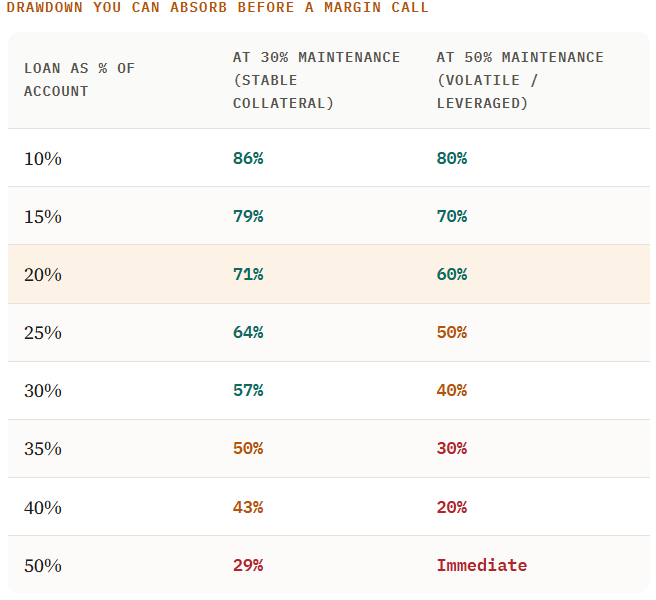
These are only estimates and can vary based on brokerages, but it an serve as a basic guideline to follow. Like I said, I personally try to keep my margin use below the 20% use of my total portfolio value. This is just my own personal safety preference but your own risk tolerance may vary. At 30% utilization against stable collateral, you can absorb a 57% decline before anything gets forced. Just to be clear, different funds will have different margin maintenance requirements. Therefore, it is important to pay attention to what your broker lists for each security.
If you want a filter for what belongs in that stable collateral bucket, I went through the specific metrics I screen for in 5 Numbers That Tell You If A Stock Is Actually High Quality. The same fundamentals that make a business worth owning are the ones that keep its share price from collapsing when the market turns, which is exactly what you need from collateral.
KQQQ Is An Efficient Fund
You need a distribution high enough to clear the interest with real room to spare, a payment schedule that lines up with how margin interest accrues, and an asset you’re willing to hold through a rough stretch. The Kurv Technology Titans Select ETF is the position I would use for this, and the distribution rate and strategy are the reasons why.
KQQQ is classified as low risk within the High Yield Database. Paid subs get access to the database full of different funds. Let’s dive into why KQQQ is generally considered to be low-risk.