

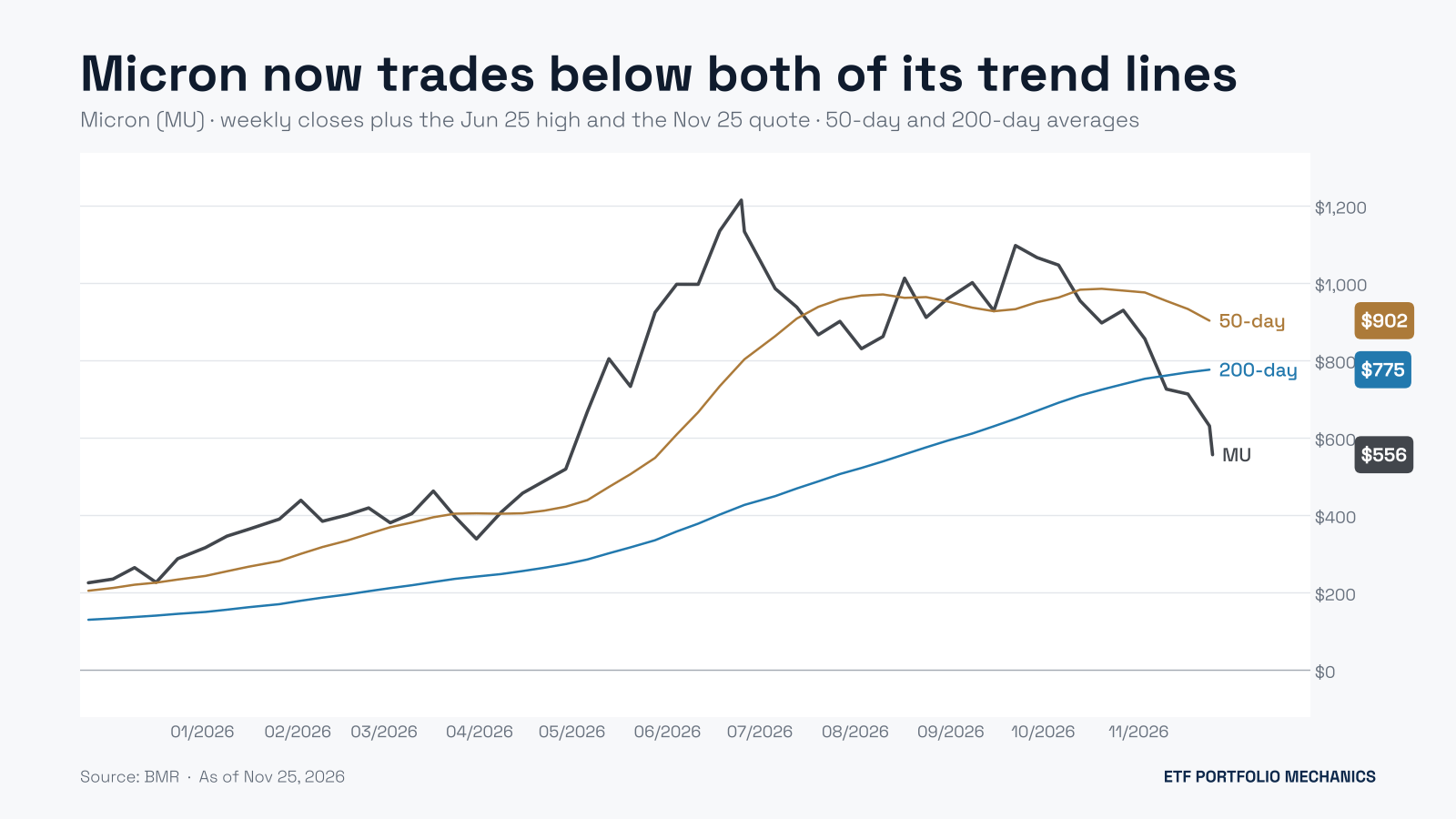
Micron fell about 12% on Wednesday as AI stocks sold off again. It now trades around $555 after closing above $1,200 in late June, which works out to a drop of more than half in five months. If you own a chip fund, a momentum fund or a value ETF, you probably own some of it.
The business did not get worse over that time. Micron reported the best quarter in its history, told investors next year will be better, and signed customers into contracts worth $150 BILLION. Free readers get my full case for the stock below.
Paid members also get my buy alert and the income side. That includes what I did in my own account today, plus a weekly-paying chip fund with every payment it has made, its top holdings and what it has paid per share since launch. The data comes from ETF Portfolio Mechanics, the research service I co-run, and its Workbench tools, and it's for paid subscribers only.
👉 Through Monday, Nov 30, the button below takes 50% off forever, so a membership drops from $0.82 a day to $0.41 and the paid section unlocks as soon as you join.
Micron's Business Keeps Growing
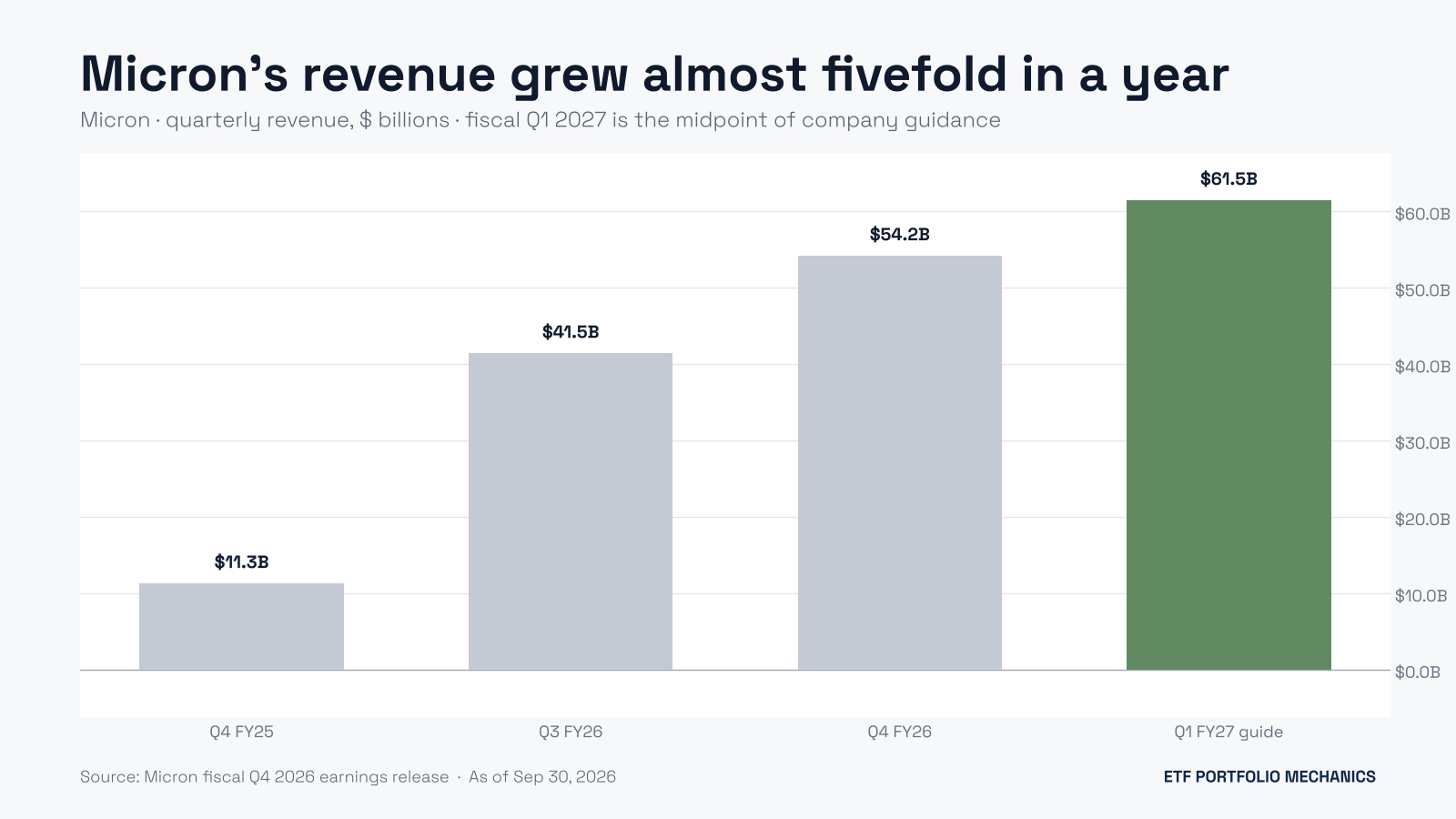
Micron makes memory chips, and every AI server needs far more memory than a regular server. That demand shows up in the numbers. In its latest quarter, revenue was $54.2 billion compared with $11.3 billion a year earlier, which is close to five times as much.
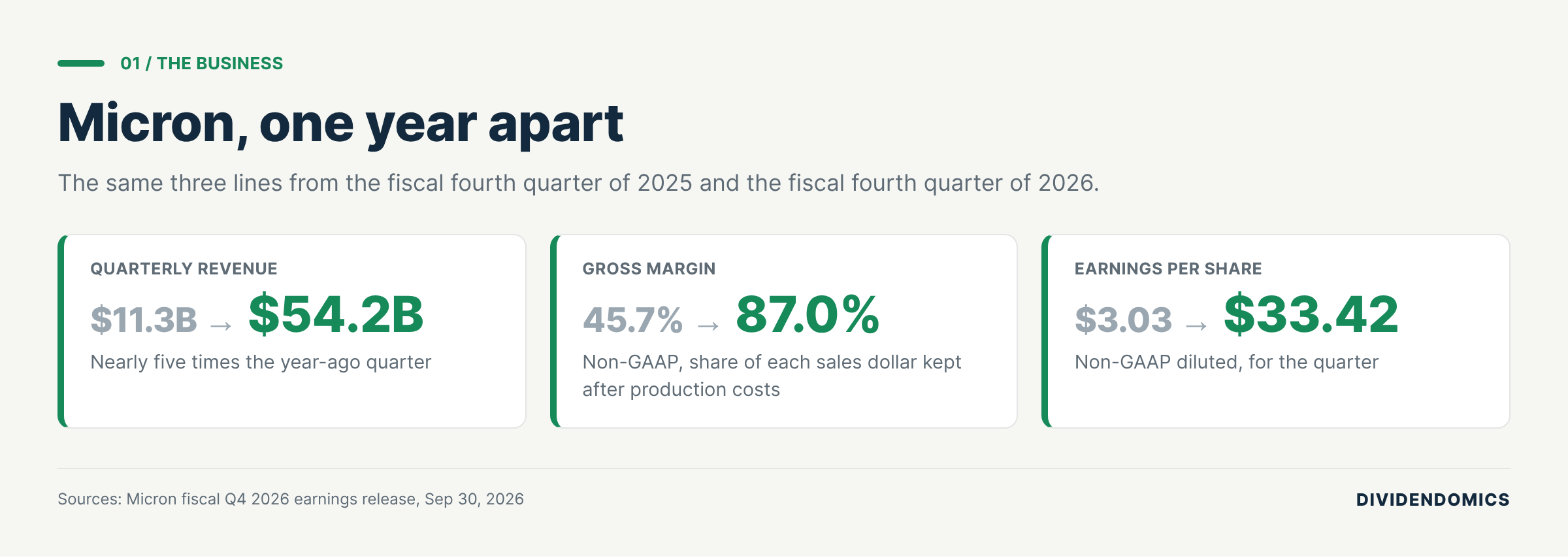
Profit grew faster than sales because Micron is charging more for each chip. Gross margin is the share of each sales dollar left after the cost of making the product. A year ago Micron's gross margin was 45.7%, and now it is 87%.
Management expects more growth. Micron told investors it expects another record in fiscal 2027, with sales rising every quarter. It guided the current quarter to $61.5 billion in revenue and about $38 in earnings per share. At a share price near $555, that works out to roughly 7% of the stock price earned in one quarter.
$150 Billion Is Already Under Contract
I think the market is overlooking how much of the next few years is already sold. In the past, customers bought memory each quarter at the current price. That is why memory stocks have a history of large gains followed by large losses.
Micron has now signed 26 long-term agreements, which it estimates will cover more than 35% of its revenue through 2030. Customers have backed those agreements with $32 billion in commitments, and the vast majority of that is in the form of cash deposits. Customers are putting money down years ahead to make sure they get supply.
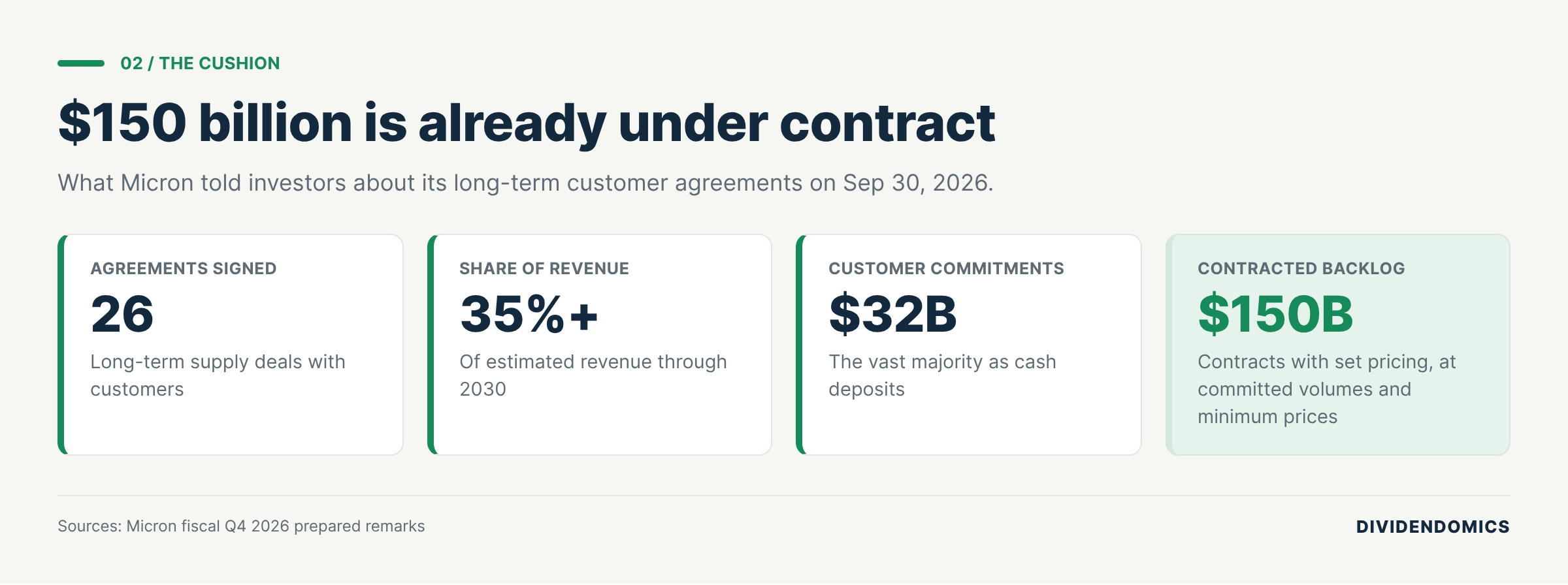
For the contracts with set pricing, Micron counts about $150 billion in revenue that customers have committed to and Micron has not yet delivered. Micron calculates that number using the minimum prices in each contract, so it would be higher if chip prices stay where they are. Micron has also signed agreements for the vast majority of the AI memory it can make in calendar 2027.
Prices are still rising, and TrendForce expects regular memory contract prices to rise another 10% to 15% this quarter and the average price of AI memory to rise 121% in 2027. Meanwhile, ETF Portfolio Mechanics shows the stock trading at under 4 times the earnings analysts expect this fiscal year.
Why The Stock Keeps Falling
I see four reasons the stock is falling, and only one is about Micron's own business. First, traders have been pricing in a Fed rate hike for December, and higher rates tend to hurt tech stocks. Second, Nvidia's CEO resigned on Nov 12 during a board investigation and was reinstated on Nov 23, and those two weeks of uncertainty hurt chip stocks. Third, the Anthropic IPO may be pulling money away from other AI stocks.
The fourth reason is a labor dispute. In early November, construction on Micron's planned plant in Taoyuan, Taiwan was all but halted. Taiwan makes 60% of Micron's main memory product, so investors worry the dispute could spread to plants that are already running.
The larger concern is 2028, because Micron and its competitors are all building new plants while prices are high. I covered that in my chip shortage post. In past cycles, that kind of building led to too much supply and falling prices. I think investors are selling now over a supply problem that is still about two years away.
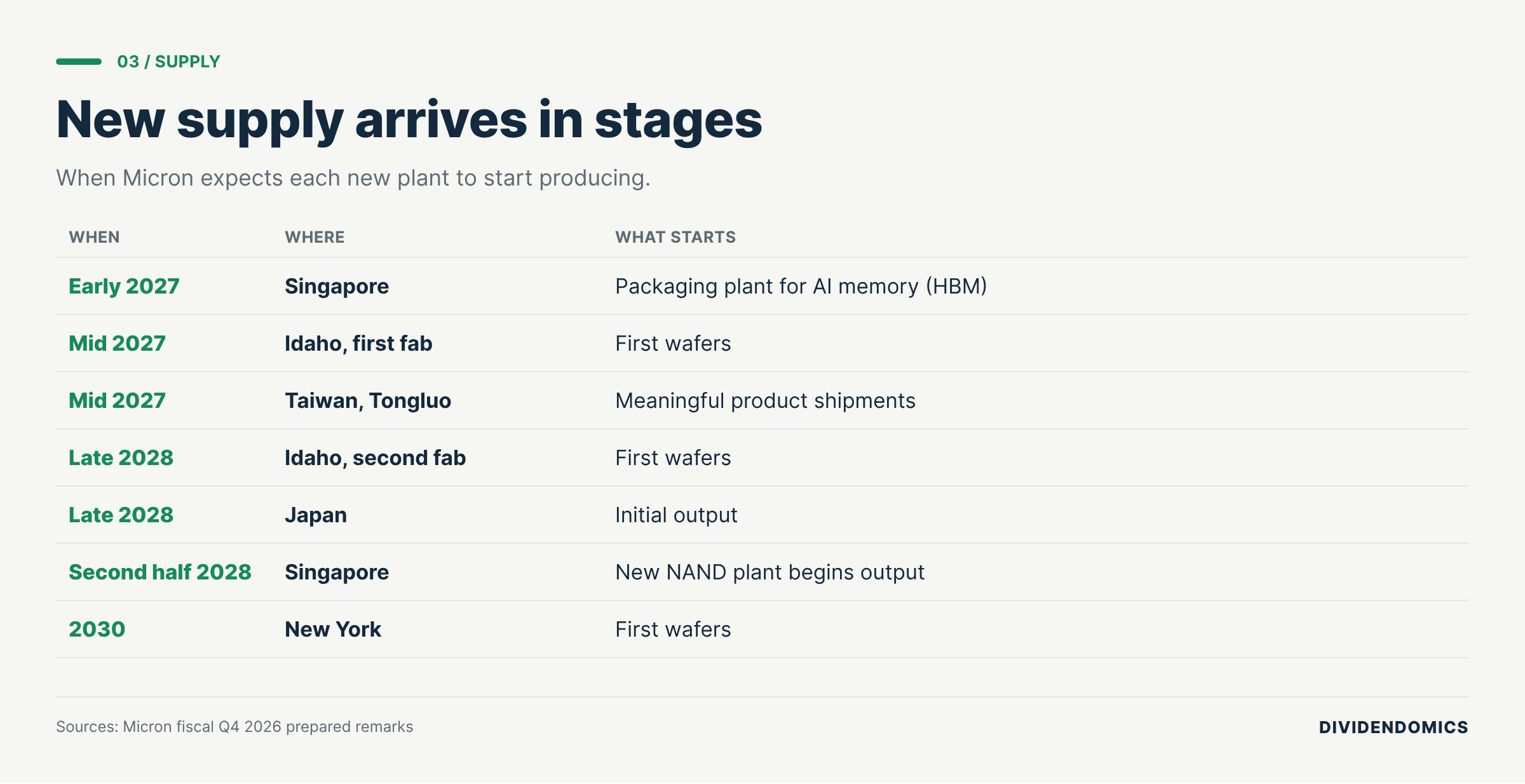
New plants take years to build and more time to reach full production. Micron's packaging plant in Singapore starts in early 2027, and the first Idaho plant and the Taiwan expansion start in mid-2027. The plant in Japan and the second Idaho plant do not start until late 2028. Micron expects industry shipments of its main product to grow in the low 20% range in 2027 and 2028, slightly slower than this year.
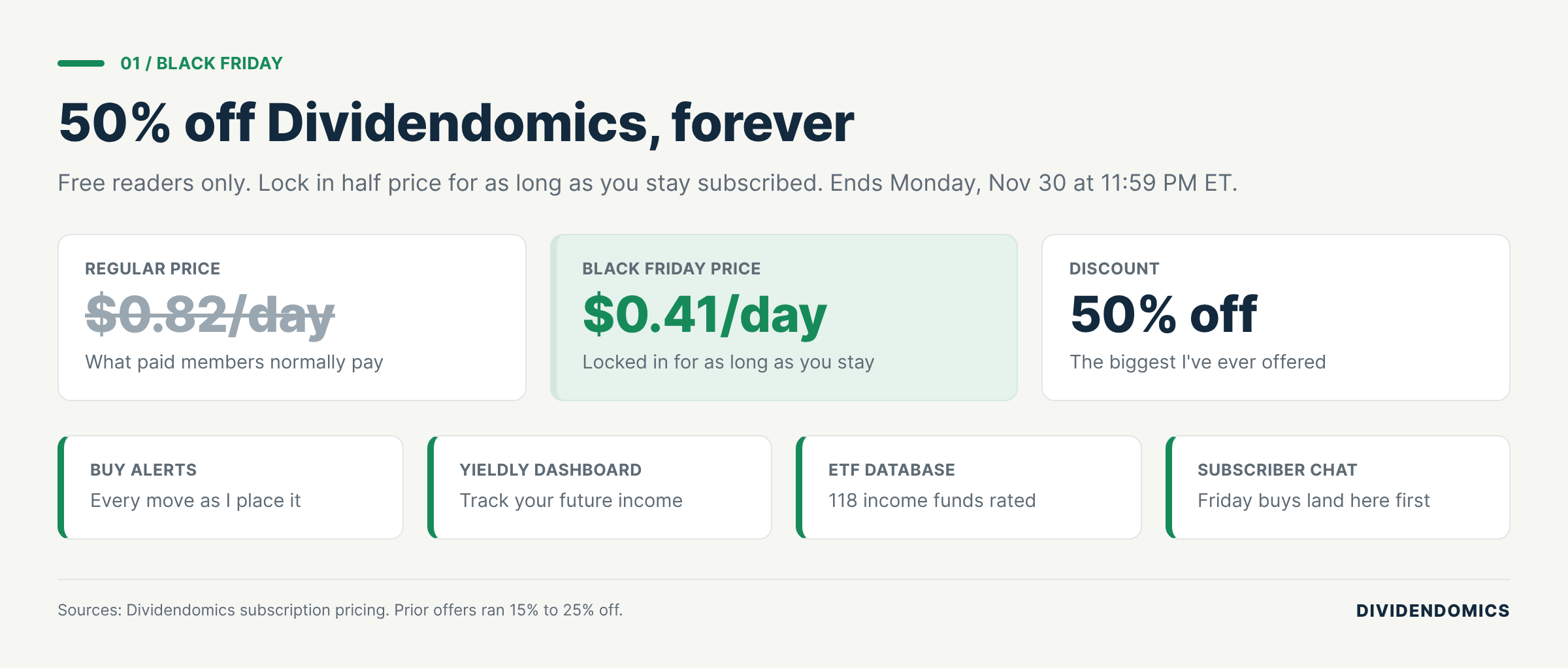
The rest is for paid members. Below is my buy alert, including what I bought today and how much. You also get the weekly-paying chip fund, whose payment has fallen by half since June, with a chart of every payment and the reason it fell. The paid section also covers which funds already hold the most Micron, the four risks I'm watching and what would make me sell. Through Monday, Nov 30, free readers can lock in 50% off forever and get every buy and sell alert, the Yieldly Dashboard and the High Yield ETF Database.
