

Meta grew revenue 26% last quarter and the stock dropped 7% the next day because of what it plans to spend, not because of anything it failed to earn. YieldMax AI & Tech Portfolio Option Income ETF GPTY 0.00%↑ owns Meta and most of the names that fell with it, and the fund is down about 11% since I wrote it up two weeks ago.
I’m not going to pretend that doesn’t sting, but I bought this fund for exactly this kind of market, because the thing that knocked the share price down is the same thing the fund sells to make the weekly check, and it paid me $194 in September doing it. I suspect that the income over the next 30 days will rise.
👉 I will also share what I plan to do to increase my annual dividend income through the uncertainty.
Below is what happened to the fund since my October 9 article, the mechanism that connects a volatile earnings season to a bigger option check, and the scoreboard the headlines skipped. Paid subscribers get the capex argument in full, why I think the market is being dramatic about it, what I’m doing with my GPTY and Meta shares, and the three things that would change my mind.
👉 Upgrade Your Subscription for $0.82 a day and get every buy alert first, plus the Yieldly Dashboard and the High Yield ETF Database on day one.
What Happened Since My Last Call
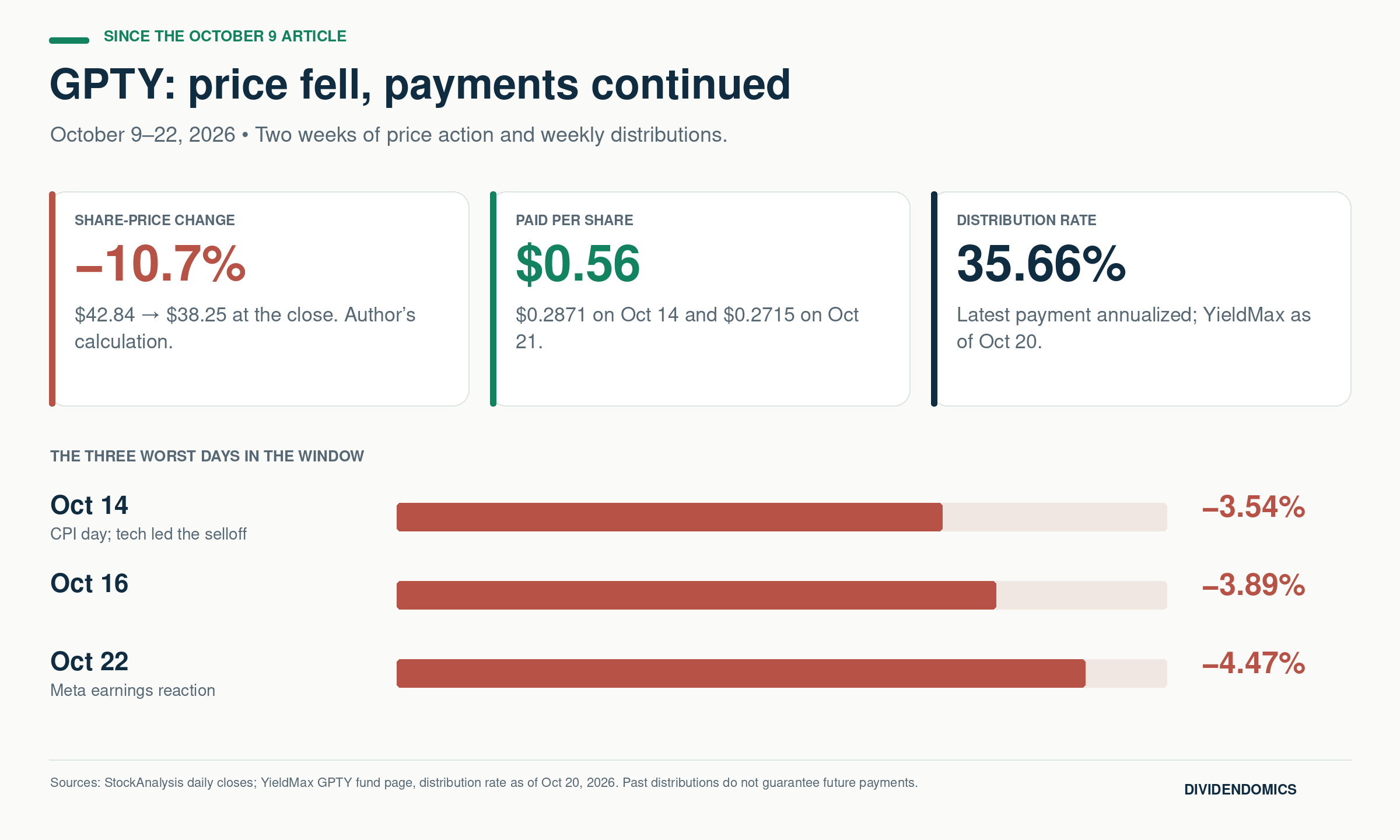
GPTY closed at $38.25 on October 22, down about 11% from the day my article went out, per StockAnalysis. Three sessions in that stretch each took more than 3.5% off the fund. The first was the CPI day I covered in Why The Market Is Dipping, and the last was the Meta reaction. Add back the two weekly distributions and the total return is about minus 9%, my own calculation.
That’s a bad two weeks and I’m not dressing it up, but it’s a bad two weeks for a fund that owns Nvidia, Alphabet, Microsoft and Meta, and those names fell with it. The question for an income fund isn’t whether it dropped with its holdings, because it always will. The question is what the drop does to the check, and that’s where this fund works differently from a regular stock.
Volatility Is What GPTY Sells
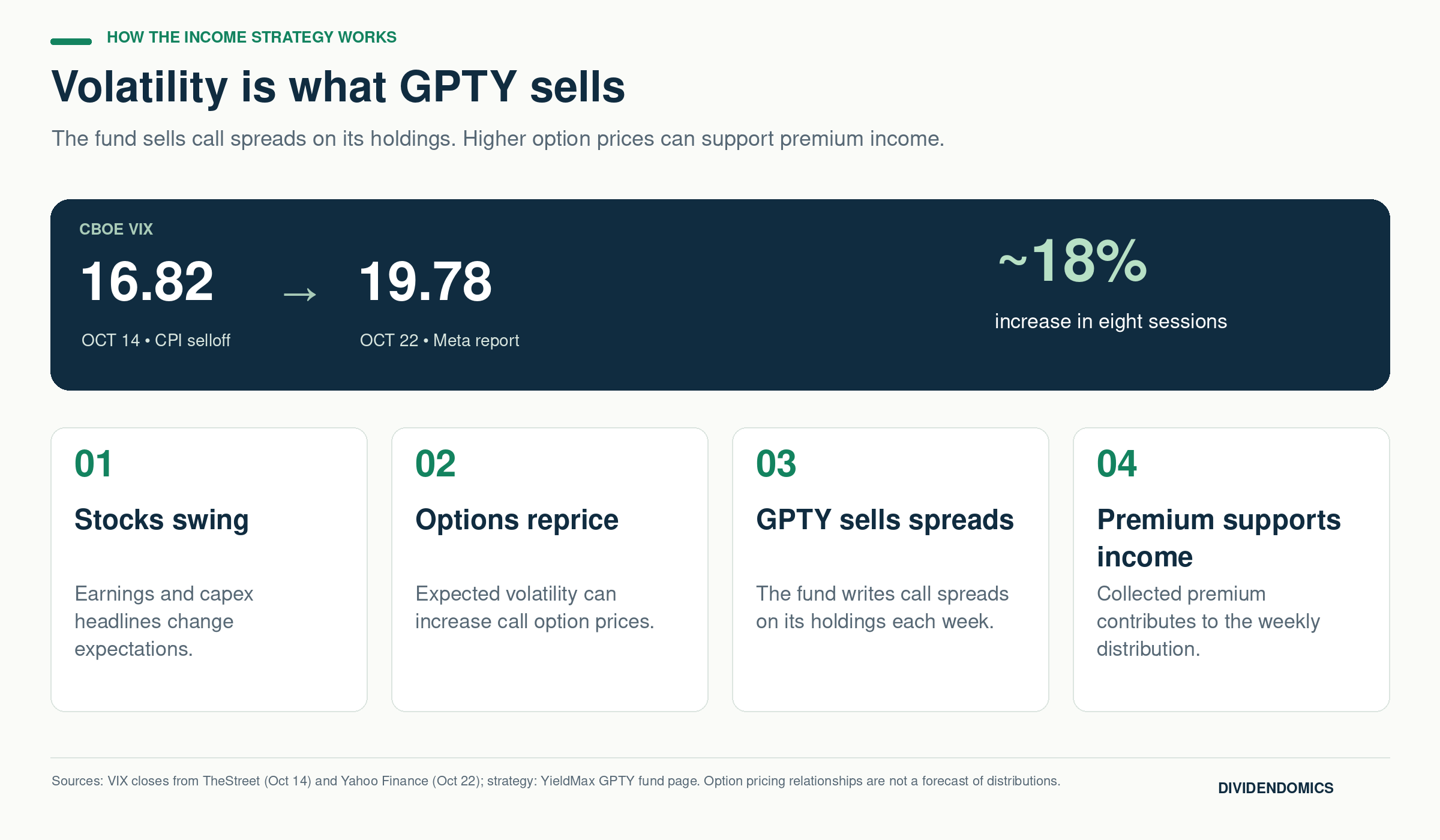
GPTY earns its payout by selling call spreads on the stocks it owns, every week, per the YieldMax fund page. The price of any option rises with expected volatility, because the buyer is paying for the chance of a big move and big moves have gotten more likely. So when the Cboe VIX climbs from 16.82 to 19.78 in eight sessions, which it did between the CPI selloff and the Meta reaction, the same spread the fund sold in September fetches more premium in October.
That premium is the weekly check. It’s the reason an earnings season full of 7% single-day moves is a better environment for this fund than the calm one before it, and it’s the trade-off I accepted when I bought it, the same one I scored across the field in I Analyzed 10 Option Income ETFs. In a quiet, grinding bull market the fund gives up upside for a thinner premium. In a jumpy one the premium fattens while the shares take the hit.
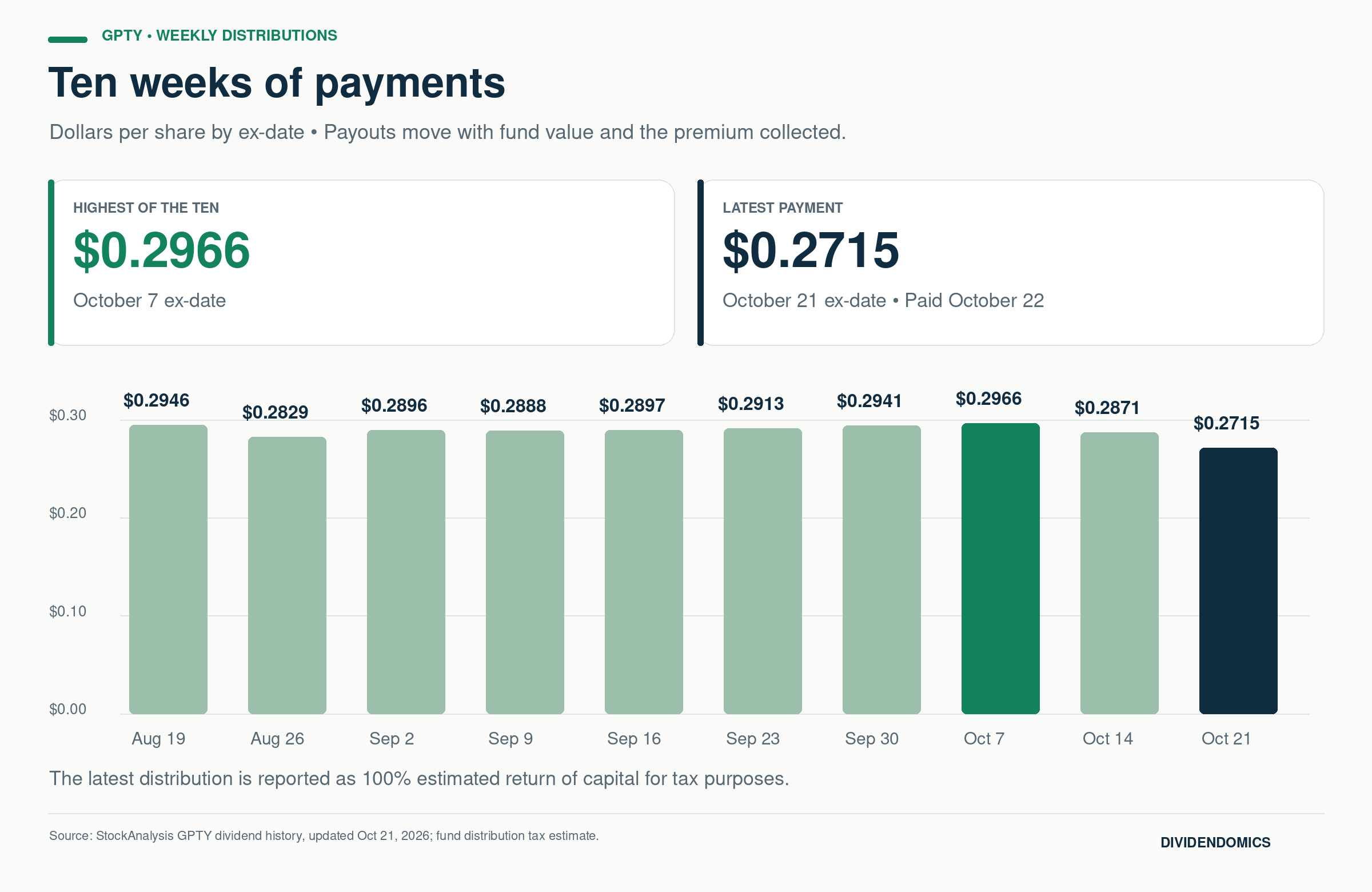
A falling share price pulls the dollar amount down even as the premium per spread goes up. The rate itself held at 35.66% as of October 20, per YieldMax, against 35.64% when I wrote the first piece. If volatility stays elevated through next week's reports, I'd expect the premium side of that equation to do more of the work, but that's an expectation and I'll report what the fund actually pays.
The Scoreboard The Headlines Skipped
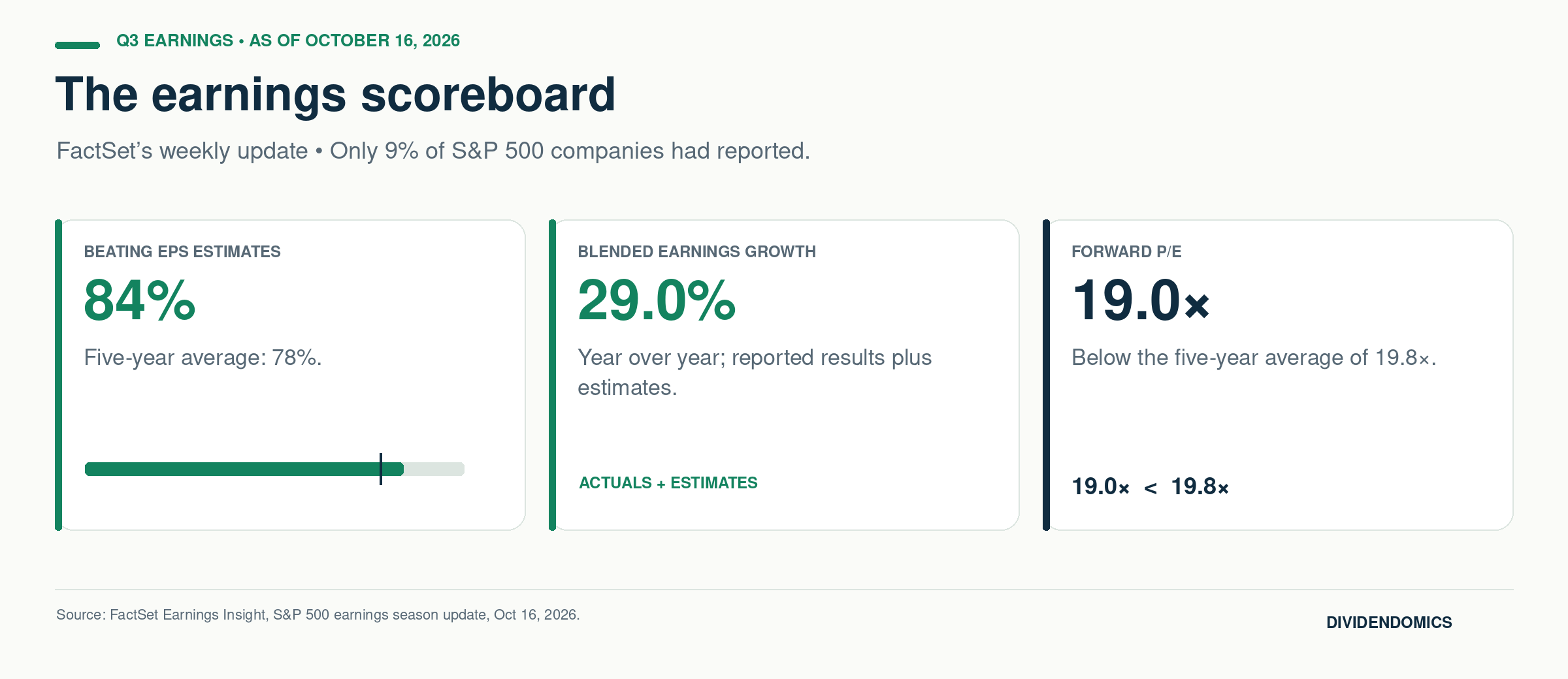
Here’s what the companies are doing while the market argues about them.
So far 84% of S&P 500 companies have beaten earnings estimates against a five-year average of 78%, per FactSet. Blended earnings growth for the quarter sits at 29%, and FactSet credits positive surprises from information technology, the sector GPTY is built on, as a major reason the index’s revenue growth rate rose.
The index trades at 19 times forward earnings, below its five-year average, and that was before this week’s drop made it cheaper. A market with 29% earnings growth and a below-average multiple isn’t a market pricing in a bust. It’s a market that got spooked by one line item, and that line item is the paid half of this article.
The Capex.. “Problem”
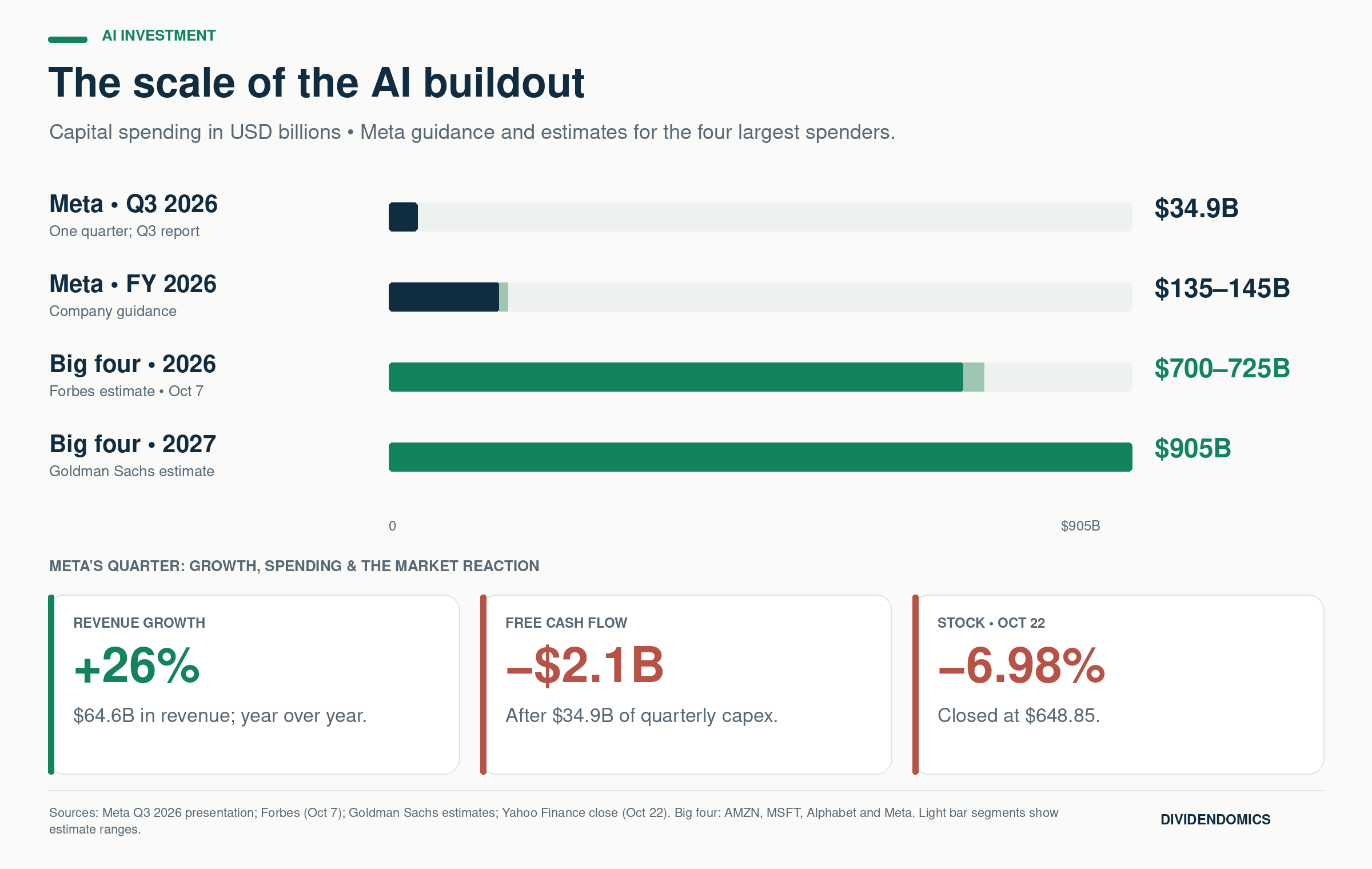
The worry is real, so let me give it its due. Meta spent $34.9 billion on capital expenditures in a single quarter and guided the full year to $135 to $145 billion, per its Q3 presentation. That spending pushed free cash flow negative for the quarter, at minus $2.1 billion, for a company that was printing cash a year ago.
Meta is one of four. Across Amazon, Microsoft, Alphabet and Meta, Forbes put 2026 spending at roughly $700 to $725 billion, and Goldman Sachs has 2027 at $905 billion. That’s a pool of money bigger than most countries’ economies pointed at one idea, and it’s fair to ask what it earns.
The fear has a name now. IBM’s CEO told investors this week that large enterprises are “getting worried if some of the AI spending is completely out of control with no real return,” per Yahoo Finance. When the company selling the AI tools says its customers are asking about returns, the market listens, and it listened by selling the companies writing the checks and the companies cashing them.
Meta is my largest position, per my September report, so I’ll be direct: revenue grew 26% to $64.6 billion and the stock fell 7%. That’s a market punishing a company for what it might waste rather than for anything it has failed to earn, and that distinction is the whole argument for the next section.
Why The Market Is Being Dramatic
On October 22 the Nasdaq dropped 2.6% and the Dow finished flat, per Yahoo Finance. Two-thirds of the stocks in the S&P 500 went up that day, and the equal-weight index beat the cap-weighted one by the widest margin since July 2024, per CNT Trading’s daily note. That’s not money leaving the market. That’s money leaving twenty stocks for the other four hundred and eighty.
The bond market said the same thing louder. The 10-year Treasury yield fell 17 basis points to 4.96%, its biggest one-day drop in more than two years, which is the opposite of what happens when investors fear a bust. Staples, homebuilders and software companies all rallied. The capex names got sold because they went up the most, and a 6.7% drop in the chip index after the run those stocks have had is a correction inside a bull market, not the end of one.
I wrote in Stocks Are Cheaper Even Though The Market Is Up that earnings had been outrunning prices all year, and this week made that gap wider. The capex is a real risk to the spenders’ free cash flow in 2027. It isn’t a risk to the 29% earnings growth they’re reporting right now, and a market that sells the second to worry about the first is being dramatic.
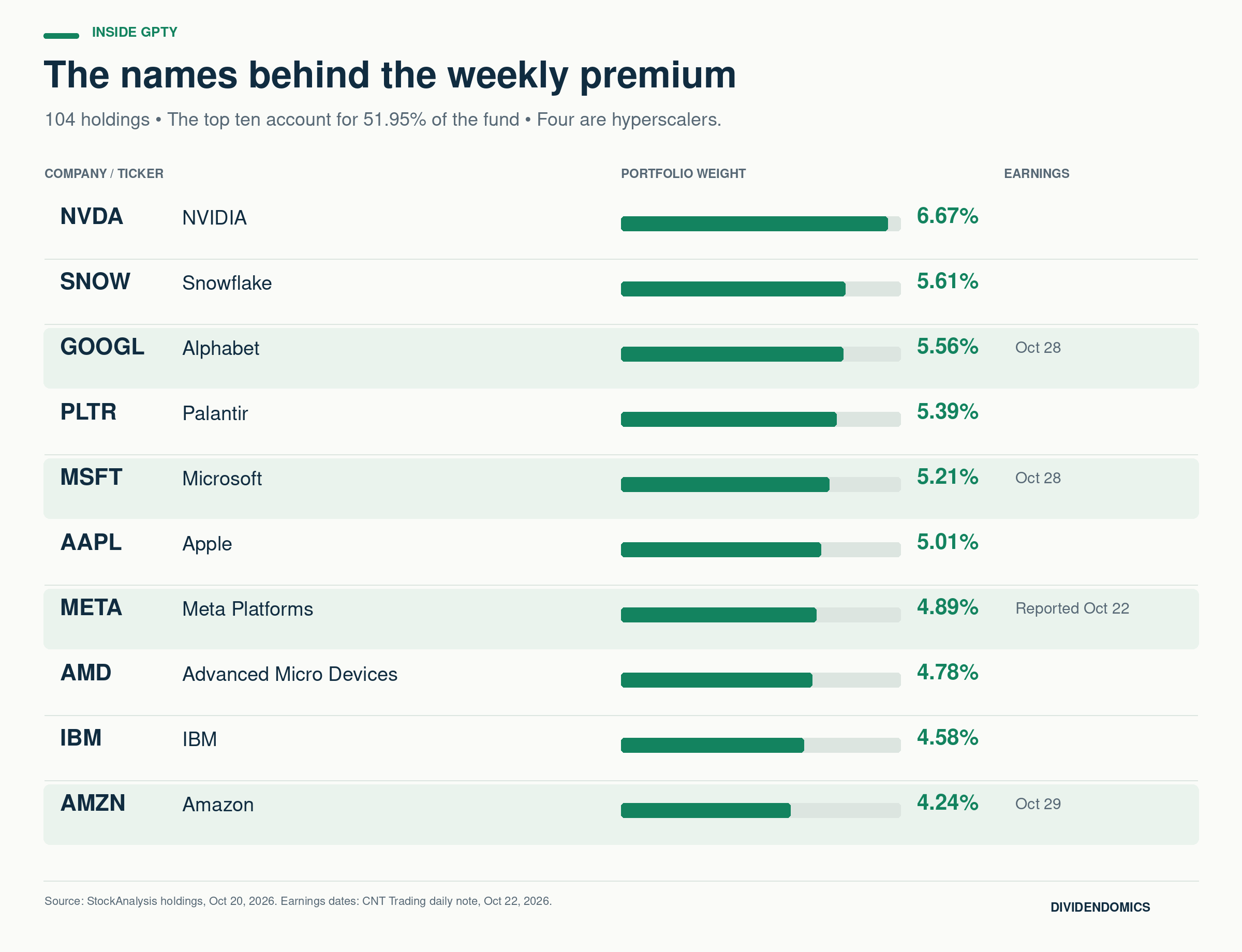
So here’s what I’m doing next…